

Yankees Catcher J.C. Escarra Explores Switch-Hitting to Challenge Austin Wells
The Era of the Radical Pivot: Why Versatility is the New Currency in Professional Sports
In the high-stakes world of Major League Baseball, the “specialist” is becoming a luxury that teams can no longer afford. The recent revelation that New York Yankees catcher J.C. Escarra is attempting to become a switch-hitter at age 31 isn’t just a quirky locker room story—it’s a symptom of a larger shift in professional athletics.
We are entering an era where the ability to reinvent oneself mid-career is more valuable than raw, singular talent. When a backup catcher decides to rewrite his biological blueprint to challenge a starter, he isn’t just fighting for playing time; he’s embracing the “Super-Utility” trend that is redefining roster construction across the league.
The Death of the One-Dimensional Player
For decades, the “platoon system” was the gold standard. You had a left-handed hitter for right-handed pitchers and vice versa. However, the modern game is moving toward a model of total versatility. Managers now crave players who can eliminate the opponent’s tactical advantage without requiring a substitution.
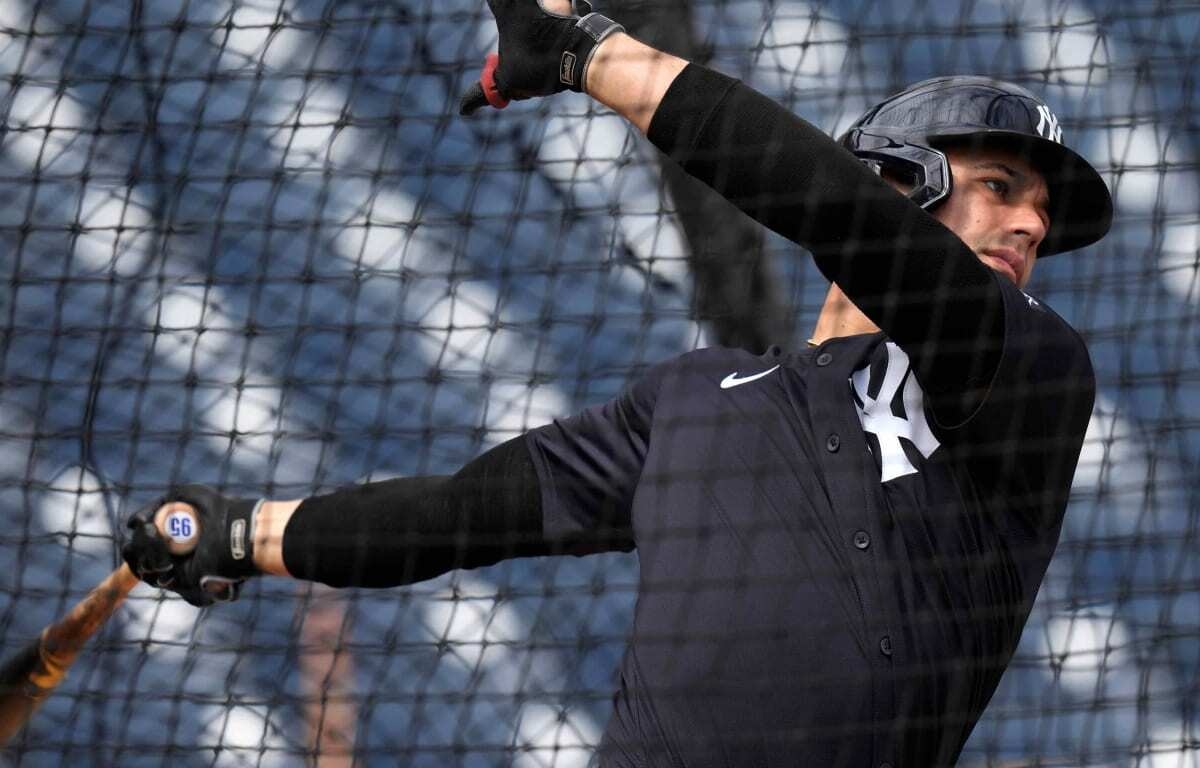
This shift is driven by the “Three True Outcomes” era (home runs, walks and strikeouts). As pitching becomes more specialized with high-velocity relief arms, a player who can hit from both sides of the plate—or play four different positions—becomes a strategic cheat code. They allow a manager to keep the hottest bat in the game regardless of who is on the mound.
The “Utility” Premium
Look at the trajectory of modern contracts. Players who can provide “plug-and-play” versatility are seeing their market value soar. It is no longer enough to be a great catcher; you must be a catcher who doesn’t create a liability in the lineup against a tough lefty.
For players like J.C. Escarra, this versatility is the only way to break the glass ceiling of a backup role. When the starter, such as Austin Wells, hits a slump, the team doesn’t just look for a replacement—they look for a tactical upgrade.
The Psychology of the Late-Career Reinvention
Attempting a fundamental change at 31 is statistically improbable. Most players are focusing on longevity and injury prevention at this stage. However, the psychological drive behind this “radical pivot” is often rooted in a history of resilience.
Escarra’s journey—driving for Uber and substitute teaching to survive the minors—highlights a “survivor mentality.” In sports psychology, this is known as cognitive flexibility: the ability to adapt behavior and thinking to new, changing environments.
Overcoming Muscle Memory
The biggest hurdle isn’t physical strength; it’s neurological. The brain has spent decades carving a path for a left-handed swing. To build a right-handed one requires “unlearning,” a process that can be mentally exhausting. Yet, the reward is a massive increase in leverage during contract negotiations and roster cuts.
Data-Driven Evolution: Using Splits to Force Change
The decision to switch isn’t just a “gut feeling”—it’s backed by analytics. When a player sees a massive discrepancy in their OPS (On-base Plus Slugging) between left-handed and right-handed pitching, the data presents a clear path to improvement.
If a player hits .345 against lefties but struggles against righties, the logical conclusion is to find a way to neutralize that weakness. We are seeing a trend where MLB teams use heat maps and spray charts to suggest mid-career adjustments that were previously unthinkable.
- Platoon Neutralization: Reducing the ” platoon advantage” given to the opposing pitcher.
- Roster Efficiency: Allowing one player to fill two tactical roles, freeing up a spot for another specialist.
- Psychological Warfare: Forcing the opposing manager to change their pitching strategy.
FAQs: The Future of Player Versatility
Can a veteran player actually learn to switch-hit?
It is extremely rare, but not impossible. While most switch-hitters start young, the key is “athletic transference”—using the coordination from other right-handed activities (like throwing or golfing) to accelerate the learning curve.
Why is versatility more important now than in the 1990s?
Modern rosters are more optimized. With tighter salary caps and a greater emphasis on bullpen specialization, every single spot on the 26-man roster must provide maximum value in multiple scenarios.
Does this trend apply to other positions?
Absolutely. We see this in “super-utility” infielders who can play second, short, and third, and in “two-way” players who can both pitch and hit. The trend is moving toward the “Generalist” who possesses “Specialist” skills.