

2,000 retired Google Pixel phones get a second life as a private cloud
Researchers at the University of California, San Diego (UCSD) and Google are deploying a compute cluster using 2,000 retired Pixel Fold smartphones. According to associate professor Ryan Kastner, the project repurposes discarded hardware into a low-carbon computing platform by extracting motherboards and flashing them with Linux to handle university research and grading workloads.
How do 2,000 retired smartphones become a server?
The process begins by stripping the phones of their outer shells. Google is working with a third party to extract the motherboards, as Google engineers warned that keeping batteries in a datacenter environment creates significant fire hazards, according to Kastner.
Once the boards are isolated, the team replaces the Android operating system with Linux. While Android is optimized for handheld use, it includes safety mechanisms to prevent apps from draining batteries or consuming too much memory. These restrictions are unnecessary for server duties and would hinder performance.
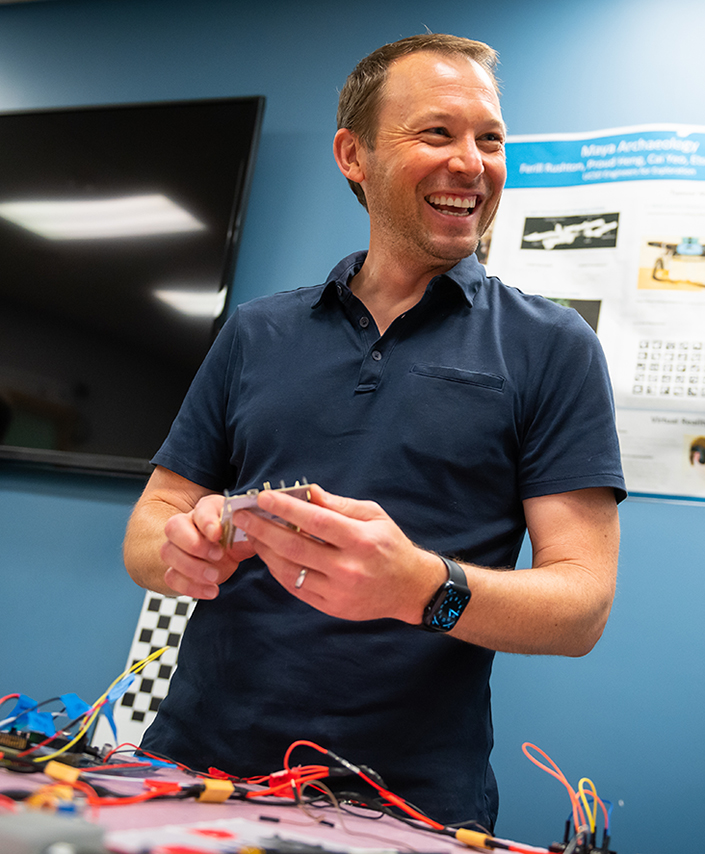
Connectivity is handled through custom printed circuit boards (PCBs). Instead of relying on Wi-Fi or cellular signals, which Kastner says are impractical and insecure at this scale, the PCBs provide both power and wired Ethernet networking to link the devices together.
What is the processing power of a Pixel Fold cluster?
Each unit in the cluster utilizes a Google Tensor G2 processor. This chip features two 2.85 GHz Cortex-X1 cores, two 2.35 GHz Cortex-A78 cores, and four 1.80 GHz Cortex-A55 Arm cores, supported by a Mali-G710 MP7 GPU and 12 GB of system memory.

Early benchmarking using the SPEC suite indicates that a group of 25 to 50 phones can deliver performance comparable to a conventional server. Kastner noted that the single-threaded performance of these mobile chips is often equal to or better than what is found in many-cored datacenter chips.
The primary technical hurdle isn’t raw power, but orchestration. The team is using Kubernetes to manage container deployments across these small clusters of 25-50 devices.
What tasks can a smartphone-based cluster actually handle?
The cluster is designed for “function as a service” workloads—tasks that are sporadic and don’t require high-performance compute. According to a project blog post, the system is ideal for EdTech and research workloads typically run by universities in the cloud.
For example, the researchers found that a moderately sized cluster of just 20 phones could support peak submission rates for a class of over 75 students. This makes the platform a viable alternative for standard grading backends.
Beyond administrative tasks, the cluster will support exploration into parallel computing and systems programming. This approach mirrors the “Beowulf clusters” of the 1990s, where researchers built supercomputers from consumer-grade PCs. The cluster will be available to teams at the San Diego Supercomputing Center.
How does this compare to other unorthodox clusters?
The UCSD project is part of a broader trend of repurposing non-server hardware for high-density computing. It follows a similar path to a project at UC Santa Barbara, which deployed one of the largest Raspberry Pi clusters ever built.
| Project | Hardware Used | Scale |
|---|---|---|
| UCSD/Google | Pixel Fold Motherboards | 2,000 units |
| UC Santa Barbara | Raspberry Pi 3B+ | 1,050 units |
| Gigabyte | Intel Lunar Lake Processors | 40 processors |
While the Raspberry Pi cluster focused on single-board computers, the UCSD project leverages the significantly higher performance of mobile SoC (System on a Chip) architecture. The Gigabyte example takes a different approach, packing 40 notebook processors into a chassis the size of a pizza box.
Frequently Asked Questions
Who conceived the smartphone cluster project?
The project was the brainchild of Jennifer Switzer, a former PhD student at UCSD who is currently a post-doc at Google.
Why not just use the phones as they are?
According to Ryan Kastner, using unmodified phones is impractical and unsafe. The batteries are fire hazards in datacenters, and the Android OS limits the memory and power usage required for server-level tasks.
When will the cluster be fully operational?
The full smartphone cluster is expected to launch this fall.
Can these phones run AI workloads?
While the Tensor G2 chips have integrated tensor processing units (TPUs), Kastner stated that access to some of that specific functionality remains elusive during the current development phase.
What do you think about repurposing old tech for supercomputing? Would you trust a server made of old phones? Let us know in the comments or subscribe to our newsletter for more updates on sustainable tech.