

2026 FIFA World Cup Match Schedule and Fixtures
The New Era of Global Football: Decoding the 2026 Expanded Tournament Landscape
The landscape of international football is undergoing a tectonic shift. With the upcoming 2026 tournament structure featuring an unprecedented number of nations, the traditional “favourites” narrative is being challenged by a surge in competitive parity. As we analyze the sprawling match schedule, it becomes clear that we are moving toward a tournament defined by tactical unpredictability and cross-continental rivalries that were previously rare.
The Rise of the “Middle Class” in International Football
Historically, World Cup cycles were dominated by a handful of elite nations. However, recent qualification data suggests that the gap between top-tier powerhouses and emerging football nations is narrowing rapidly. Countries like Uzbekistan, Curaçao, and Cape Verde are no longer just making up the numbers; they are bringing distinct tactical identities to the pitch.
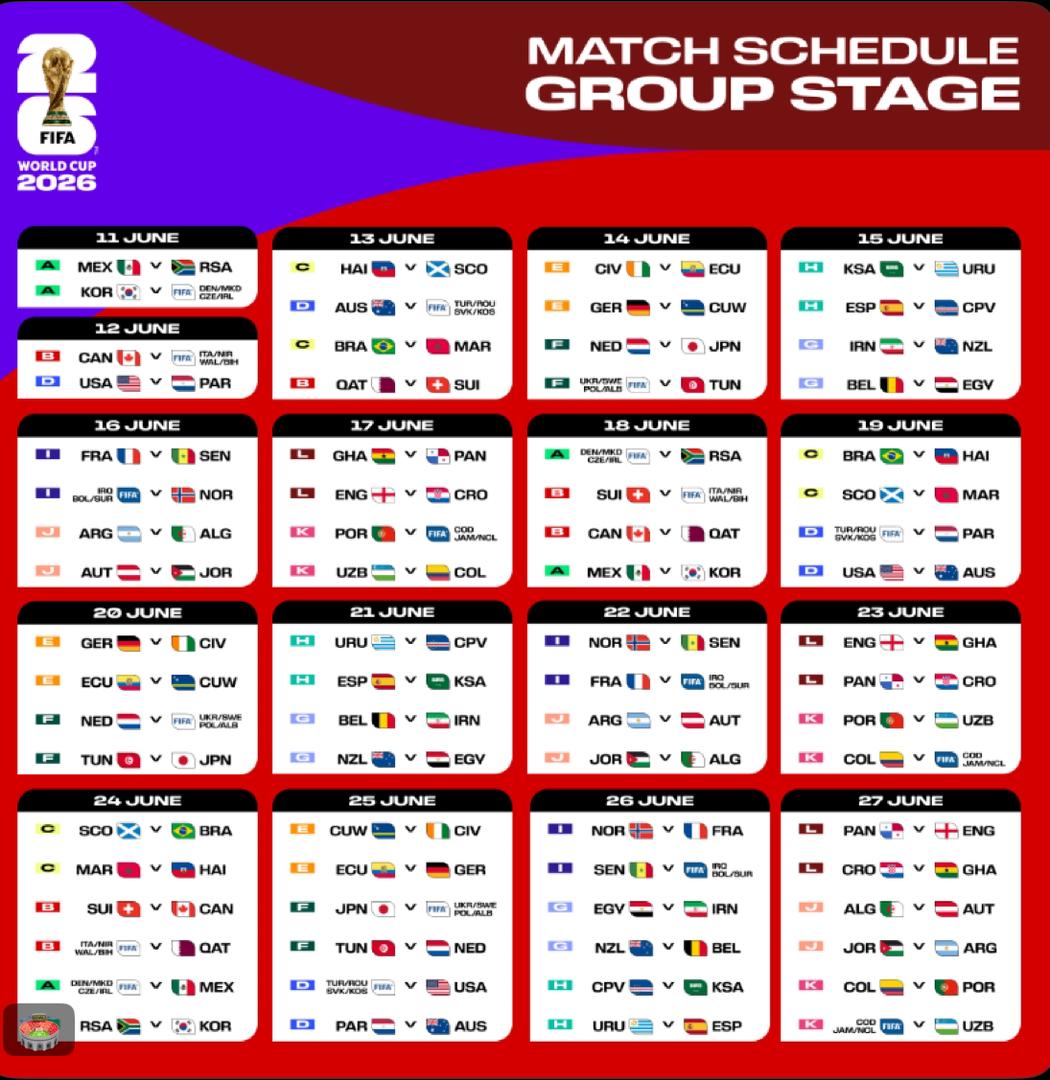
This expansion favors teams with deep tactical discipline over those relying solely on individual star power. As we see in matchups like Portugal vs. DR Kongo or England vs. Croatia, the pressure to maintain consistency across a longer, more grueling group stage will test the squad depth of every participating nation.
Tactical Evolution: Why Versatility Trumps Tradition
Modern football is no longer about adhering to a single philosophy. The most successful teams in the 2026 cycle are those displaying “tactical fluidity”—the ability to switch formations mid-game to counter specific opponents. Whether it is Germany’s precision against Curaçao or Brazil’s flair tested by Haiti, the ability to adapt to varying styles of play is the new gold standard.
The Impact of Cross-Continental Matchups
The 2026 format increases the frequency of inter-confederation play. Matches like Saudi Arabia vs. Uruguay or Japan vs. Sweden provide unique challenges for players who are accustomed to regional playing styles. This exposure is forcing coaching staffs to broaden their scouting networks, utilizing big data and AI-driven performance analysis to prepare for opponents they rarely face in standard international windows.
Navigating the Path to the Final
The expanded knockout stage—starting from the Round of 32—introduces a new psychological layer to the tournament. The pressure of a single-elimination match against a lower-seeded team can turn the tide of a favorite’s campaign in an instant. Managing player fatigue over the extended schedule will be the ultimate differentiator for the eventual champion.
Frequently Asked Questions (FAQ)
- How does the expanded tournament format affect smaller nations? It provides more opportunities for exposure and competitive experience, allowing emerging programs to build long-term infrastructure.
- Which tactical trend will dominate 2026? Defensive transition speed and high-pressing systems are expected to be the most critical factors in neutralizing counter-attacking threats.
- Why is squad depth more important now? With more matches played in a shorter timeframe, the ability to rotate players without losing tactical cohesion is essential to avoid burnout and injury.
Join the Conversation
As the tournament draws closer, which underdog are you keeping an eye on? Will the traditional giants hold their ground, or are we on the verge of a historic shift in footballing power? Share your predictions in the comments below, and don’t forget to subscribe to our newsletter for deep-dive tactical breakdowns of every group stage match.