
2026 Medicare Trustees Report: Part A Depletion and Rising Spending Trends
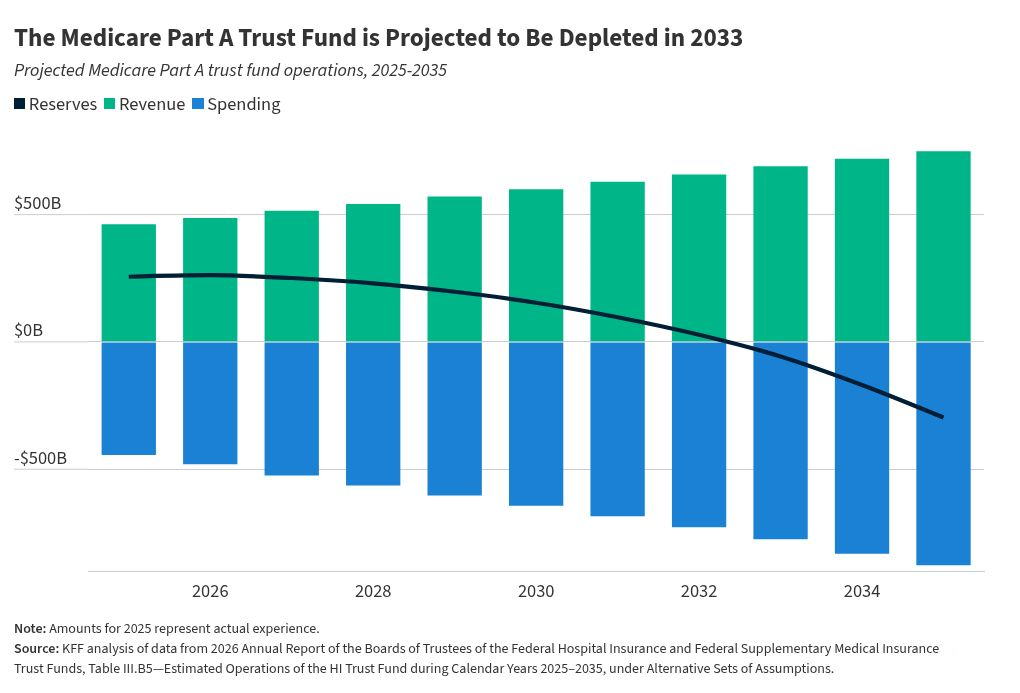
The Medicare Part A trust fund is projected to be depleted in the second quarter of 2033, according to the June 9, 2026, annual report from the Medicare Trustees. This depletion date arrives one quarter earlier than the previous year’s projection, primarily due to lower estimated Social Security tax revenues resulting from changes in the 2025 budget reconciliation bill (H.R. 1).
Medicare benefit payments reached $1.2 trillion in 2025, nearly double the $666 billion spent a decade earlier, the report states. Spending on Part B services, which include physician and outpatient services, now accounts for 48% of total benefit spending.
Why is the Medicare Part A trust fund depleting faster?
The Medicare Trustees attribute the accelerated depletion date to updated estimates of Social Security tax revenue. These revenues, a primary funding source for Part A, are projected to be lower than previously expected because of the 2025 budget reconciliation bill (H.R. 1).
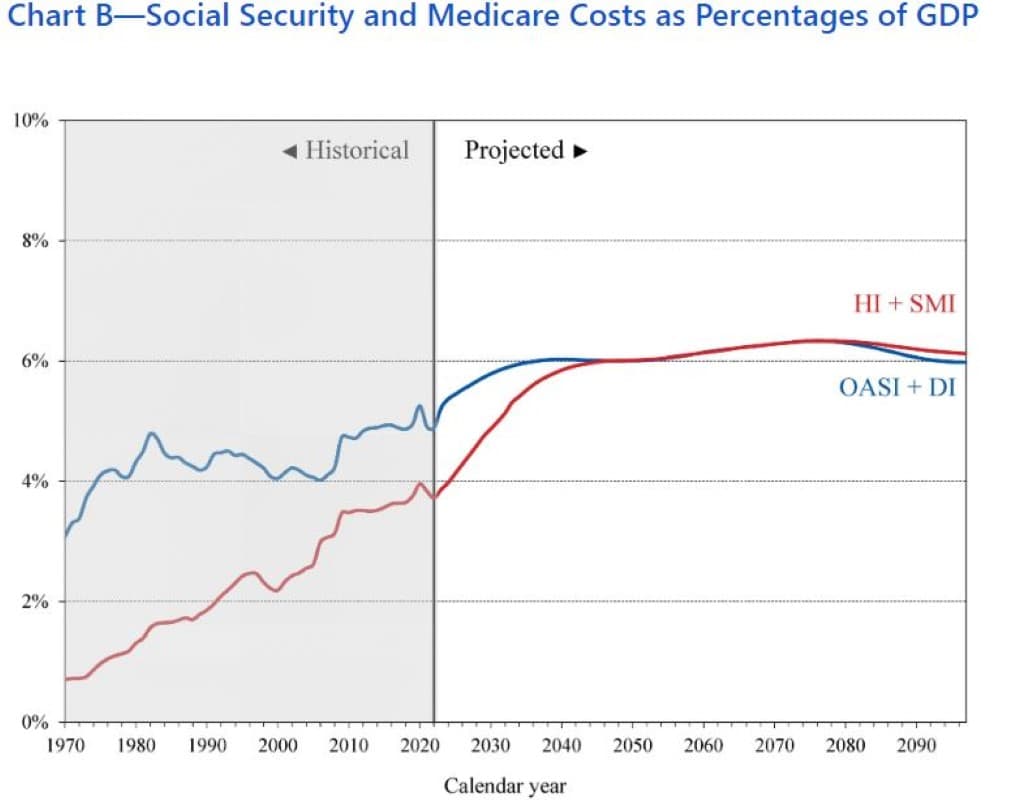
If the reserves are fully depleted, the Trustees warn that Medicare may not have sufficient funds to cover Part A benefit spending for a full year. This scenario could necessitate additional revenues or reductions in payments to providers and benefit spending.
How is Medicare spending shifting between programs?
Spending on Part A services has fallen as a share of total benefits, dropping from 43% in 2016 to 37% in 2025. The Trustees state this decline reflects a shift toward outpatient settings and increased costs for physician-administered drugs covered under Part B.

Medicare Advantage spending reached $534 billion in 2025, representing 53% of total Part A and Part B spending. Enrollment in these plans rose from 33% to 54% of eligible beneficiaries between 2016 and 2025.
The report notes that Medicare pays an estimated 14% more per enrollee in Medicare Advantage than it would in traditional Medicare. This gap resulted in $76 billion in additional spending for 2026, driven by favorable selection and higher coding intensity. Payments to Medicare Advantage plans are projected to reach $1.3 trillion by 2035.
What is driving the increase in Part D prescription drug costs?
Part D spending is projected to nearly double from $181 billion in 2025 to $346 billion by 2035. This represents an average annual growth rate of 6.7%, a significant increase from the 4.8% growth rate projected last year.
The Trustees cite the increased use of GLP-1s and other high-cost specialty drugs as primary drivers. Other contributing factors include the pharmacy price concessions policy and the exemption of more orphan drugs from price negotiations under H.R. 1.
Additionally, a redesigned Part D benefit has increased federal subsidies and shifted more liability onto plans. These increases are partially offset by inflation rebates and drug price negotiations established by the Inflation Reduction Act.
How will these trends affect beneficiary costs?
The Trustees project that monthly Part B premiums will rise to $210 in 2027, up from $203 in 2026. This follows a 9.7% increase between 2025 and 2026, when premiums rose from $185 to $203.

Other out-of-pocket costs are also expected to climb in 2027. The Part A hospital deductible is projected to increase to $1,788 from $1,736, while the Part D deductible is expected to rise to $292 from $283.
The report suggests these costs may become a growing burden for beneficiaries if income growth does not keep pace with premium and deductible increases.
Frequently Asked Questions
When is the Medicare Part A trust fund projected to be depleted?
The Medicare Trustees project the reserves will be depleted in the second quarter of 2033.
What is causing the increase in Part D spending projections?
Higher spending is driven by the increased use of GLP-1s and high-cost specialty drugs, changes in orphan drug negotiation exemptions under H.R. 1, and a redesigned benefit that increased federal subsidies.
How much more does Medicare pay for Medicare Advantage enrollees?
Medicare pays an estimated 14% more per enrollee in Medicare Advantage than it would for the same beneficiary in traditional Medicare.
How do you feel these projected premium increases will impact your healthcare planning?