
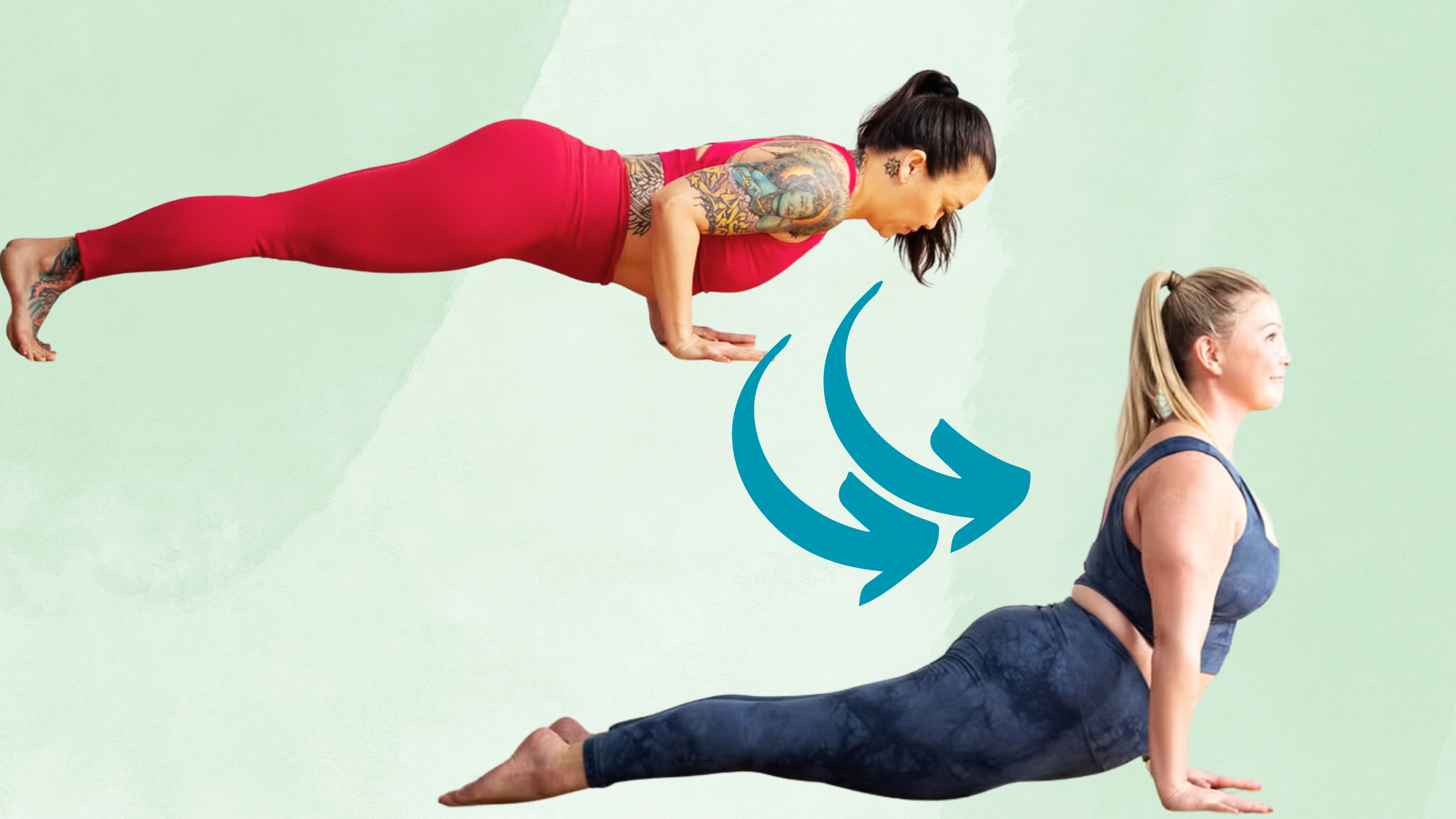
4 Ways to Transition From Chaturanga to Upward-Facing Dog
In the rhythm of a vinyasa practice, the transition from Chaturanga to Upward-Facing Dog is a common yet notoriously difficult movement. While often performed quickly in class, this shift requires a complex coordination of weight distribution and foot positioning that many practitioners find baffling.
The transition is frequently marked by common physical challenges, such as wobbly arms, a core that sags toward the mat, or uncomfortable friction on the tops of the big toes. Understanding how to navigate this space with intention can help turn a clunky movement into a more sustainable and controlled part of your flow.
Refining Your Approach
Because Upward-Facing Dog is a significant backbend, it is beneficial to prepare the body with gentler movements like Cat-Cow or Baby Cobra. Stretching the feet beforehand can also help prevent the discomfort often associated with flipping the toes.
While many group classes maintain a pace of one breath per pose, you have the agency to move more slowly. Taking extra time to explore these transitions—even if it means lagging slightly behind the rest of the room—can allow you to find the technique that best suits your body.
Four Techniques for Transitioning
1. Lower Your Knees: By placing your knees on the mat, you shift your weight away from the toes, making it easier to untuck them. A blanket can be added under the knees for extra support, and you may choose to keep the knees grounded or lift them once you reach the final pose.
2. Flip One Foot at a Time: This asymmetrical approach often feels more natural than moving both feet at once. By lifting and flipping one foot, then the other, you can maintain better balance, though it is helpful to alternate which foot you lead with to maintain a sense of equilibrium.
3. Keep Toes Tucked: If the traditional flip feels too disruptive, you have the option to keep your toes tucked throughout the movement. While this may intensify the arch in your lower back, you can mitigate this by lifting your pelvis higher or keeping your elbows slightly bent.
4. Roll Over Both Feet: This is the most symmetrical method but requires significant core and arm strength to carry the body forward. If you find your toes catching on the mat, applying athletic tape or Band-aids to the tops of your big toes can help manage the friction while you build the necessary control.
Looking Ahead
As you continue to refine these transitions, you may find that your strength and fluidity improve with consistent practice. A possible next step for those struggling with the movement is to incorporate targeted exercises, such as using a block between the ankles, to build the muscle memory required for a more seamless transition.
Frequently Asked Questions
Is it okay to move slower than the rest of the class during transitions?
Yes. You are encouraged to move at a pace that allows you to explore the transitions that work best for your body, even if it means you are a few beats behind the group.
What should I do if my lower back hurts when keeping my toes tucked?
If keeping your toes tucked intensifies the backbend to an uncomfortable degree, you can lift your pelvis higher or keep your elbows slightly bent to lessen the strain.
How can I prevent mat burn on my big toes?
Friction is common when rolling over the feet. You may find it helpful to tape your big toes with athletic tape or Band-aids while you are still learning the mechanics of the transition.
Which of these transition methods feels most supportive for your current practice?