
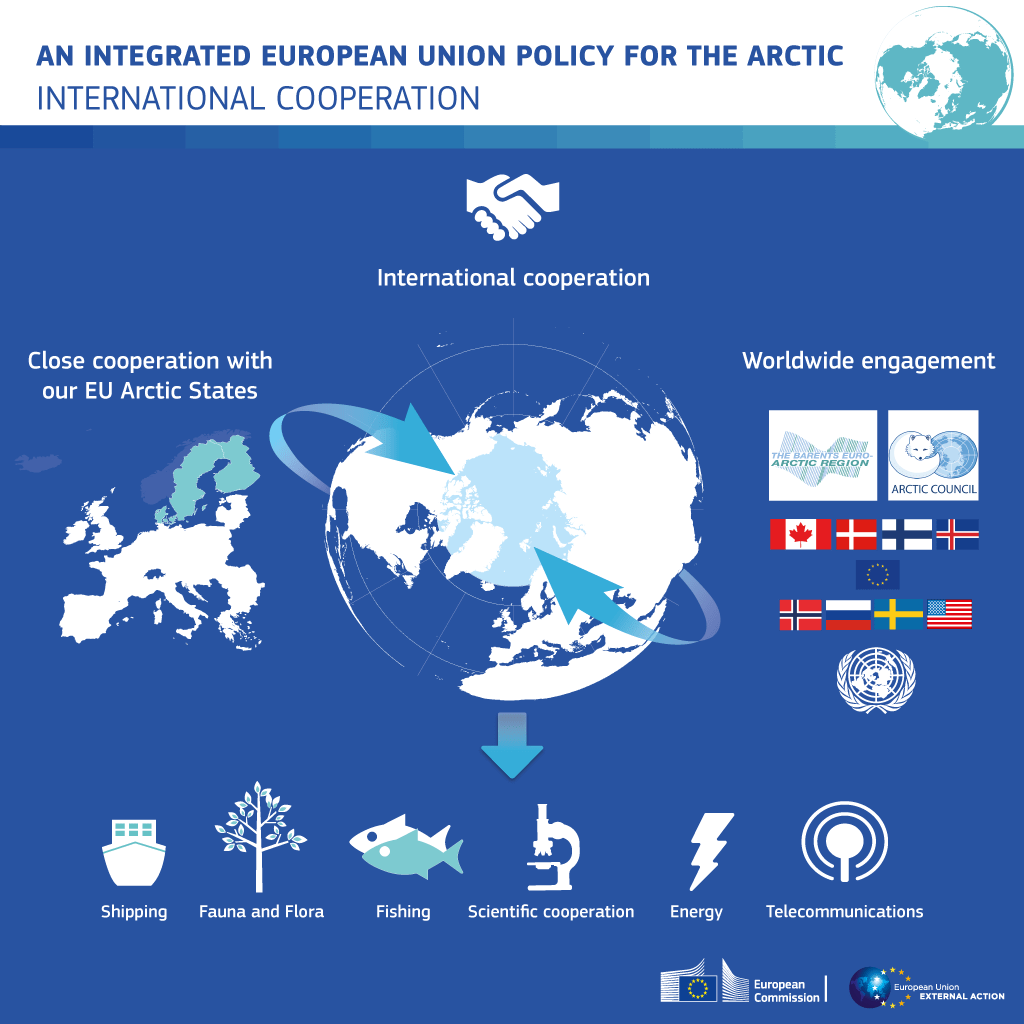
a case for the EU’s revised Arctic policy
The geopolitical landscape of the High North is undergoing a significant transformation, prompting a critical reassessment of how international entities exert influence in the region. A new policy brief, published in 2026, examines the European Union’s strategic pivot as it seeks to redefine its Arctic priorities and establish a more robust role for itself in a changing institutional environment.
Redefining Regional Influence
At the heart of this shift is the EU’s desire to solidify its legitimacy as a key cooperation partner. The analysis by Kirsti Methi and Dorothea Wehrmann highlights that the organization faces inherent tensions between different models of cooperation and the external expectations placed upon its Arctic agenda.
The EU’s current strategy involves a delicate balancing act. It must navigate these internal and external pressures to ensure it is not excluded from critical policy negotiations that hold significant weight for its own short-term, mid-term, and long-term priorities.
The Path Forward
As the EU moves to redesign its institutional partnerships, a possible next step involves a stronger emphasis on the human dimension of security. This approach could serve as a primary mechanism to strengthen the bloc’s standing as an essential partner in the Arctic.

Analysts expect that if the EU successfully navigates these tensions, it may effectively fill the existing governance gap. However, the organization’s success will likely depend on its ability to reconcile its stated ambitions with the complex, evolving expectations of its international counterparts. You can review the full analysis via the Open Access documentation.
Frequently Asked Questions
Why is the EU rethinking its Arctic policy?
The EU is seeking to strengthen its role and legitimacy in the Arctic to ensure it is not excluded from policy negotiations that are critical to its own short-term, mid-term, and long-term priorities.
What challenges does the EU face in the region?
The EU faces tensions inherent in different types of cooperation approaches, as well as the need to manage external expectations regarding its priorities while operating within an institutional vacuum left by the Arctic Council.
How does the EU plan to improve its legitimacy?
The EU aims to bolster its legitimacy as a cooperation partner by emphasizing the human dimension of security in the Arctic and redesigning its partnerships and established institutional policies.
How do you believe prioritizing the human dimension of security will alter the balance of power in the Arctic region?