
A lot of ‘recycled’ plastic is being burned overseas – and causing widespread pollution linked to health problems
By 2050, the world is predicted to generate an annual volume of plastic waste comparable to a pile the size of Manhattan and taller than one and a half Empire State Buildings. While recycling is often viewed as the primary solution, the majority of this waste currently ends up in landfills or is shipped overseas.
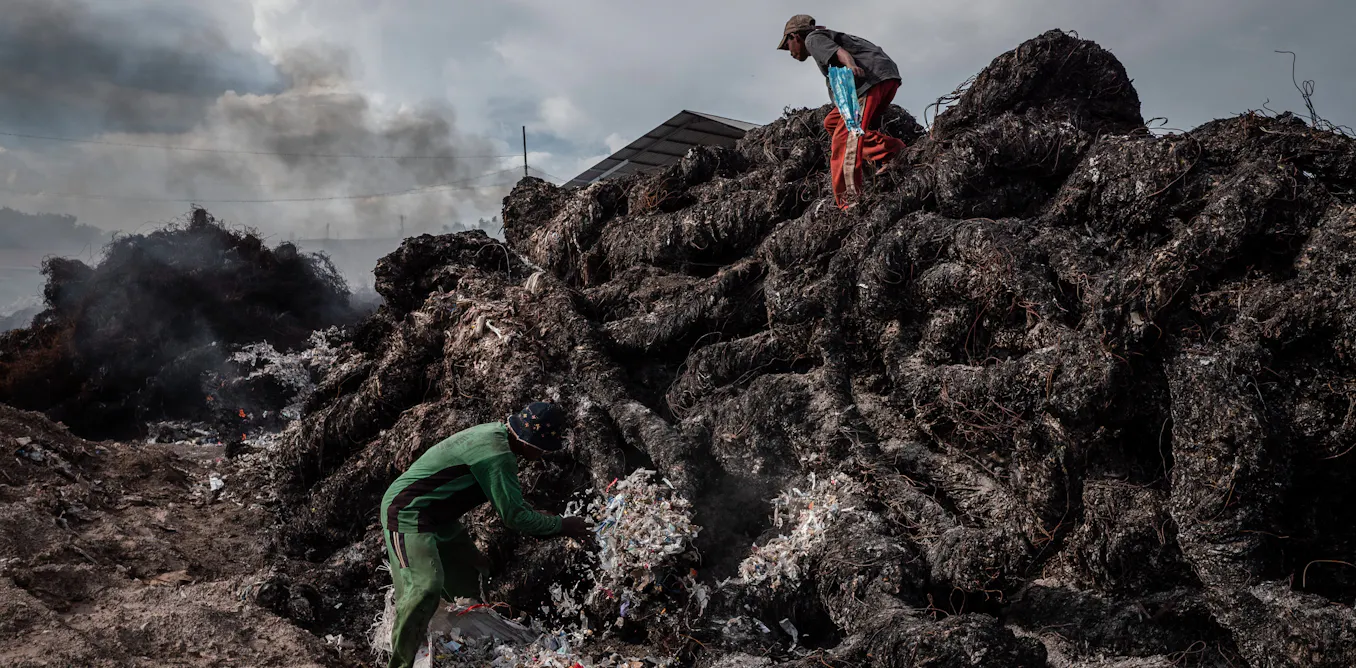
Recent analysis reveals that shipping plastic waste to lower- and middle-income countries often leads to a significant increase in toxic air pollution. In these regions, open burning is a common method for managing excess waste, both intentionally and through spontaneous combustion at dump sites.
The Health Toll of Open Burning
Between 40% and 65% of total municipal solid waste is openly burned in low- and middle-income countries. This is largely driven by the fact that 2 billion people worldwide lack access to municipal solid waste collection.
When plastic burns, it releases dangerous gases including carbon monoxide, styrene gas, and hydrogen cyanide. It also emits persistent organic pollutants such as dioxins and polycyclic aromatic hydrocarbons.
These pollutants are linked to severe health risks, including cardiovascular and respiratory diseases, cancer, and neurological or reproductive disorders. Toxic ash can contaminate groundwater and soil with heavy metals, increasing human exposure through food and water.
Did You Know? Between 1992 and 2016, China’s plastic waste imports accounted for 45% of all global imports before the country stopped importing plastic waste in 2018.
Shifting Trade Routes and Air Quality
The global plastic waste trade has shifted significantly since China’s 2018 ban. In 2024, the United Nations reported 9.34 million metric tons of plastic waste imports globally, with much of the flow moving toward Turkey and Southeast Asia.
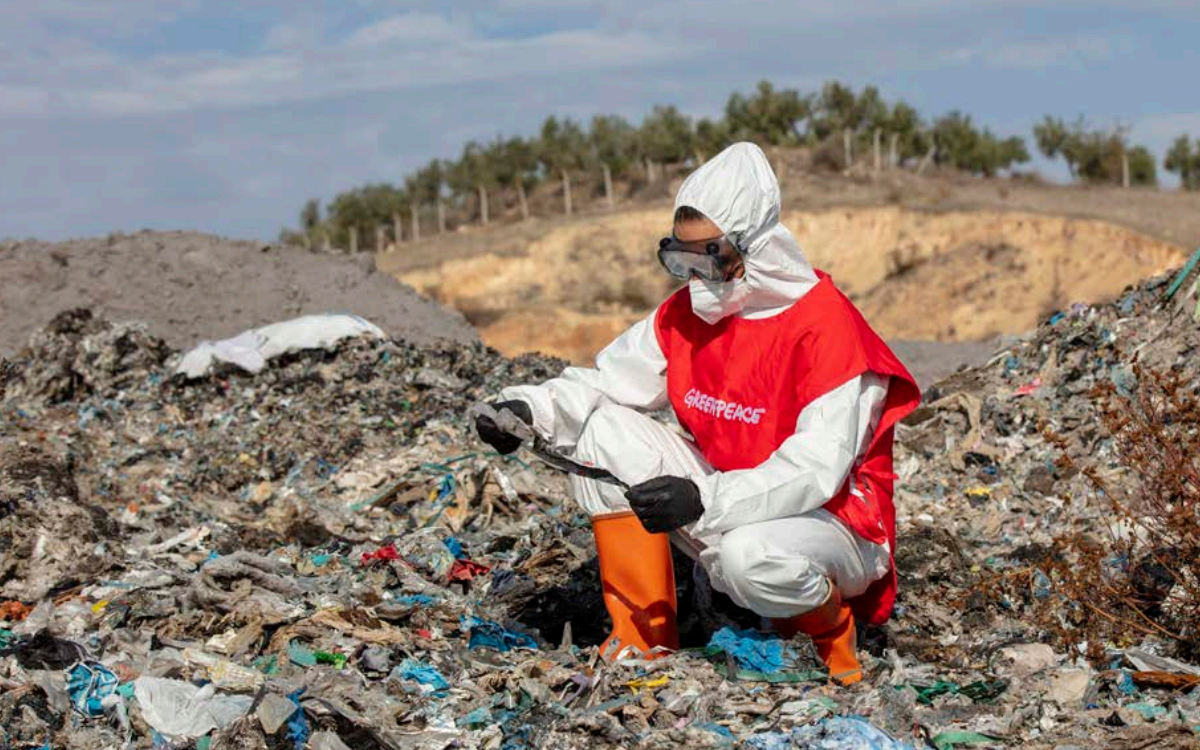
Indonesia became a net importer of plastic waste in 2018, receiving materials primarily from North America, Australia, and Western Europe. By 2020, estimates from the Indonesian government and the World Economic Forum suggested that 48% of the nation’s plastic waste was openly burned.
Data from satellite observations and cargo ship tracking show that particulate matter air pollution increased by an average of 3.3% at large open dump sites in Indonesia following the China ban. This increase corresponds to a higher mortality risk from lung cancer (1.9%), lower respiratory infections (3.5%), and chronic obstructive pulmonary disease (1.5%).
Expert Insight: Samantha Carter notes that the shift in waste trade highlights a critical tension between developed nations’ disposal needs and the environmental health of importing countries. The reliance on “recycling” exports may effectively relocate pollution rather than eliminating it, creating a cycle of health crises in regions lacking waste infrastructure.
New Global Constraints
Several nations are now implementing stricter controls. Indonesia restricted nonhazardous waste imports to 15 ports in 2021 and banned plastic waste imports entirely in 2025.
Malaysia also implemented a ban in mid-2025, permitting plastic waste only from countries that have ratified the Basel Convention. The United States has never ratified this treaty.
The European Union passed a regulation in mid-2024 that prohibits exporting plastic waste to non-OECD wealthy countries from November 2026 until at least May 2029. Meanwhile, negotiations for a legally binding international treaty on plastic waste have stalled since they began in 2022.
The Challenge Within the United States
Domestic recycling rates in the U.S. Remain low, with only 5% to 6% of plastic waste recycled as of 2021. Capacity is a major hurdle; the Association of Plastic Recyclers estimates that current facilities could only increase recycling rates to between 7% and 9%.
To address this, seven states—Maine, Oregon, California, Colorado, Minnesota, Washington, and Maryland—have enacted extended producer responsibility (EPR) laws. These laws may raise the cost of producing non-recyclable products to fund better waste programs.
In Colorado, the first payments of EPR fees to the Department of Public Health and Environment are scheduled to begin in mid-2026. Experts suggest that a combination of decreased plastic use, packaging reuse, and harmonized design standards may be necessary to reduce the need for new plastics.
What May Happen Next
As more countries implement import bans, the U.S. And other exporting nations could face increased pressure to develop domestic reclamation capacity. If illegal shipments and contaminated paper imports persist, the effectiveness of bans in Southeast Asia may be limited.

The implementation of EPR laws across more states is likely to shift the financial burden of waste to producers, which could potentially incentivize the creation of more recyclable packaging. The global health impact may depend on whether nations can move toward a system of packaging reuse and return.
Frequently Asked Questions
Why is open burning so prevalent in low- and middle-income countries?
Open burning occurs because approximately 2 billion people worldwide lack municipal solid waste collection. Burning is often used intentionally to manage waste or occurs unintentionally when organic waste in dump sites spontaneously combusts.
What are the specific health risks associated with burning plastic?
Burning plastic releases toxic gases like hydrogen cyanide and carbon monoxide, as well as dioxins. These are linked to cancer, respiratory and cardiovascular diseases, and neurological and reproductive disorders.
Which U.S. States have passed extended producer responsibility laws?
As of the provided data, seven states have enacted these laws: Maine, Oregon, California, Colorado, Minnesota, Washington, and Maryland.
How should governments balance the need for plastic utility with the risks of global pollution?