

A Turquoise Tint for the Black Sea
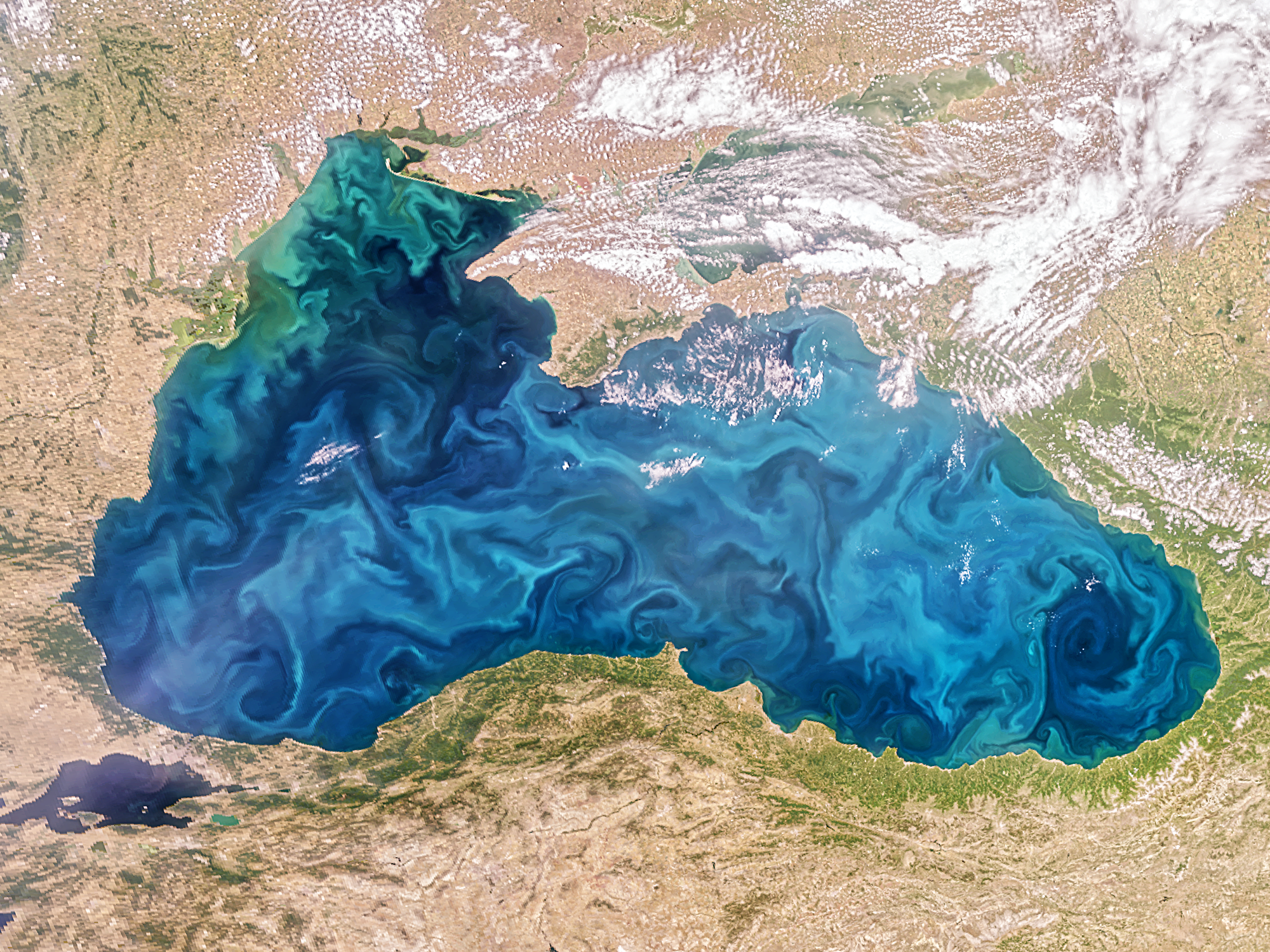
NASA’s PACE satellite and International Space Station imagery confirm that coccolithophore blooms turn the Black Sea turquoise during late spring and early summer. According to NASA Earth Observatory, these calcium carbonate-plated phytoplankton are critical to the ocean’s carbon cycle, sequestering carbon that eventually sinks to the seafloor.
Why does the Black Sea turn turquoise?
The shift in water color results from the dominance of coccolithophores, a specific type of phytoplankton. These organisms are covered in calcium carbonate plates that reflect light, giving the surface a milky-blue or turquoise appearance, according to NASA Earth Observatory.
This phenomenon typically peaks in late spring and early summer. In contrast, diatoms—microscopic algae with silica shells—often prevail during other seasons. Unlike coccolithophores, diatoms tend to darken the water rather than brighten it.
How do PACE satellites track plankton blooms?
NASA uses the Ocean Color Instrument (OCI) on the PACE (Plankton, Aerosol, Cloud, ocean Ecosystem) satellite to monitor these changes. On June 22, 2026, the OCI captured the swirling turquoise waters of the Black Sea, providing a high-resolution look at biological activity from orbit.

This satellite data is often complemented by human observation. An astronaut aboard the International Space Station photographed the Bosphorus strait on May 27, 2026, using a Nikon Z9 camera. The image showed blooming phytoplankton tracing currents on both sides of the waterway connecting the Black Sea to the Sea of Marmara.
Comparison: Satellite vs. Astronaut Imaging
| Feature | PACE Satellite (OCI) | ISS Astronaut Photo |
|---|---|---|
| Primary Tool | Ocean Color Instrument | Nikon Z9 Digital Camera |
| Data Type | Spectral ocean color data | High-resolution visual imagery |
| Focus | Global ecosystem patterns | Localized current and bloom tracing |
What happens to the carbon captured by phytoplankton?
These blooms serve as a mechanism for the ocean’s carbon cycle. Coccolithophores absorb carbon from the atmosphere and surface waters. According to NASA, when these organisms die, a portion of that captured carbon sinks to the seafloor.
Once it reaches the bottom, the carbon can remain stored for long periods. This process makes the tracking of blooms essential for scientists studying how the ocean regulates atmospheric carbon levels.
How will remote sensing change marine research?
The ability to detect blooms from space reduces the reliance on direct water sampling. NASA Earth Observatory notes that remote sensing is particularly useful in regions where physical sampling is limited or logistically difficult.
Future trends in marine biology will likely see an increase in “autonomous monitoring.” By combining PACE satellite data with AI-driven analysis, researchers can predict bloom dynamics and their impact on carbon sequestration without needing to deploy ships for every observation.
Frequently Asked Questions
Is the turquoise water in the Black Sea harmful?
The turquoise color is caused by coccolithophores, which are a natural part of the marine ecosystem and contribute to the carbon cycle, unlike some harmful algal blooms (HABs).
What is the difference between coccolithophores and diatoms?
Coccolithophores have calcium carbonate plates that brighten the water to a milky-blue. Diatoms have silica shells and tend to darken the water.
How does NASA capture these images?
NASA uses a combination of the PACE satellite’s Ocean Color Instrument and high-resolution photography from astronauts on the International Space Station.
Want to stay updated on the latest Earth science discoveries?
Join the conversation in the comments below or subscribe to our newsletter for weekly insights into how satellite technology is uncovering the secrets of our planet.