

AI breakthrough accelerates molecular simulations for drug discovery
A new AI model called TITO, developed by researchers at Chalmers University of Technology and the University of Gothenburg, predicts molecular movements 10,000 times faster than conventional simulations. According to a study published in Science Advances, this technology accelerates drug discovery by predicting how molecules evolve over long timescales without requiring the step-by-step numerical calculations that typically slow the process.
How does TITO speed up the drug discovery process?
Traditional molecular dynamics simulations calculate forces between atoms in increments of one femtosecond (10⁻¹⁵ seconds). Because drug development involves processes that happen over much longer periods, researchers must run billions of these tiny steps. This makes the process computationally expensive and slow.

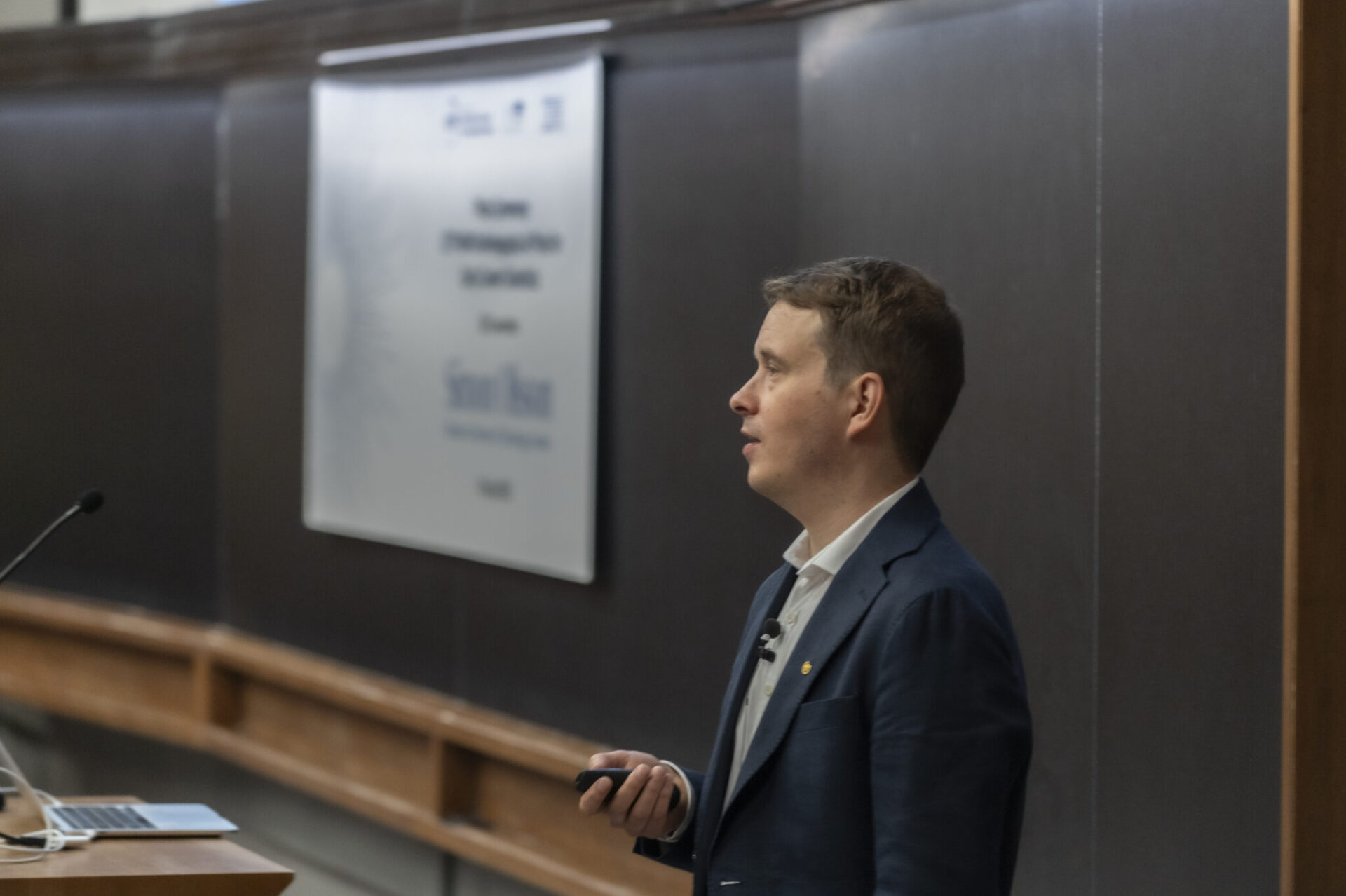
The TITO (Transferable Implicit Transfer Operators) model bypasses these numerical calculations. Instead, it uses a deep generative modelling framework to learn the statistical rules of molecular motion. Simon Olsson, a research leader and Associate Professor at Chalmers University of Technology and the University of Gothenburg, describes the results as a way to jump between scenes in “molecular movies” rather than watching every individual frame.
What makes this AI model different from existing simulations?
Most AI tools in this field either speed up individual calculation steps or generate static molecular structures. TITO differs by learning the underlying dynamics over extended time scales. It identifies not only the shapes molecules take but also the pathways and speed of their transitions.
The model demonstrates a high capacity for generalization. According to Olsson, TITO can predict the behavior of molecules it never encountered during its training phase. It achieves this by learning general rules of physics rather than memorizing specific molecular systems.
The researchers found that the model could observe molecular behavior over tens of nanoseconds and then predict changes occurring over a period 1,000 times longer. This ability to forecast the “molecular future” allows researchers to identify properties of molecules before they are even tested in a lab.
How was the TITO model validated for accuracy?
The research team tested the AI on more than 12,500 organic molecules containing carbon, nitrogen, hydrogen, and oxygen. They also included over 1,000 short peptides, which are amino acid chains that form proteins.
To ensure the AI didn’t hallucinate patterns, the team used extensive post-processing simulations. They compared TITO’s predictions against standard numerical algorithms. Olsson stated that the results were consistent, confirming that the AI’s “fast-forward” predictions still adhere to the laws of physics.
Why is this significant for the pharmaceutical industry?
Developing a new medicine typically takes over a decade from the initial concept to patient delivery. A massive portion of this time and cost is spent in the early screening stages, where thousands of molecules are tested, but only a small fraction move forward.
Juan Viguera Diez, the study’s lead author and an industrial doctoral student at AstraZeneca, says the industry is seeking simulations that more accurately reflect reality to speed up this pipeline. By reducing the time needed to identify promising drug candidates, TITO could lower the cost of early-stage research.
While the current model was tested on small molecular systems in simplified solvents at specific temperatures, the team is now expanding the technology to handle more complex, realistic biological systems.
Comparing Traditional Simulations vs. TITO AI
| Feature | Traditional Molecular Dynamics | TITO AI Model |
|---|---|---|
| Calculation Method | Step-by-step numerical forces | Deep generative statistical rules |
| Time Step | ~1 femtosecond | Long-scale temporal jumps |
| Processing Speed | Baseline | >10,000x faster |
| Capability | High precision, high cost | Rapid screening, transferable |
Frequently Asked Questions
What is the TITO AI model?
TITO (Transferable Implicit Transfer Operators) is a deep generative AI framework that learns the rules of molecular motion to predict how atoms rearrange over time without needing slow, step-by-step calculations.
How much faster is TITO than old methods?
According to the researchers from Chalmers University of Technology, the model is more than 10,000 times faster than conventional molecular dynamics simulations.
Can TITO predict molecules it hasn’t seen before?
Yes. Because it learns general physical rules rather than memorizing specific data, it can be applied to new molecules that were not part of its training set.
Will this make drugs cheaper to produce?
While it doesn’t change manufacturing costs, it can reduce the time and financial resources spent during the early identification and testing stages of drug development.
Want to stay updated on the intersection of AI and biotechnology? Share your thoughts in the comments below or subscribe to our newsletter for the latest research breakthroughs.