

America at 250: What the Country Means to Its People
The Great Re-Evaluation: Mapping the Future of American Identity
As the United States crosses the threshold of its 250th anniversary, the national conversation is shifting from a shared narrative of progress to a fragmented dialogue about survival, identity, and the very definition of liberty. From the quiet RV parks of Arizona to the bustling corridors of state senates, a profound re-evaluation of the “American Dream” is underway.
This isn’t just a political disagreement; it is a fundamental divergence in how citizens perceive their relationship with the state and each other. To understand where the country is heading, we must look at the emerging trends in constitutional interpretation, generational labor shifts, and the enduring legacy of indigenous sovereignty.
The Constitutional Tug-of-War: Rights vs. Governance
One of the most volatile trends in the modern American landscape is the shift toward “Constitutional Originalism” as a tool for resistance. We are seeing a growing segment of the population view the Bill of Rights not just as a legal framework, but as a defensive shield against perceived government overreach.
The tension between individual liberties—specifically the Second Amendment—and collective security is reaching a boiling point. Future trends suggest a move toward “hyper-localism,” where citizens prioritize the laws and norms of their immediate community over federal mandates.
The Rise of the “Sovereign Mindset”
This trend manifests as a desire to return to the Founding Fathers’ vision of limited government. When citizens feel that the system no longer protects their core values, they often pivot toward a mindset of self-reliance and autonomy. This could lead to increased friction between state and federal authorities, particularly regarding land use, firearm regulations, and digital privacy.
The Labor Paradox: From Grit to the Gig Economy
There is a palpable friction between the “immigrant work ethic” of previous generations and the digital-native approach of Gen Z and Alpha. The traditional narrative of “working 16 hours a day” to achieve stability is being replaced by a quest for “work-life integration” and passive income.
This isn’t necessarily a decline in ambition, but a shift in how value is perceived. While older generations value physical labor and tangible output, younger generations are navigating a landscape dominated by AI, remote work, and the “passion economy.”
The Automation Anxiety
As AI continues to permeate the workforce, the “physical work” once championed by early settlers and immigrants is being automated. The future trend here is a “Resurgence of Craft.” We are likely to see a premium placed on human-made goods and services—artisanal labor will become a luxury status symbol as digital saturation peaks.
Beyond the 250-Year Lens: The Long View of Sovereignty
While much of the national discourse focuses on the 250 years since the founding of the U.S., there is a growing intellectual and political movement to acknowledge the “long view.” This perspective, championed by Indigenous communities, views the United States as a relatively brief chapter in a much older history.
The trend toward “decolonizing” the American narrative is moving from academia into mainstream policy. We are seeing an increase in the fight for tribal sovereignty, land repatriation, and the integration of indigenous ecological knowledge into climate change strategies.
This shift suggests that the future of American identity will not be a “melting pot” that erases origin, but a “mosaic” that recognizes overlapping layers of sovereignty and history. For many, the survival of their culture is not tied to the survival of the federal government, but to the land itself.
Exceptionalism in a Globalized Era
The belief that America is the “land of opportunity” remains a powerful psychological driver, but it is being tested by economic volatility. The future of American Exceptionalism will likely depend on whether the country can reconcile its identity as a global superpower with the internal need for social cohesion.
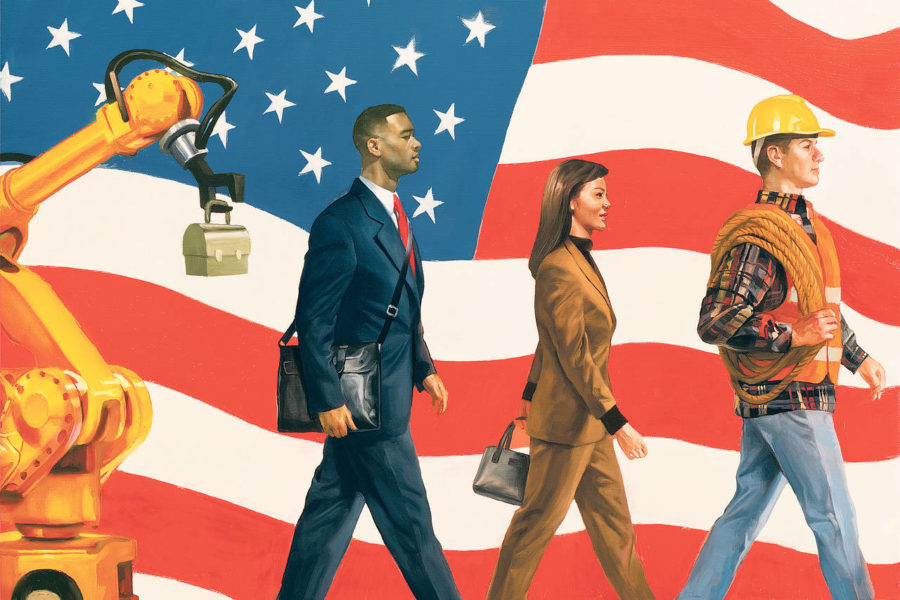
We are moving toward a “Multi-Speed America,” where some regions embrace globalist, tech-driven urbanism while others double down on traditionalist, agrarian values. The challenge for the next century will be maintaining a single national identity amidst these diverging realities.
Frequently Asked Questions
How is the American Dream changing for younger generations?
The focus has shifted from homeownership and lifelong corporate loyalty to flexibility, mental health, and the pursuit of purpose-driven work.
What is the “long view” perspective in American history?
It is the understanding that Indigenous peoples have inhabited this land for over 10,000 years, making the 250-year history of the U.S. A small fraction of the region’s total human experience.
Why is there increased tension regarding the Constitution?
Different groups interpret the Constitution either as a “living document” that evolves with society or as a strict set of rules that must be followed exactly as written to prevent tyranny.
Join the Conversation
Do you believe the American Dream is evolving or disappearing? How do you balance your individual rights with the needs of the community?
Share your thoughts in the comments below or subscribe to our newsletter for more deep dives into the future of society.