
Anci Lombardia and BCC Federation Partner to Fight Banking Desertification
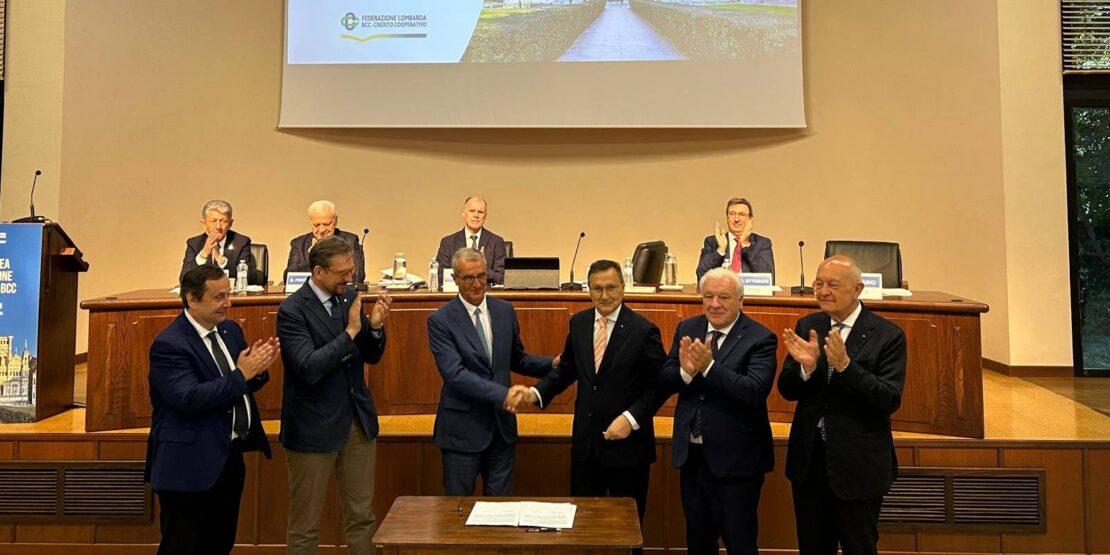
Anci Lombardia and the Federazione Lombarda delle Banche di Credito Cooperativo (BCC) signed a memorandum of understanding on June 13 in Certosa di Pavia to combat banking desertification and support local financial services. The agreement, signed by presidents Mauro Guerra and Alessandro Azzi, establishes a framework for cooperation to maintain essential credit services in small municipalities and peripheral areas across the region.
Did You Know? In the Lombardy region, the credit cooperative system serves as the sole banking presence in 165 different municipalities, according to data provided by the Federazione Lombarda delle BCC.
Addressing the decline of local banking services
The memorandum aims to mitigate the impact of the ongoing reduction of bank branches, a trend that limits access to financial services for citizens, businesses, and public administrations. By formalizing local agreements between municipalities and BCC branches, the partners intend to test innovative solutions that improve service accessibility and provide financial support to local government entities.

This regional initiative follows a national protocol established in October 2025 between ANCI and Federcasse. The strategy focuses on shared economic data, discussions on urban regeneration regulations, and the overall strengthening of proximity banking to ensure that rural and peripheral areas remain economically viable.
Operational impact on the Lombardy region
The regional banking landscape currently features 26 Banche di Credito Cooperativo managing approximately 720 branches across 514 municipalities. These institutions are increasingly positioned as “community banks,” according to Alessandro Azzi, who emphasized the importance of tailoring services to the specific needs of local territories.
Expert Insight: The focus on “proximity banking” marks a shift in how regional financial institutions are responding to digital and demographic transformations. By integrating financial services with urban development and digital transition goals, these institutions are attempting to preserve the economic infrastructure of smaller towns that are often marginalized by larger commercial banking consolidation.
What happens next for local communities
The partnership is expected to expand beyond traditional credit services to include initiatives in financial education, professional training, and sustainability. Future collaborations may involve joint projects that require the participation of local governments, private enterprises, and residents to foster regional growth.

As the agreement moves into the implementation phase, the success of the initiative will likely depend on the ability of the BCC and local administrations to align their digital and infrastructure development goals. If effective, the model could provide a template for other Italian regions facing similar challenges regarding the loss of essential services in non-urban areas.
Frequently Asked Questions
Who signed the agreement in Certosa di Pavia?
The protocol was signed by Mauro Guerra, president of Anci Lombardia, and Alessandro Azzi, president of the Federazione Lombarda delle BCC.
How many municipalities rely exclusively on BCC branches?
According to data from the Federazione Lombarda delle BCC, there are 165 municipalities in Lombardy where a BCC branch is the only banking facility available.
What is the primary objective of the partnership?
The agreement seeks to combat banking desertification, improve access to financial services for local communities, and establish new forms of financial support for local government entities.
How do you believe the integration of digital services will affect the future of small-town banking in your local area?