
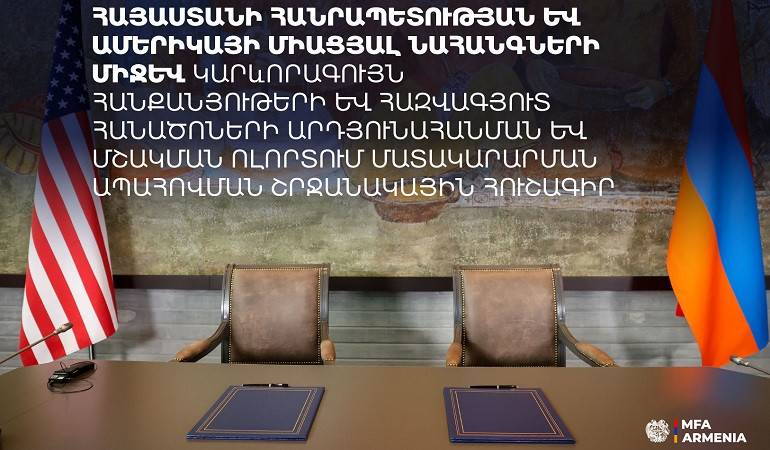
Armenia and US Critical Minerals and Rare Earths Supply Chain Framework
The United States and the Republic of Armenia have established a strategic framework to secure the supply of critical minerals and rare earths. This agreement is designed to support the commercial and defense industries of both nations by ensuring the availability of materials essential for advanced technologies.
Strategic Investment and Infrastructure
The two participants intend to mobilize both government and private sector support through loans, equity investments, and guarantees. Priority will be given to projects that establish refining, separation, and value-added processing capabilities within the Republic of Armenia.

A key component of the agreement is the recognition of the Trump Route for International Peace and Prosperity (TRIPP). This route is intended to support the transit of critical minerals originating from Central Asia and the South Caucasus.
Technical Cooperation and Workforce Development
The framework outlines a technical partnership to support the creation and capacity building of a national Armenian Geological Survey. This initiative will focus on modernizing data collection standards and exchanging scientific best practices.
To support these goals, the participants intend to launch exchange programs and training initiatives. These efforts aim to upskill the Armenian workforce in metallurgy, modern mining engineering, and environmental management.
Market Protections and Regulatory Reform
Both nations intend to collaborate on pricing frameworks to protect their domestic markets from unfair trade practices. They also plan to develop diplomatic tools to review or deter the sale of critical mineral assets on national security grounds.
the participants may take measures to modernize and streamline permitting processes for mining, and processing. Efforts will also be made to encourage investment in minerals recycling technology and the management of scrap materials.
Potential Future Developments
Following the implementation of this framework, the participants could see a significant increase in technology transfers to Armenian entities to improve extraction efficiency. This may lead to the modernization of domestic mining operations in the region.
The participants are likely to hold regular consultations, meeting within 10 days of a written request, to coordinate the framework’s execution. Post-project analyses may be conducted by appropriate authorities to evaluate the success of these initiatives.
Frequently Asked Questions
Is this agreement legally binding?
No. The framework is a policy and programmatic action plan that does not create legally binding or enforceable obligations under domestic or international law.
What is the purpose of the Armenian Geological Survey partnership?
The partnership aims to assist in mapping mineral resources and building capacity through the exchange of data and training in advanced geological assessment techniques.
How will the participants handle asset sales?
They intend to hold consultations to develop national capacities and diplomatic tools to review, approve, or deter the sale of critical minerals and rare earths assets based on national security grounds.
Do you believe that diversifying critical mineral supply chains is the most effective way to ensure national security?