
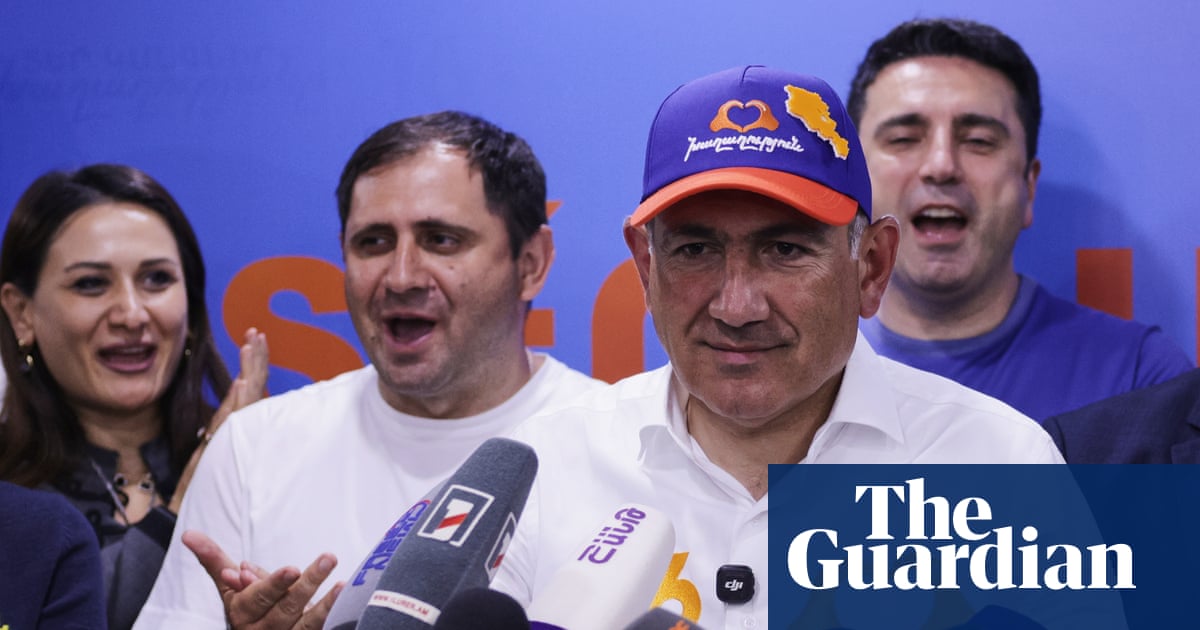
Armenia’s Pro-Europe Party Wins Election, Signaling Pivot Away From Russia
Armenia’s recent parliamentary elections have confirmed a decisive shift in the country’s geopolitical orientation, with Prime Minister Nikol Pashinyan’s Civil Contract party securing a majority. This victory solidifies Armenia’s pivot toward Western integration and signals a cooling of its historic reliance on Russia. By prioritizing a peace agreement with Azerbaijan and normalization with Turkey, the administration aims to reshape the South Caucasus, though the move faces significant internal opposition and economic pressure from Moscow.
Why is Armenia shifting its foreign policy toward the West?
The pivot toward the West is largely driven by the perceived failure of traditional security guarantees. Following the 2023 loss of Nagorno-Karabakh to Azerbaijan, many Armenians grew disillusioned with the Collective Security Treaty Organization (CSTO), a Russia-led military alliance. Despite the presence of Russian peacekeepers, Moscow did not intervene during the conflict. Consequently, according to the official government stance, Pashinyan has suspended Armenia’s participation in the CSTO, viewing deeper ties with the European Union as a path to long-term security and economic modernization.
The European Commission has pledged an initial €50 million support package to assist Armenia in mitigating the impact of Russian economic trade restrictions, which have recently targeted Armenian exports like brandy and fruit.
How will this election impact the peace process with Azerbaijan?
Pashinyan’s mandate is explicitly tied to his campaign promise of achieving a lasting peace agreement with Azerbaijan and normalizing relations with Turkey. The Prime Minister argues that ending decades of confrontation is essential for unlocking regional prosperity. However, the path remains fraught with difficulty. Pashinyan failed to secure the supermajority required to amend the constitution, which currently contains references that Azerbaijan interprets as territorial claims over Nagorno-Karabakh. Without these constitutional changes, the finalization of a peace treaty remains a complex legal and political hurdle.
What are the primary risks facing the Pashinyan administration?
While the Civil Contract party holds the legislative majority, the government faces significant internal and external challenges. The opposition, led by the Strong Armenia alliance, secured 25% of the seats, providing a platform for critics who accuse Pashinyan of abandoning historical lands. Furthermore, Moscow has utilized both political and economic leverage to express its displeasure, including trade barriers and alleged disinformation campaigns. Observers, such as commentator Tatul Hakobyan, suggest that many citizens support the current government primarily as the “lesser of two evils” rather than out of unbridled enthusiasm.
Comparison: Political Landscape
| Factor | Pashinyan (Civil Contract) | Strong Armenia Alliance |
|---|---|---|
| Foreign Policy | Pro-Western / EU Integration | Pro-Russian / Traditionalist |
| Regional Stance | Normalization with Turkey/Azerbaijan | Skeptical of territorial concessions |
When analyzing regional stability in the South Caucasus, watch for shifts in trade volume between Yerevan and Brussels versus Yerevan and Moscow. Economic data often acts as a leading indicator for diplomatic realignments.
Frequently Asked Questions
Has Armenia officially applied to join the EU?
No, Armenia has not formally applied for EU membership. However, the government has expressed interest in deeper integration, and European Commission President Ursula von der Leyen has publicly stated that “Armenia can count on us.”
Why is the opposition critical of the current government?
Opposition figures, including those in the Strong Armenia alliance, argue that the loss of Nagorno-Karabakh was a failure of leadership and that current policies risk national identity and security by alienating traditional allies like Russia.
What is the status of the Russian-Armenian relationship?
Relations are at their lowest point since independence. Pashinyan has suspended participation in the CSTO and accused Moscow of attempting to influence elections through trade restrictions and political interference.
What do you think the future of the South Caucasus looks like? Share your thoughts in the comments below or subscribe to our weekly intelligence briefing for ongoing updates on regional geopolitical shifts.