
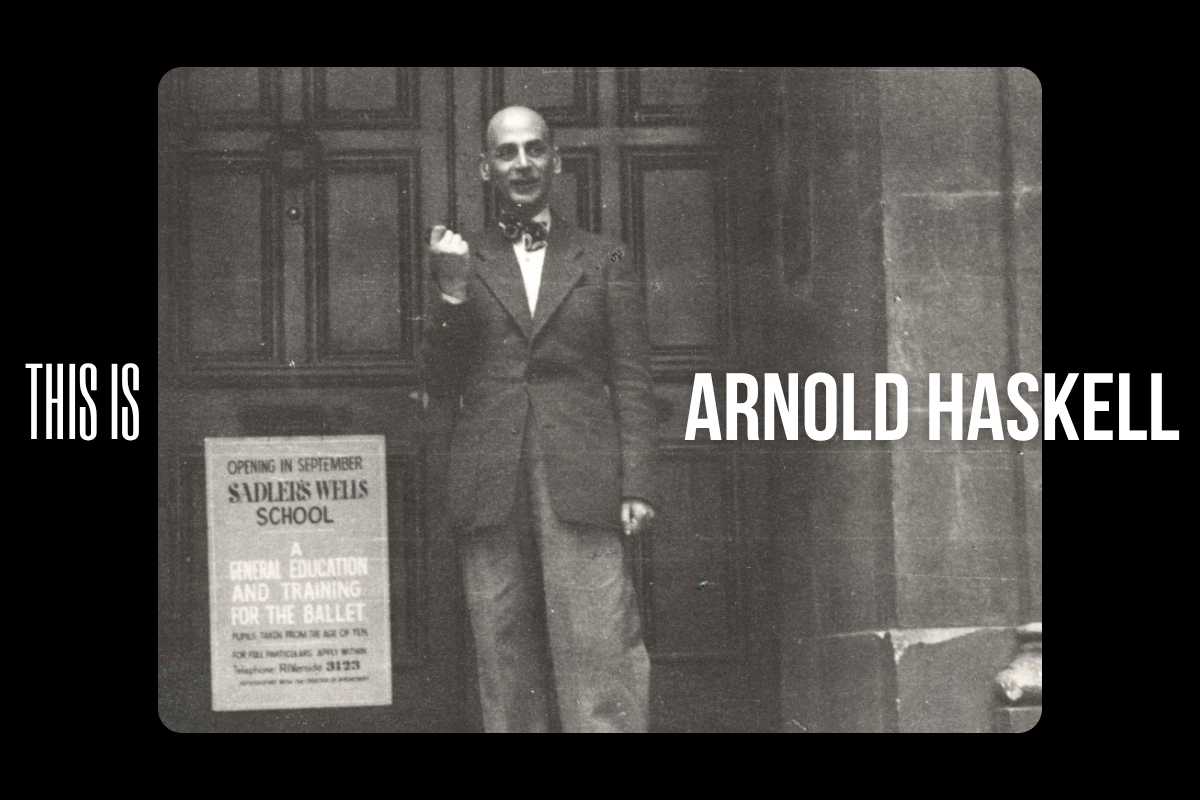
Arnold Haskell: First Principal of The Royal Ballet School
Arnold Haskell, the first principal of the Sadler’s Wells Ballet School (now the Royal Ballet School) from 1947 to 1965, was a central figure in the professionalization of British ballet. According to archives managed by Dr. Anna Meadmore, Haskell transitioned from a critical dance writer and journalist to a leader who helped establish ballet as a serious theatrical art in the United Kingdom.
Haskell served as a director of the Royal Ballet starting in 1956 and received the Commander of the Order of the British Empire (CBE) in 1954. He was also awarded the Chevalier of the Legion of Honour in 1950.
How did Arnold Haskell influence dance literature?
Haskell began his career as a proofreader at Heinemann from roughly 1928 to 1934, where he convinced Russian ballerina Tamara Karsavina to write her autobiography, “Theatre Street,” in 1930. He later served as a dance critic for The Daily Telegraph between 1935 and 1938.
His 1934 book, “Balletomania: The Story of an Obsession,” achieved significant commercial success, reaching a fourth printing by April of the following year. Haskell claimed the title of this work introduced the Russian term “balletomane” into the English language.
In 1937, he published “Dancing the World Round: Memoirs of an Attempt to Escape Ballet,” which detailed his travels through Australia and the United States. During these tours, Haskell acted as a semi-official historian and interpreter for Colonel W. de Basil’s Ballets Russes due to his fluency in Russian and French.
What was the relationship between Haskell and Ninette de Valois?
The professional bond between Haskell and Ninette de Valois was initially marked by conflict. Before 1935, Haskell criticized de Valois’ early choreography as “too boring” and “too serious,” while arguing that the future of ballet belonged to Russian teachers and dancers.
Haskell’s perspective shifted as Margot Fonteyn emerged as a prominent British ballerina under the guidance of de Valois and choreographer Frederick Ashton. This change led to a 40-year partnership dedicated to the development of British ballet.
Ninette de Valois later praised Haskell in the 1943 preface of “The National Ballet: Its History and Manifesto.” She credited him with using his practical knowledge to combat public “ignorance, misunderstanding, and indifference” toward ballet.
How was Haskell’s legacy recognized in 2025?
On November 27, 2025, Arnold Haskell’s grandson, Matt Mex, and his wife Jennifer visited the Upper School in Covent Garden. The couple, who reside in the United States, previously accessed materials regarding Haskell’s career at the White Lodge special collections archives.
During the visit, Mex observed numerous photographs of his grandfather displayed throughout the building. This includes school history exhibits curated by Andy Granville, the head of the degree program at the Upper School.
Given the ongoing interest from descendants and the preservation of archives by Dr. Anna Meadmore, the school may continue to integrate Haskell’s historical records into its educational displays.
Frequently Asked Questions
Who was Arnold Haskell?
Arnold Haskell (1903–1980) was a dance critic, writer, and the first principal of the Sadler’s Wells Ballet School from 1947 to 1965.

What roles did Haskell hold within the ballet community?
He was a director of the Royal Ballet from 1956, a critic for The Daily Telegraph, and a co-founder of the Camargo Society.
Which books did Arnold Haskell author?
His major works include “The Sculptor Speaks” (1931), “Balletomania” (1934), and “Dancing the World Round” (1937).
Do you believe the transition from critical commentary to institutional leadership is essential for the growth of the arts?