

Astronomers finally detect wind from Milky Way’s giant black hole
The Invisible Breath of Sagittarius A*: Why Our Galaxy’s “Missing Wind” Matters
For over 50 years, astrophysicists have stared into the heart of the Milky Way, searching for a ghost. We knew Sagittarius A* (Sgr A*), our galaxy’s supermassive black hole, was active, but something was missing: the wind. Now, thanks to a groundbreaking study led by researchers at Northwestern University, that half-century mystery has been put to rest.
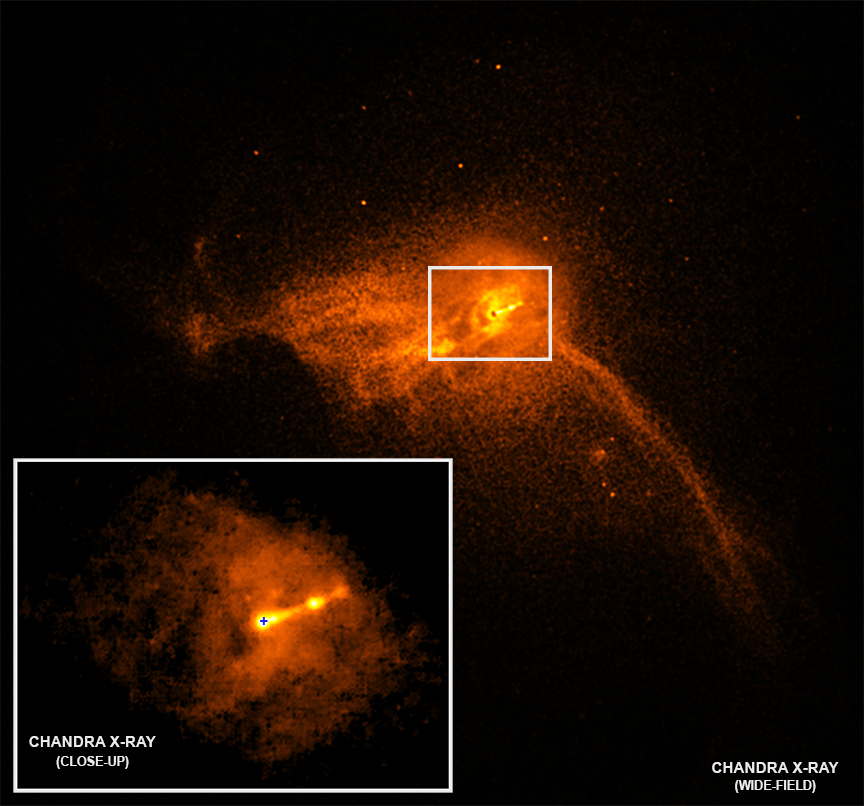
By analyzing five years of data from the Atacama Large Millimeter/submillimeter Array (ALMA) and overlaying it with X-ray maps from NASA’s Chandra X-ray Observatory, the team identified a massive, cone-shaped cavity near the black hole. This void, carved out by hot plasma, is the “smoking gun” of an active wind pushing cold gas away from the galactic centre.
While black holes are famous for their hunger, they are surprisingly messy eaters. In the case of Sagittarius A*, more gas is actually ejected back into the galaxy as wind than is permanently consumed by the black hole itself.
Aligning the Milky Way with the Cosmic Standard
For decades, astronomers observed distant, violent galaxies where massive jets and winds strip away gas, effectively shutting down star formation. However, our own galaxy seemed oddly quiet, leading to questions about whether the Milky Way was an outlier or if we were simply missing the data.
This discovery confirms that the Milky Way plays by the same rules as the rest of the universe. Sagittarius A* is not a dormant giant; it is a dynamic engine that shapes its environment. This realization shifts our understanding of galactic evolution, suggesting that even “quiet” black holes perform a vital role in regulating the gas supply that fuels future star birth.
What Which means for Future Space Exploration
The successful detection of this wind marks a new era in high-resolution galactic cartography. As we look toward future space-based observatories and more sensitive radio arrays, we can expect several key trends to emerge in astrophysical research:
- Multi-Messenger Astronomy: The study highlights the necessity of combining radio data (ALMA) with X-ray observations (Chandra) to paint a complete picture of invisible phenomena.
- Dynamic modelling: Future simulations of galaxy formation will now have to account for these “gentle” winds, which may be more common than previously thought.
- Refined Star Formation Theories: By understanding how black hole winds clear out gas, scientists can better predict the lifecycle of stars in the galactic centre.
Frequently Asked Questions
How did astronomers find wind that is invisible?
They didn’t see the wind directly; they saw the “wake” it left behind. By mapping cold gas, they found a cone-shaped cavity where the gas was missing, pushed aside by the pressure of the hot plasma wind.
Is the wind from Sagittarius A* dangerous to Earth?
No. While the energy is immense, the black hole is located roughly 26,000 light-years away. The wind is a localized phenomenon affecting the immediate environment of the galactic centre, not the solar system.
Why did it take 50 years to solve this?
Detecting the wind required a combination of unprecedentedly deep observations and the specific ability to distinguish between the black hole’s influence and the complex, turbulent gas environment of the Milky Way’s centre.
What are your thoughts on this discovery? Does the realization that our galaxy is more “active” than we thought change how you view the Milky Way? Share your questions in the comments below or subscribe to our newsletter for more deep dives into the latest space science news.