
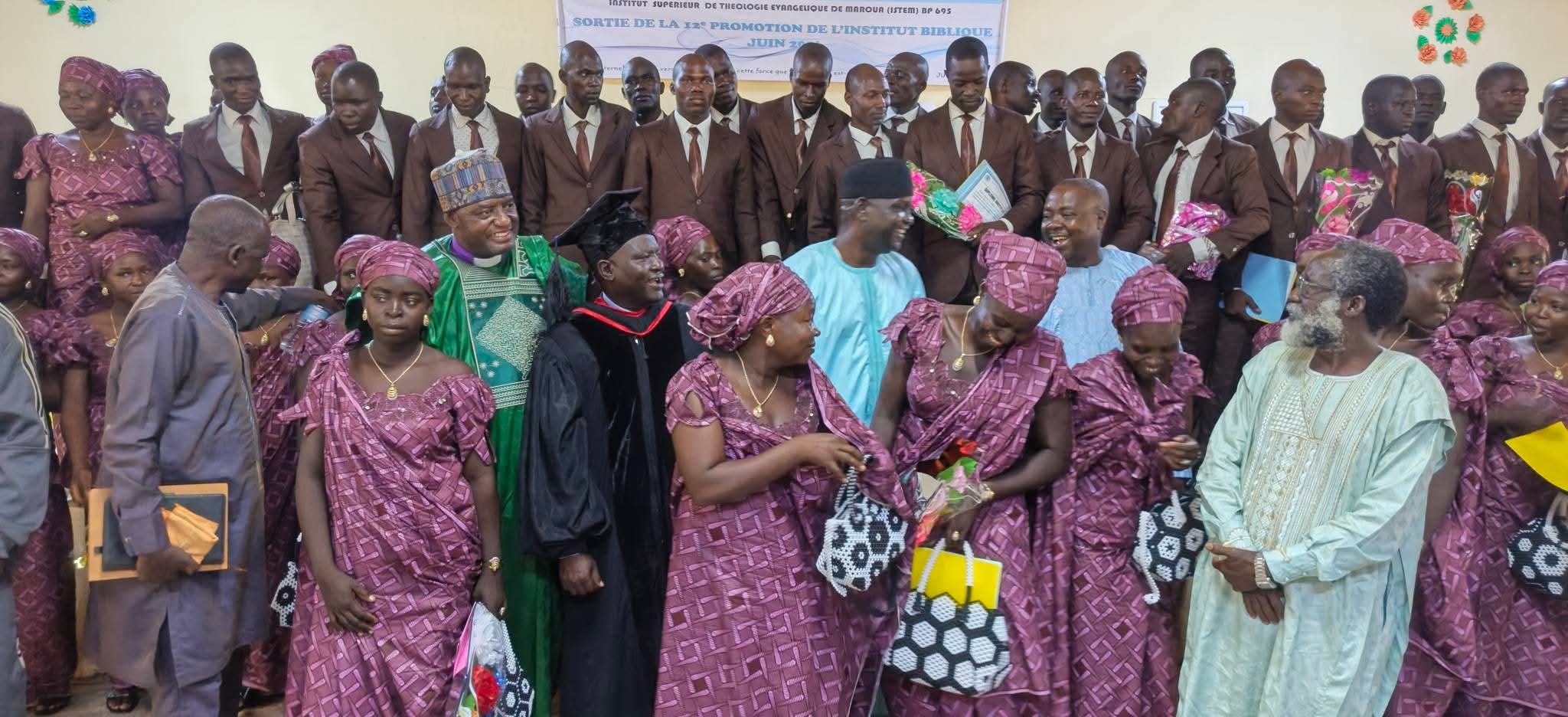
UEEC Cameroon Ordains 34 New Pastors from ISTEM Theological Institute
On Friday, June 5, 2026, the Union of Evangelical Churches in Cameroon (UEEC) marked a significant milestone as thirty-four new pastoral workers were officially approved for ministry. The solemn ceremony, held to conclude their academic and spiritual training at the Higher Institute of Evangelical Theology and Mission (ISTEM), drew a large crowd, underscoring the institutional importance of this new generation of leaders.
The event was presided over by the Reverend Salomon Hamadina, President of the UEEC. In his address, he emphasized the necessity of spiritual fortitude, urging the graduates to embrace a ministry defined by zeal, courage, and strength as they face the complexities of the current global pastoral landscape.
The UEEC traces its institutional roots to the mid-20th century, having evolved from the foundational work of the Lutheran Fraternal Mission into an autonomous pillar of the evangelical ethos in Cameroon.
Strategic Deployment and Academic Rigor
The graduation of these thirty-four individuals represents more than a symbolic transition; it is a calculated response to the operational needs of the church. These new pastors are slated for deployment to priority regions, including the strategically significant and mission-intensive Eastern Zone, extending the church’s reach to the most remote areas.
The curriculum at ISTEM reflects a shift in how religious leadership is prepared in 2026. Rather than focusing solely on text, the training is designed as a holistic preparation involving biblical hermeneutics, leadership development, and practical missiology. This pedagogical approach is intended to provide a defense against the rise of syncresis and divergent doctrines.
The emphasis on a multidisciplinary curriculum at ISTEM suggests that modern evangelical institutions are prioritizing organizational resilience and critical thinking. By equipping leaders with tools beyond traditional preaching, the UEEC is likely attempting to ensure that its clergy can navigate complex societal challenges while maintaining doctrinal stability.
Future Implications for the Region
As these new ministers enter the field, the UEEC may experience an increase in its operational capacity within its target mission zones. The integration of these thirty-four leaders into the Eastern Zone could facilitate a more structured presence in areas that the institution identifies as mission-critical.
Looking ahead, the success of this cohort may influence future enrollment and training standards at ISTEM. If these graduates demonstrate the expected discernment and resilience in their respective communities, the institute is likely to maintain or expand its current rigorous academic model to meet the ongoing demand for qualified pastoral guidance.
Frequently Asked Questions
Who presided over the graduation ceremony?
The ceremony was presided over by the Reverend Salomon Hamadina, President of the UEEC.
What is the primary focus of the training provided at ISTEM?
The training is a holistic preparation that integrates biblical hermeneutics, leadership, and practical missiology to prepare pastors for complex societal and theological challenges.
Where will the new pastors be deployed?
The graduates are being sent to priority mission areas, specifically including the Eastern Zone of Cameroon.
How do you perceive the role of specialized academic training in shaping the future of community leadership?