
AWS Launches New Context Intelligence Stack for AI Agents
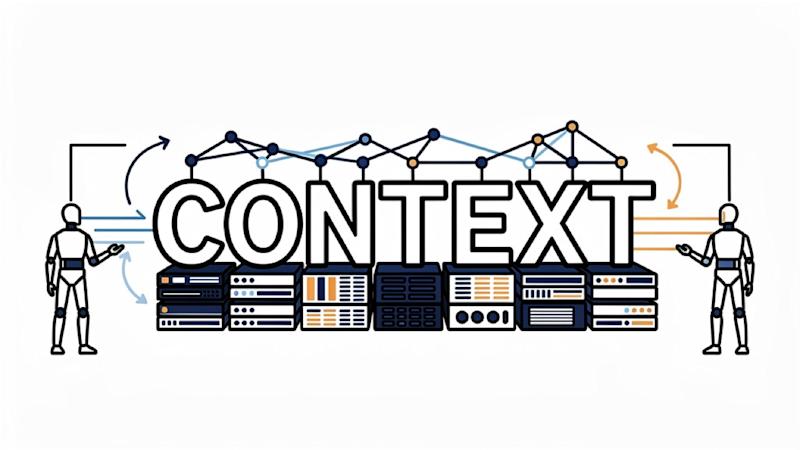
Amazon has launched a new “context intelligence” stack for AI agents, anchored by AWS Context, a service designed to build and refine knowledge graphs automatically. According to AWS, the suite enables enterprise agents to infer data relationships and business rules without manual re-curation. The move places AWS in direct competition with emerging context-layer providers like Snowflake, Microsoft, and Pinecone.
How AWS Context automates agent intelligence
The core challenge for enterprise AI has been the manual, bespoke effort required to link data stores to agents. AWS Context aims to solve this by automatically mapping relationships across existing datasets, identifying authoritative sources, and defining business logic. Swami Sivasubramanian, vice president of Agentic AI at AWS, stated that the service builds a knowledge graph from existing data, which then learns from agent usage over time to improve results without requiring developers to rebuild infrastructure from scratch.
The components of the new context stack
AWS is deploying a multi-layered approach to handle context, moving beyond a single service. The architecture relies on three primary pillars:
- Amazon S3 Annotations: Allows users to attach business context directly to individual objects within the storage layer.
- AWS Glue Data Catalog skill assets: Connects runbooks, usage rules, and domain knowledge to data assets across the enterprise estate.
- AWS Context: Synthesizes these inputs into a self-learning graph that agents query at runtime.
According to AWS, all metadata is published in Apache Iceberg format, ensuring compatibility with engines like Athena, Redshift, and Spark without proprietary API lock-in.
How AWS compares to the broader context market
The “context layer” has become a heavily contested architectural category. While AWS is leveraging its existing footprint in S3 and Lake Formation to minimize data movement, competitors are taking different routes:
| Provider | Approach |
|---|---|
| Snowflake | Uses Horizon Context and Cortex Sense. |
| Microsoft | Utilizes Fabric IQ for semantic ontology. |
| Pinecone | Compiles data into task-specific artifacts via Nexus. |
Holger Mueller, VP and Principal analyst at Constellation Research, noted that while context is a necessary capability for any agentic platform, the primary hurdle for all these vendors will be maintaining performance, particularly when dealing with high-volume transactional data.
Future trends in agentic data architecture
The industry is moving toward “zero-integration friction.” Enterprises are increasingly wary of moving data to satisfy the requirements of AI agents. AWS is banking on the argument that by extending the existing identity model—where every query inherits the calling user’s IAM and Lake Formation permissions—they can offer a more secure, auditable path to agent deployment. The trend suggests that future data platforms will be judged by their ability to provide context at runtime rather than their ability to simply store or retrieve raw information.
Frequently Asked Questions
Does AWS Context require moving data?
No. AWS emphasizes that its context stack is designed to work with existing data in S3 and other stores, avoiding the need for large-scale data migration.

Is the knowledge graph proprietary?
AWS states that all metadata is published in Apache Iceberg format, allowing it to be queried via standard engines like Spark or Redshift, avoiding proprietary API lock-in.
Can I use third-party data with AWS Context?
Yes. The service supports third-party catalog connections, allowing enterprises to pull context from systems outside the AWS ecosystem into the centralized graph.
Are you building AI agents for your enterprise? Share your thoughts on the “context layer” in the comments below, or subscribe to our newsletter for the latest updates on data infrastructure trends.