
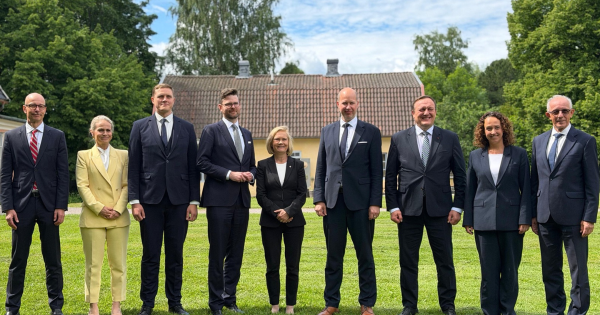
Baltic Sea Region Ministers Call for Unified Anti-Drone Defense Strategies
Latvian Interior Minister Jānis Dombrava and regional counterparts from the Baltic Sea Security Group recently convened in Helsinki to address the escalating threat posed by unmanned aerial systems (UAS) to critical infrastructure and borders. Officials concluded that current defensive capabilities are insufficient and require an immediate, coordinated shift toward mobile, integrated anti-drone technologies across the European Union’s eastern flank.
Why are drones considered a critical security threat?
Drones now pose a persistent challenge to national sovereignty, according to statements made by Jānis Dombrava during the Helsinki security meeting. The increased frequency of unauthorized drone activity near EU borders and sensitive facilities forces a shift in how nations monitor their airspace. Unlike traditional aircraft, small, low-altitude drones are difficult to detect with legacy radar systems, making them ideal tools for surveillance or sabotage.
The integration of civilian and military radar data is now a primary goal for the Baltic Sea Security Group. By sharing real-time telemetry, member states aim to create a seamless “air-picture” that covers the entire region, rather than relying on fragmented national data.
How will mobile anti-drone units function?
To counter these agile threats, the Latvian Interior Ministry suggests the development of mobile pre-drone units capable of rapid identification and neutralization. According to Dombrava, relying on static, site-specific defenses is no longer enough. These mobile units must be interoperable, meaning they can function seamlessly across borders as threats move through regional airspace.

This approach mirrors lessons learned from the conflict in Ukraine, where rapid, decentralized response units have proven effective against mass-produced drone swarms. The Baltic nations intend to formalize these tactics into shared “action algorithms” to ensure that when a drone crosses from one jurisdiction to another, the response is continuous and legally authorized.
Comparison: Regional Defense Strategies
| Approach | Focus |
|---|---|
| Static Defense | Protecting specific, high-value infrastructure sites. |
| Mobile Units | Interception and tracking across borders; rapid response. |
What funding is required for future border security?
Dombrava emphasized that EU financial instruments must be recalibrated to reflect the actual threat level on the eastern border. Current funding models often lag behind the rapid technological evolution of drone warfare. The minister argued that future budget cycles must specifically earmark resources for anti-drone sensors and the hardening of critical infrastructure against electronic warfare tactics.
Beyond hardware, the focus is on human capital. Training personnel to operate complex signal-jamming equipment and coordinating with military branches is a costly but necessary investment. Member states like Finland, Sweden, and Poland are expected to lead these discussions as they continue to integrate their security protocols with the broader EU framework.
Frequently Asked Questions
What is the primary goal of the Baltic Sea Security Group?
The group seeks to synchronize security responses, share intelligence on hybrid threats, and develop unified protocols for protecting borders and critical infrastructure.

Why is Ukraine’s experience relevant?
Ukraine provides a real-world test case for current drone warfare, demonstrating how small, low-cost drones can overwhelm traditional defensive systems and why mobile, flexible responses are essential.
Will these new measures affect civilian drone hobbyists?
While the focus is on security threats, increased regulation and monitoring of the electromagnetic spectrum will likely lead to stricter identification requirements for all drone operators in sensitive regions.
How do you view the balance between national security and the rapid evolution of drone technology? Share your thoughts in the comments section below or join the conversation on our social media channels.