

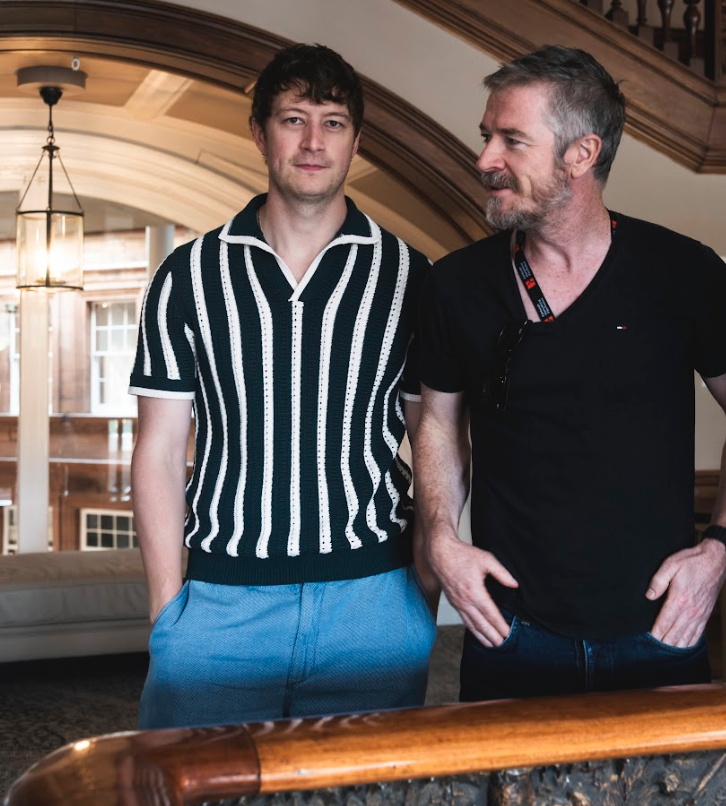
Barry Ward and Lorne MacFadyen in Gay Love Story
The rise of “rural queer cinema,” exemplified by Helen Walsh’s On the Sea, signals a shift toward nuanced portrayals of LGBTQ+ identities within traditional working-class environments. According to film critics, these narratives move beyond urban stereotypes to explore the intersection of restrictive masculinity, generational labor, and repressed desire in isolated coastal or farming communities.
Why is rural queer cinema gaining traction?
Audiences are moving away from polished, urban-centric LGBTQ+ stories. There is a growing demand for “rugged, elemental dramas” that place queer identities in harsh, authentic settings. This trend shifts the focus from “coming out” stories to the quiet endurance of people living in restrictive social codes.
Helen Walsh’s On the Sea follows this trajectory by swapping the typical city backdrop for the coastal waters of North Wales. The film mirrors the impact of Francis Lee’s 2017 debut, God’s Own Country, which established a blueprint for the “slow-burn” rural romance. While both films use bleak landscapes to mirror internal isolation, Walsh emphasizes the specific pressures of working-class survival.
How does the working-class lens change LGBTQ+ storytelling?
Integrating labor and economics adds a layer of desperation often missing from middle-class queer narratives. In On the Sea, the struggle isn’t just about sexuality; it’s about the survival of a third-generation mussel farm being squeezed by commercial fisheries. The economic fragility of the characters makes the risk of social exposure far more dangerous.

This “labor-first” approach creates a contrast in how intimacy is portrayed. Instead of romanticized dates, connection happens through shared work—chopping firewood or tending to boats. This reflects a broader cinematic trend where pleasure and passion are portrayed as “dulled” by the grind of poverty, making the eventual emotional payoff more potent.
For more on the intersection of class and identity, see our analysis on the evolution of class-based storytelling in modern film.
What happens to traditional masculinity in these narratives?
Modern rural dramas are dismantling the “strong, silent type” trope by highlighting the “emotional inarticulacy” of men. In Walsh’s film, characters like Jack and Dyfan are locked into codes of masculinity “set in stone generations ago.” The tension arises not from a lack of feeling, but from a lack of language to describe it.
The trend is moving toward showing masculinity as a performance. When Jack feigns indifference to Daniel’s signals, he isn’t just hiding his sexuality; he’s maintaining a social mask required for survival in a suspicious community. This reflects a real-world shift in how psychologists and sociologists view “toxic masculinity” as a restrictive cage rather than a personal choice.
How is the landscape used as a character?
The environment in these films is no longer just a background; it’s an antagonist. In On the Sea, the “icy seawater and rough currents” of the straits serve as a metaphor for the characters’ volatile emotions. The landscape is described as “as bleak as it is beautiful,” mirroring the duality of a forbidden love.
Comparing On the Sea to other regional dramas, there is a clear pattern of using “searching close-ups” of textures—calloused hands, lined faces, and wool sweaters—to convey a sense of place. This tactile approach helps the audience feel the “gritty textures” of a life defined by physical hardship, grounding the romance in a tangible reality.
Frequently Asked Questions
What is rural queer cinema?
It is a subgenre of LGBTQ+ film that focuses on characters living in non-urban environments, often emphasizing the conflict between individual identity and traditional, conservative community norms.
How does On the Sea differ from God’s Own Country?
While both feature rugged landscapes and taciturn men, On the Sea places a heavier emphasis on the generational struggle of working-class labor and the specific dynamics of a family-owned business under economic threat.
Why is “emotional inarticulacy” important in these films?
It realistically portrays how men in traditional labor sectors are often socialized to suppress emotion, making the eventual breakthrough of intimacy more dramatic and meaningful.
Join the Conversation
Do you think rural settings provide a more authentic lens for exploring identity than urban ones? Share your thoughts in the comments below or subscribe to our newsletter for more deep dives into independent cinema.