
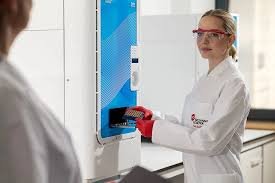
Beckman Coulter Life Sciences Commercialises Echo 650 Plus Series For Next Generation Acoustic Liquid Handling
The Future of High-Throughput Labs: How Acoustic Precision is Redefining Drug Discovery
In the high-stakes world of pharmaceutical research, speed is often the enemy of precision. As drug discovery pipelines grow increasingly complex, laboratories are under immense pressure to deliver accurate results while cutting overhead. The recent launch of the Echo 650 Plus Series by Beckman Coulter Life Sciences signals a major shift: the move toward intelligent, energy-efficient liquid handling that does more than just move fluids—it thinks about them.

This evolution highlights a broader industry trend where lab automation is no longer just about robotics; it is about integrating machine learning to solve the “reproducibility crisis” that has long plagued life sciences research.
Intelligence at the Microliter Scale
The core of this advancement lies in real-time adaptive intelligence. Technologies like Dynamic Fluid Analysis 2 (DFA2) represent a leap forward in how we approach sample integrity. By leveraging machine learning to analyze fluid responses before a single droplet is ejected, systems can now self-correct in real-time.
Sustainability as a Productivity Metric
For years, “sustainability” in the lab was viewed as a separate goal from “throughput.” However, the industry is waking up to the reality that energy-intensive equipment is also a financial liability. A 54% reduction in power consumption, as seen in the latest Echo series, isn’t just a win for the environment; it’s a massive reduction in operational expenditure (OpEx).
As laboratories scale toward 24/7 operations, the cumulative effect of lower power draw, reduced need for manual calibration, and increased transducer longevity creates a competitive advantage. Labs that prioritize these “green” metrics are finding it easier to justify capital investments to stakeholders focused on long-term scalability.
The Shift Toward “Hands-Off” Lab Environments
The future of drug discovery is undeniably autonomous. We are moving away from manual pipetting and toward systems that require minimal human intervention. Key trends driving this include:
- Predictive Maintenance: Using sensors to detect hardware wear before a failure stops a multi-day screening run.
- Data-Driven Calibration: Replacing manual focus tracking with automated, AI-driven adjustments to ensure every well is treated with identical precision.
- Miniaturization: Reducing the volume of reagents required, which not only saves money but allows for more complex screening assays that were previously cost-prohibitive.
Addressing the Reproducibility Challenge
A 2016 survey published in Nature revealed that over 70% of researchers have tried and failed to reproduce another scientist’s experiment. In drug discovery, this is a multi-million dollar problem. By standardizing the liquid handling process through machine learning, platforms like the Echo 650 Plus help remove the “human factor,” ensuring that data is consistent from the first plate to the thousandth.

Frequently Asked Questions
- How does acoustic liquid handling improve drug discovery?
- It uses high-frequency sound waves to transfer precise volumes of liquid without physical contact, preventing cross-contamination and allowing for significant miniaturization of assays.
- Why is real-time fluid analysis important?
- Different samples have different viscosities. Real-time analysis allows the machine to adjust its ejection power dynamically, ensuring accuracy regardless of the liquid type.
- Can these systems integrate into existing lab automation?
- Yes, modern acoustic handlers are designed to be modular, fitting into larger robotic workcells to support fully automated high-throughput screening environments.
Are you looking to optimize your lab’s throughput? Share your experiences with liquid handling automation in the comments below, or subscribe to our newsletter for deep dives into the latest biotech infrastructure trends.