

Bernie Sanders’ call to seize the AI industry has damning lessons about politics today
Sen. Bernie Sanders has proposed nationalizing a significant portion of the artificial intelligence industry, arguing that AI’s foundation rests on the collective knowledge of humanity. According to a New York Post editorial, this proposal faces significant constitutional and economic hurdles but reflects a growing push for state-level AI and data center restrictions.
Why is Sen. Bernie Sanders proposing AI nationalization?
Sen. Bernie Sanders (I-Vt.) contends that the foundation of artificial intelligence is built upon the creative work of tens of millions of people and the collective knowledge of humanity. Because of this, he argues the public, rather than private corporations, should own a substantial share of the industry.
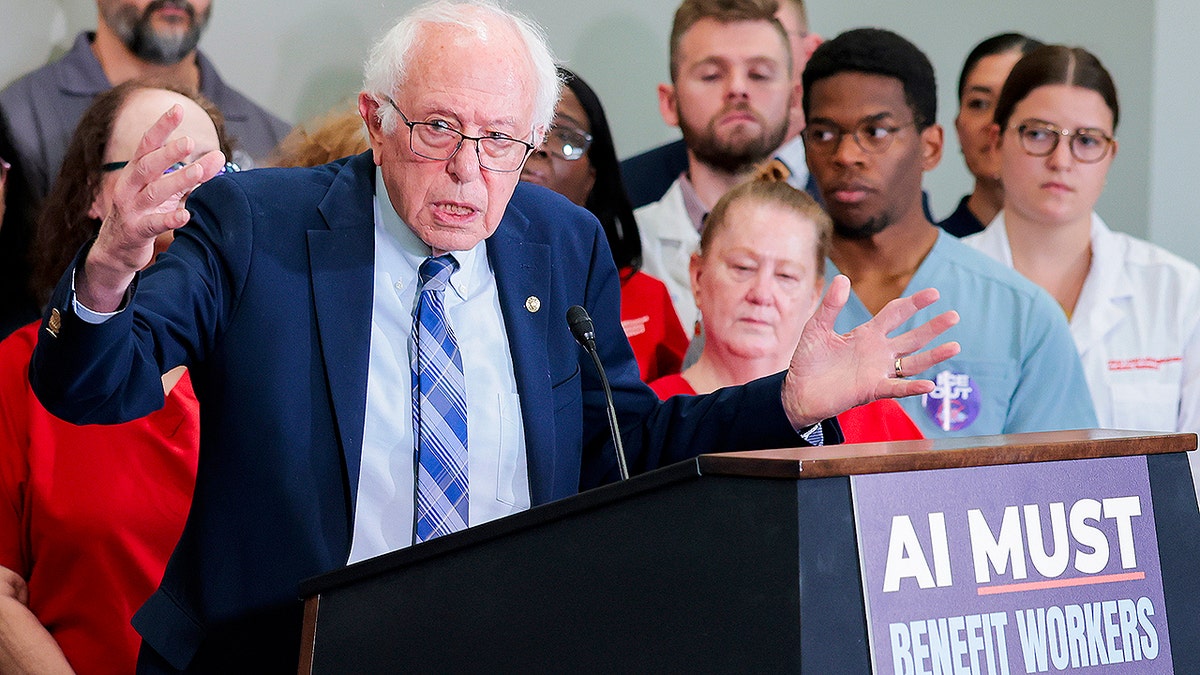
The New York Post Editorial Board characterizes this move as “economic suicide” and “fundamentally tyrannical.” They argue that while some AI companies have ignored intellectual property rights during the training of Large Language Models (LLMs), the solution isn’t government seizure. Instead, they suggest a royalty system similar to how Spotify compensates songwriters when their music is sampled.
What happens if the US pursues AI nationalization?
While the New York Post Editorial Board claims the proposal is “blatantly unconstitutional” and has “zero chance of passing” a Democratic Congress, they note a recurring political pattern. They point to “Medicare for All” and pushes for open borders as examples of how extreme demands can shift the political center, eventually leading to “compromise” proposals that still move the needle toward government control.
The editorial board suggests this strategy could make AI nationalization a talking point for 2028 presidential campaigns. The risk, according to the board, is a transition toward collectivism that they link to the economic failures of the Soviet Union, Castro’s Cuba, and Chavez’s Venezuela.
Nationalization vs. Royalty Systems: A Comparison
| Approach | Mechanism | Primary Goal |
|---|---|---|
| Nationalization | Government seizure of private AI assets | Public ownership of “collective knowledge” |
| Royalty System | Direct payments to creators (Spotify model) | Protection of individual IP rights |
How could data center moratoriums impact AI growth?
Beyond ownership, Sen. Sanders has called for a national moratorium on new data centers. The New York Post Editorial Board describes these claims as “poppycock,” yet warns that these ideas are already inspiring state-level pushes. They specifically cite New York as a place where such restrictions could potentially become law.
Data centers are the physical backbone of AI, providing the immense computing power required for LLMs. A moratorium would limit the ability of companies to scale their hardware, potentially slowing the pace of AI development within the U.S. and shifting the competitive advantage to international rivals.
Will these trends reshape the 2028 political landscape?
The New York Post Editorial Board argues that the “seize the wealth” mentality now drives many major Democratic proposals. They claim that even some Republicans are looking for ways to join in on these “clever” redistributive schemes.
The board suggests that by refusing to denounce these “monstrous” ideas, the political and media establishment allows them to become normalized. This process mirrors the shift from fringe ideas to mainstream policy debates seen in previous election cycles.
Frequently Asked Questions
Can the US government legally nationalize the AI industry?
The New York Post Editorial Board argues it is unconstitutional. Generally, the Fifth Amendment requires “just compensation” for private property taken for public use, which would cost trillions of dollars in the case of the AI industry.

What is the “collective knowledge” argument?
Sen. Bernie Sanders argues that because AI is trained on data created by millions of humans, the resulting technology belongs to the public rather than the companies that built the software.
Why are data centers being targeted?
Critics of data centers often cite energy consumption and environmental impact. However, the New York Post Editorial Board dismisses these arguments as baseless attempts to hinder industry growth.
Join the Discussion
Should AI be treated as a public utility or a private innovation? Do you think a royalty system is fairer than nationalization?
Leave a comment below or subscribe to our newsletter for more updates on AI policy and politics.