
Blood pressure trajectories during pregnancy, labor, and postpartum period: a multicenter study in Japan
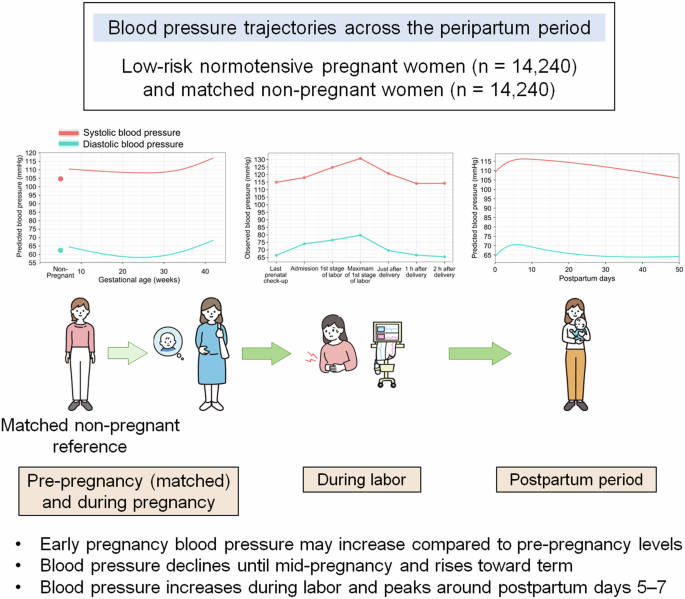
A large multicenter study of normotensive women found that outpatient blood pressure (BP) measured in early pregnancy was higher than estimated pre-pregnancy levels, challenging the long-held assumption that BP declines during early gestation, according to research published in a recent analysis. The study tracked BP trajectories across pre-pregnancy, pregnancy, labor, and postpartum phases, revealing a transient increase in early pregnancy, followed by a peak during labor and a gradual return to non-pregnant levels by 7 weeks postpartum.
The findings, based on longitudinal data from multiple clinical settings, suggest that BP patterns during pregnancy may be more complex than previously understood. Researchers noted that early pregnancy BP increases could be influenced by psychological stress, the “white-coat effect” in clinical settings, and cardiovascular reactivity in first-time pregnancies. These results contrast with traditional models that anticipated a physiological drop in BP due to vasodilation.
Key Findings
The study observed that systolic BP rose by approximately 15 mmHg and diastolic BP by 13 mmHg during the first stage of labor among low-risk women, highlighting a significant physiological response to labor. Postpartum BP peaked around days 5–7 after delivery before gradually declining, with levels returning to pre-pregnancy norms by 7 weeks. However, the researchers emphasized that pre-pregnancy BP estimates were derived from non-pregnant women, not direct measurements from the participants themselves.
Why It Matters
The study’s findings could influence clinical practices by prompting closer monitoring of BP during early pregnancy and labor. The transient BP elevation in early pregnancy, if confirmed in prospective studies, may require reevaluating how healthcare providers interpret BP changes in pregnant women. Additionally, the postpartum BP peak underscores the need for continued monitoring in the first week after delivery, even for women who remained normotensive throughout pregnancy.
Limitations and Next Steps
Researchers acknowledged limitations, including the use of estimated pre-pregnancy BP from non-pregnant cohorts rather than direct measurements. Variability in BP measurement conditions and medication effects during labor and postpartum recovery also introduced potential biases. Future studies, particularly those with direct preconception BP measurements, are needed to validate these findings.
What May Happen Next
Healthcare providers may begin incorporating these findings into prenatal and postpartum care guidelines, emphasizing the need for tailored BP monitoring. Future research could focus on the role of psychological stress and the white-coat effect in early pregnancy BP readings. Additionally, studies using direct preconception measurements may clarify whether the observed early pregnancy BP increase is a consistent physiological pattern or an artifact of measurement conditions.
Frequently Asked Questions
What did the study find about blood pressure during early pregnancy? The study found that outpatient blood pressure in early pregnancy was higher than estimated pre-pregnancy levels, contrary to the conventional assumption that BP declines during this period.
Why is this finding significant? It challenges existing models of pregnancy-related BP changes and suggests that factors like psychological stress and clinical settings may influence BP readings, requiring closer monitoring during early pregnancy.
What are the limitations of the study? The pre-pregnancy BP estimates were based on non-pregnant women rather than direct measurements from participants. Variability in measurement conditions and medication effects during labor and postpartum recovery also limited the findings’ precision.
How might these findings influence future prenatal care practices?