
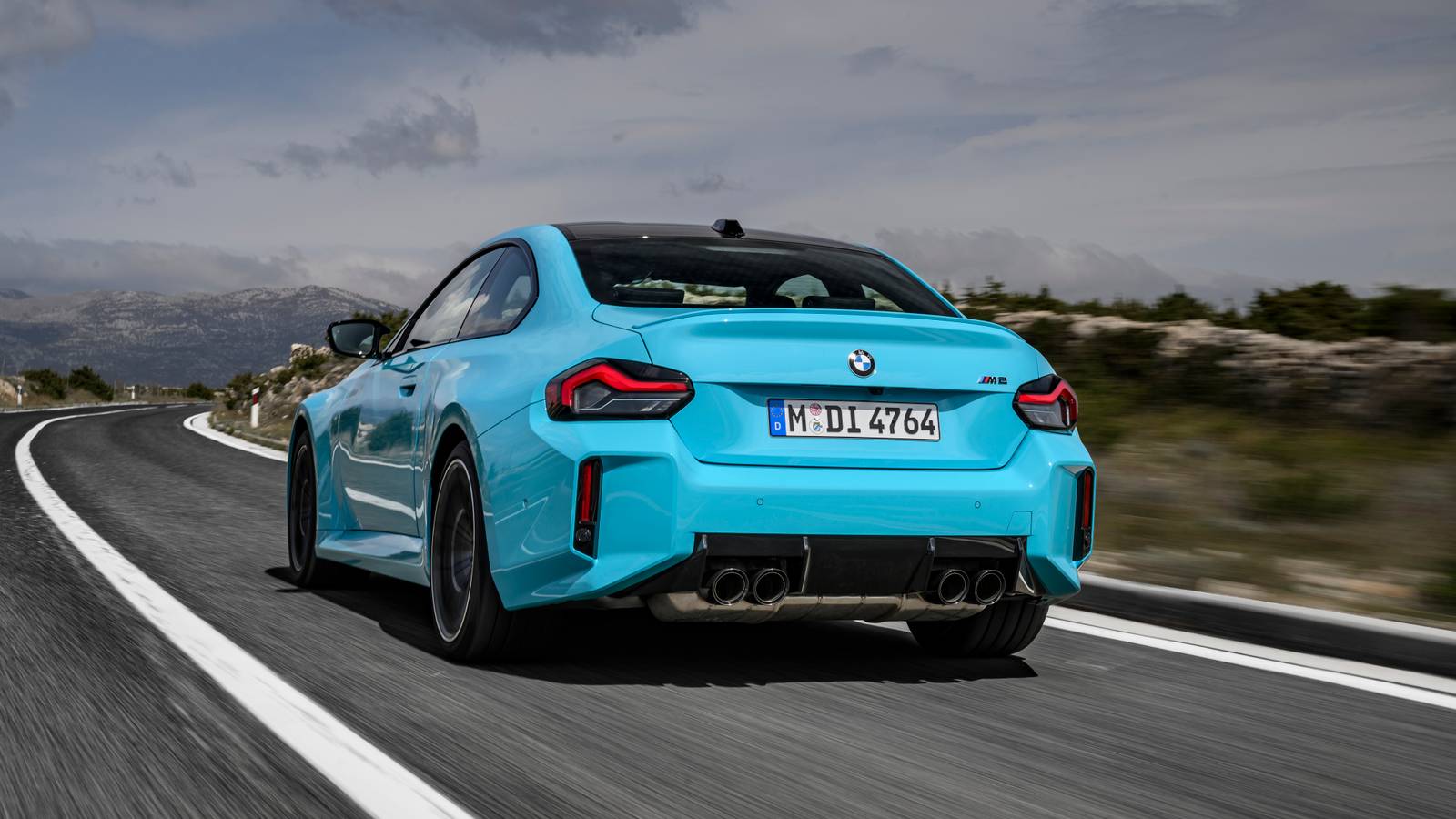
BMW M2 M xDrive: All-Wheel Drive Coming to the Compact Performance Icon
The Evolution of Grip: Why the All-Wheel Drive M2 Changes the Performance Game
When the BMW M2 first roared onto the scene in 2016, it was heralded as a return to form for the German marque. It was compact, loud, and—crucially—strictly rear-wheel drive. It was the “driver’s car” for the purist, a machine designed for those who prioritized engagement over raw, all-weather efficiency. Today, the landscape of high-performance motoring is shifting, and with the arrival of the 2026 BMW M2 with M xDrive, we are witnessing a pivotal evolution in how enthusiasts perceive “pure” driving.
Adding all-wheel drive to a platform historically defined by its tail-happy nature is a bold move. However, by integrating the M xDrive system, BMW isn’t just adding grip; they are adding a layer of sophisticated versatility that allows the M2 to compete in a different league entirely.
The Engineering Behind the All-Weather Beast
The M xDrive system is not a standard “set it and forget it” setup. At its core lies an electronically controlled multi-plate clutch that works in harmony with the Active M Differential. This isn’t just about preventing wheel spin; it’s about intelligent power distribution. In normal conditions, the car remains rear-biased, preserving that classic M-car feel, but it can shift torque to the front axle in milliseconds when the rear tires hit their limit.
Performance vs. Pedigree: The Weight Penalty
Critics often argue that adding an AWD system ruins the agility of a compact sports coupe. The data shows a 121-pound weight increase—from 3,867 lbs. To 3,988 lbs. While that might sound like a penalty on paper, the trade-off is staggering in real-world performance. The M xDrive model cuts the 0–60 mph sprint to 3.6 seconds, shaving 0.3 seconds off the rear-wheel drive version. For the weekend track warrior, that improved launch capability is a game-changer.
Future Trends: The Shift Toward Configurable Performance
The trend we are seeing across the industry—not just with BMW—is the “democratization of versatility.” Manufacturers are moving away from forcing drivers to choose between a “track car” and a “daily driver.” By offering systems that can toggle between drive modes, manufacturers are ensuring their performance flagships remain relevant in varied climates and driving conditions.
We expect this trend to continue, with more performance manufacturers adopting modular drivetrain systems. The goal is to maximize the “usage envelope” of a vehicle, ensuring that a $75,000 investment is just as capable on a snowy morning commute as It’s on a dry, sun-drenched circuit.
Frequently Asked Questions
Does the M xDrive system make the M2 slower in corners?
Quite the opposite. By managing power distribution between the front and rear wheels independently of the Dynamic Stability Control, the system allows for higher exit speeds out of corners, keeping the car more composed under heavy acceleration.

Is there a manual transmission option for the M xDrive model?
Currently, the M xDrive system is paired exclusively with the eight-speed M Steptronic automatic transmission. Purists seeking a six-speed manual gearbox will still need to opt for the rear-wheel-drive configuration.
How does the M2 with M xDrive compare to the M3 or M4?
While the M3 and M4 also offer M xDrive, the M2 provides a more compact footprint and a lower entry price point, making it the most accessible entry into the high-performance all-wheel-drive M lineup.
Where is the 2026 M2 built?
The entire M2 lineup, including the new xDrive variants, is manufactured at BMW’s facility in San Luis Potosí, Mexico.
Ready to take the next step in your driving journey? Whether you prefer the raw, unassisted feel of a rear-wheel-drive manual or the relentless, all-weather grip of the new M xDrive, the M2 remains the gold standard for compact performance. Explore our full inventory of M models or subscribe to our newsletter for the latest performance car reviews and industry insights delivered straight to your inbox.