
Cambridge robotics team makes the podium in Greece
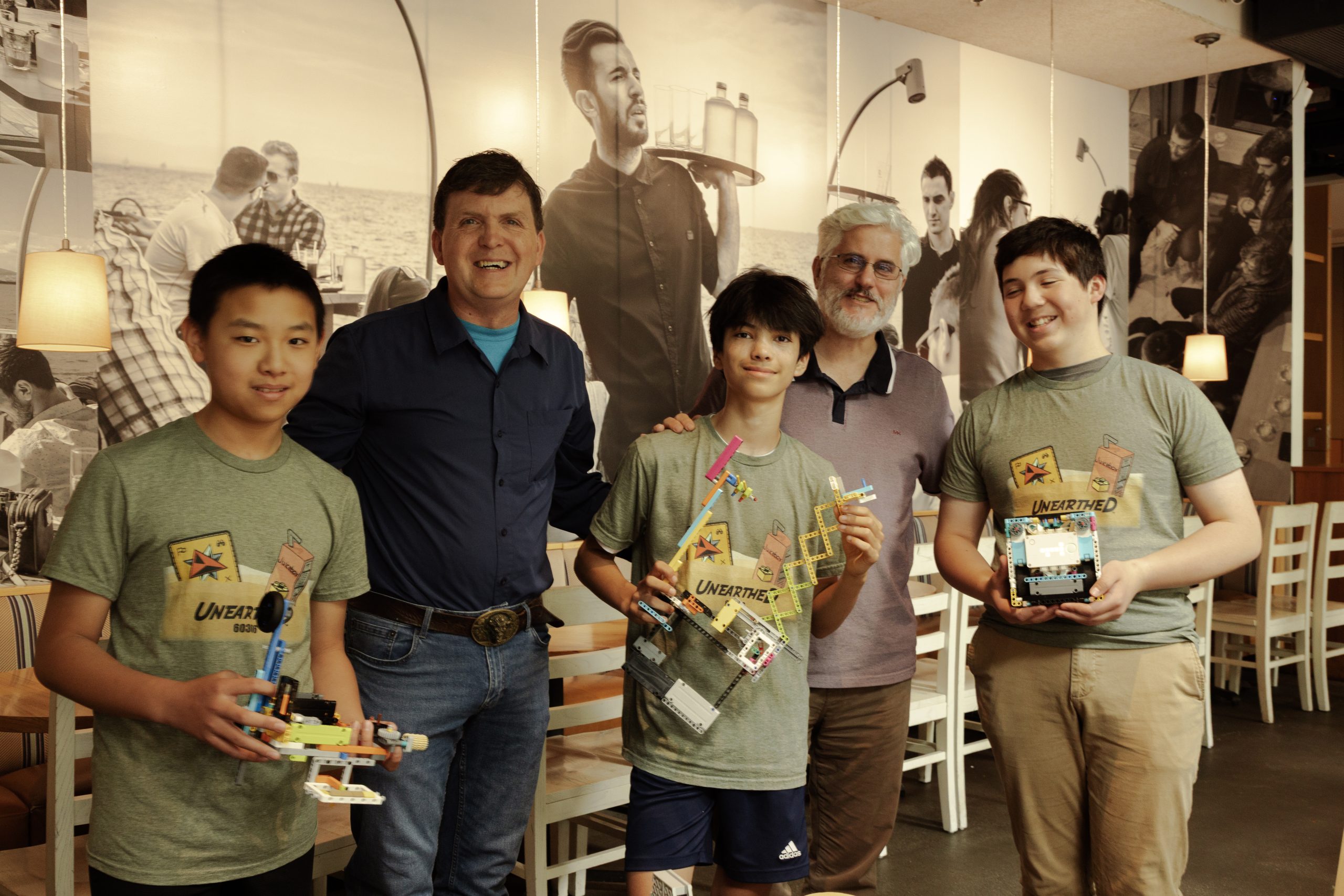
Juicebox Robotics, a Cambridge-based team of three middle schoolers, placed third in the Alliance Cup at the FIRST Lego League (FLL) World Championship in Greece. According to reports from Cambridge Day, the team developed an autonomous “mosaic” robot to scan and digitally render tile mosaics through collaborations with MIT and ARTAIC.
How did Juicebox Robotics reach the World Championship?
The team consists of Quinlan Blankinship, Jordon Li, and Miro Vinck. They operate independently of any school or organization, coached by parents Erik and Sen Blankinship and Patrick Vinck. The group began their season in a Cambridge basement and secured their spot in Greece after a series of high-ranking finishes in Massachusetts.
Their path included two first-place finishes in different categories at the Red Hawk Rumble 2025 Qualifier. They later earned a third-place Champions Award at the 2025 FLL Massachusetts East Championship. Erik Blankinship told Cambridge Day that while the team expected to do “okay,” the realization of the workload required for the world stage hit them five seconds after winning the regional award.
What is the “mosaic” robot and how does it work?
The team’s innovation project focused on creating a robot capable of scanning and digitally rendering tile mosaics. Miro Vinck said the idea was inspired by a trip to Pompeii. To move from concept to a working “proof-of-concept,” the team sought professional engineering feedback from several high-authority institutions.
The development process included:
- Technical Guidance: The team received feedback from the Kendall Square-based Robotics and AI Institute.
- Peer Review: Quinlan Blankinship and Jordon Li presented their concept to Scouting America peers at the Harvard Peabody Archeology Museum.
- Industry Testing: The team partnered with ARTAIC, a Boston company specializing in robotic tile mosaics. This partnership led to several visits to MIT’s Koch Center to execute an automated scan.
Why did the team switch to Python-based coding?
While many FLL teams use the default coding language provided by Lego, Juicebox Robotics opted for Pybricks, a Python-based language tailored for Lego robotics. Quinlan Blankinship explained that the default language “gets very messy” when coding the level of complexity their robot required.
This technical shift allowed the team to build a more sophisticated autonomous platform. One notable feature is the “French fry grabber,” an accordion-style tool made of yellow Lego bricks used to maneuver objects on the competition mat. Miro Vinck noted that the robot’s design was a collaborative effort, with Jordon Li helping build the arm and Blankinship finalizing the design after identifying flaws.
How does community funding support independent robotics?
Because Juicebox Robotics is not affiliated with a school, they rely entirely on community support. The team raised nearly $7,000 through a dedicated fundraiser to cover travel and accommodations in Greece. A community concert at the Union Tavern also helped rally financial support.
Local business involvement played a key role. Spyros Fotopoulos, senior vice president at Saloniki Greek Restaurants, sponsored the team. Fotopoulos told Cambridge Day that businesses should invest in innovation, particularly when it comes from young students.
What is the future of the Juicebox team?
The team is currently evaluating whether to return to the FLL or move toward larger-scale competitions. Miro Vinck mentioned that the First Robotics Competition (FRC) is a primary option they are considering for next year.
Frequently Asked Questions
What is the FIRST Lego League (FLL)?
FLL is a global youth competition where players build autonomous robots for timed games and develop innovation projects tied to a real-world theme.
Who are the members of Juicebox Robotics?
The team consists of middle school students Quinlan Blankinship, Jordon Li, and Miro Vinck.
What was the team’s specific achievement in Greece?
They placed third in the Alliance Cup, a segment of the competition where teams partner with randomly selected companions for collaborative missions.
Do you think independent teams have an advantage over school-sponsored teams in robotics? Share your thoughts in the comments below or subscribe to our newsletter for more updates on youth STEM achievements.