
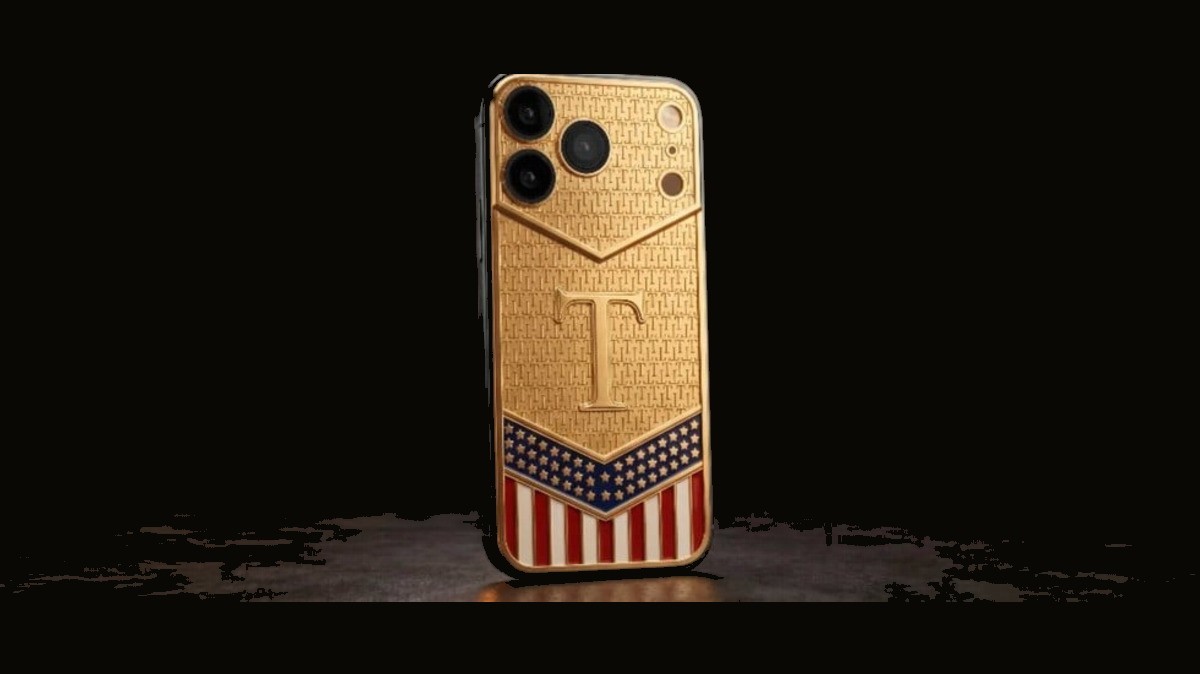
Caviar T-Great: The $10,000 Gold-Plated Trump-Themed iPhone 17 Pro Max
The Shift from Specifications to Status Symbols
For a decade, the smartphone industry has been locked in a “spec war.” We’ve chased faster processors, more megapixels, and brighter screens. But a new trend is emerging: the decoupling of a device’s value from its technical capabilities. We are entering the era of prestige tech.
The recent launch of the Caviar T-Great—a gold-plated iPhone 17 Pro Max priced at over $10,000—is the perfect case study. While the internal hardware is a standard Apple flagship, the value proposition is entirely external. The 24-karat gold plating and cloisonné American flag aren’t “features” in the traditional sense; they are signals of wealth and affiliation.
This suggests a future where the “Ultra-Premium” segment splits. On one side, we have the “Pro” users who want productivity; on the other, we have “Collector” users who treat their smartphones like high-end watches or luxury handbags. In this market, a 1 TB storage capacity is less important than the purity of the gold used on the chassis.
Tech as a Political Statement: The Rise of “Ideological Hardware”
Perhaps the most provocative trend is the convergence of consumer electronics and political branding. For years, political expression was limited to stickers or phone cases. Now, we are seeing the birth of ideological hardware.
The tension between the official “Trump Phone T1” and the Caviar T-Great highlights a fascinating market divide. While the T1 targets a broader demographic with mid-range specs, the T-Great targets the “luxury loyalist.” It transforms a tool of communication into a badge of political identity.
Beyond the Brand: The Emergence of Political Ecosystems
As polarization increases globally, we can expect more “boutique” hardware designed to signal allegiance. We may soon see devices that don’t just look different, but come pre-loaded with specific curated news feeds, encrypted apps for specific political circles, or exclusive AI assistants tailored to a particular worldview.
This moves the smartphone from being a neutral utility to a cultural artifact. When a device costs $10,910, it is no longer about making a call; it is about announcing who you are and what you stand for before you even unlock the screen.
The Future of Hyper-Customization: The “One-of-One” Economy
The T-Great isn’t just a product; it’s a service. Caviar’s offer to customize existing iPhone 17 Pro Max devices points toward a broader trend of hyper-customization. We are moving away from mass production toward “mass customization.”
In the coming years, the “off-the-shelf” experience will feel insufficient for the ultra-wealthy. We will likely see a rise in “Hardware Ateliers”—companies that take standard silicon and wrap it in exotic materials, from aerospace-grade titanium to ethically sourced gemstones and rare metals.
Materiality in a Digital Age
As software becomes more homogenized—where every flagship phone feels roughly the same to use—the physical “touch and feel” (haptics and materiality) becomes the only remaining point of differentiation. The use of 24K gold and intricate engravings is a reaction to the “glass slab” monotony of modern design. The future of luxury tech is tactile, heavy, and unapologetically ornate.
For more insights on how luxury markets are evolving, check out our guide on The Future of High-End Consumerism or explore the latest in Apple’s hardware evolution.
Frequently Asked Questions
What makes the Caviar T-Great different from a standard iPhone?
Internally, it is a standard iPhone 17 Pro Max. Externally, it features a 24K gold-plated body, a cloisonné US flag, and a custom “T” logo, positioning it as a luxury collectible rather than just a phone.
Is the “Trump Phone” the same as the Caviar T-Great?
No. The Trump T1 is an official smartphone from Trump Mobile, generally aimed at a mid-range market. The T-Great is a luxury modification created by the atelier Caviar using Apple hardware.
Why are luxury smartphones so expensive?
The cost is driven by the materials (such as 24K gold), the artisanal labor involved in the customization, and the exclusivity of the limited-edition production runs.
What do you think?
Is a $10,000 gold-plated phone a masterpiece of luxury or an unnecessary excess? Would you ever buy a device based on a political theme?
Join the conversation in the comments below or subscribe to our newsletter for more deep dives into the intersection of tech and luxury!