
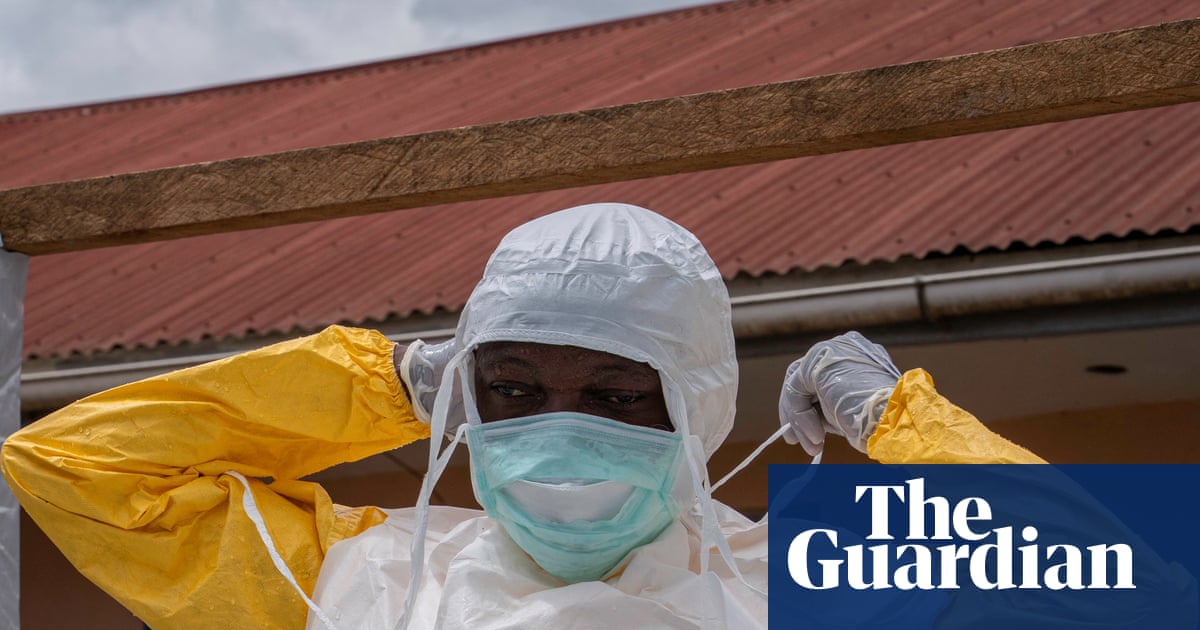
Central Africa Ebola Outbreak Could Match Worst Outbreak in History, CDC Warns
The Escalating Ebola Crisis: A Looming Global Health Challenge
The specter of a massive Ebola outbreak has returned to the headlines, with new projections from the US Centers for Disease Control and Prevention (CDC) warning that the current situation in Central Africa could mirror the devastating 2014-2016 epidemic. As health officials scramble to contain the spread, the intersection of conflict, limited data, and the absence of specific vaccines creates a complex, high-stakes scenario.

Understanding the modelling: Why Numbers Shift
Computer models are essential tools for public health, but they are not crystal balls. The CDC’s latest analysis suggests a range of outcomes, from 10,000 to over 20,000 cases. However, these figures are highly sensitive to one critical variable: the speed at which infected individuals are identified, and isolated.
Dr. Satish Pillai, incident manager for the CDC’s Ebola response, notes that without aggressive public health interventions, the outbreak could reach catastrophic levels. Yet, experts like Jennifer Nuzzo of the Brown University Pandemic centre advise caution. modelling is notoriously difficult when data is sparse, and history shows that projections can be wildly inaccurate—sometimes overestimating the final toll by a significant margin.
During the 2014 West Africa Ebola epidemic, early CDC models projected a worst-case scenario of 1.4 million infections. The actual number of cases was roughly 50 times lower, demonstrating how rapidly changing interventions can alter the trajectory of a disease.
The “Perfect Storm”: Conflict and Disease
The current outbreak is not unfolding in a vacuum. It is being exacerbated by persistent armed conflict in the Democratic Republic of Congo. Violence involving the M23 rebel group and the Allied Democratic Forces (ADF) has triggered mass displacement, making it nearly impossible for healthcare workers to track contacts or provide care safely.
the virus at the centre of this crisis—the Bundibugyo strain—lacks the specific vaccines and treatments that have been developed for other variants. This diagnostic and therapeutic gap leaves local populations particularly vulnerable.
The Link Between Biodiversity and Viral Spillovers
Ebola is often described as a “disease of deforestation.” As human activity encroaches further into wild habitats for mineral mining and urban expansion, the barrier between humans and wildlife reservoirs of the virus thins. This increases the risk of zoonotic spillover—where a virus jumps from animals to humans.
Stay informed through verified global health portals. Tracking the World Health Organization (WHO) situation reports is the best way to get real-time, accurate data on current health emergencies rather than relying on social media speculation.
Frequently Asked Questions (FAQ)
- How is Ebola transmitted?
- Ebola is spread through direct contact with the body fluids of an infected person, such as blood, vomit, or semen. It is not an airborne disease.
- Why are there no vaccines for this specific outbreak?
- Ebola has several different strains. Vaccines developed for one strain (like Zaire ebolavirus) may not provide effective protection against others, such as the Bundibugyo virus.
- What is the most effective way to stop an Ebola outbreak?
- The most effective strategy remains the rapid identification, isolation, and supportive treatment of infected patients, paired with rigorous contact tracing to break the chain of transmission.
Looking Ahead: Strengthening Global Surveillance
The current trajectory of the outbreak is a stark reminder that our global health infrastructure remains fragile. As we look to the future, the focus must shift from reactive crisis management to proactive surveillance. Investing in local healthcare capacity and addressing the socio-political drivers of instability will be the only way to prevent future localized outbreaks from becoming regional catastrophes.

What are your thoughts on how international health organizations should balance data modelling with on-the-ground reality? Let us know in the comments section below, or subscribe to our health briefing for the latest updates on global disease trends.