
Central Asia’s Geopolitical Evolution: From Buffer Zone to Strategic Power
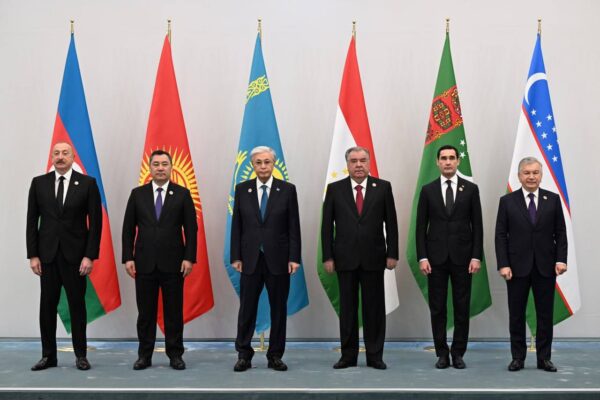
Central Asia is evolving from a landlocked buffer zone into an autonomous geopolitical actor, as regional states leverage their role as a critical supply chain nexus and energy repository. While historically viewed through the lens of great-power competition, countries including Kazakhstan, Uzbekistan, and Turkmenistan are increasingly prioritizing collective agendas, utilizing their natural geography to secure strategic leverage between global powers like China, Russia, and India.
Why Is Central Asia No Longer Just a Buffer Zone?
The traditional narrative that Central Asia exists merely as a “Heartland” for external empires is being challenged by the region’s active pursuit of decisional autonomy. According to regional analysts, the disruption of maritime trade routes, such as the volatility in the Strait of Hormuz, has forced global powers to seek overland alternatives. This shift has elevated the importance of the Trans-Caspian International Transport Route, or Middle Corridor. By positioning themselves as essential transit hubs, Kazakhstan and Azerbaijan have gained the capacity to negotiate terms rather than simply accepting the influence of Moscow, Beijing, or Washington.
Central Asia holds some of the world’s most significant energy reserves. Turkmenistan maintains the world’s fourth-largest natural gas reserves, while Kazakhstan has ranked among the top 15 nations for oil reserves for decades.
How Is the Region Capitalizing on Critical Raw Materials?
Central Asia is transitioning from a fossil-fuel-dependent economy to a key player in the nuclear and rare-earths sectors. Kazakhstan has been the world’s leading uranium producer since 2009, responsible for 40% of global output as of 2025. Furthermore, the 2025 discovery of a massive rare-earths reserve in Kazakhstan provides a potential alternative to Chinese supply chains. To maximize this, the Kazakh government is actively seeking technological partnerships with Beijing to move beyond raw extraction and into processing, a strategy designed to avoid the “resource curse” that has hampered other resource-rich developing nations.
What Role Does Demographic Growth Play in Economic Strategy?
The region’s youthful population and high literacy rates offer a distinct competitive advantage in a world of aging labor markets. Central Asia maintains a fertility rate of 3.1 births per woman and a median age of approximately 26.8 years. With a literacy rate of 99.5%, the workforce is increasingly capable of supporting a knowledge-driven economy. Chinese foreign direct investment (FDI) has reflected this shift: ten years ago, 68% of Chinese capital in the region targeted raw materials. Today, that figure has dropped to 54%, with manufacturing now accounting for 22% of Chinese FDI, signaling a transition toward industrial localization.
When analyzing regional growth, look at the ratio of raw material investment versus manufacturing FDI. A shift toward manufacturing indicates a more sustainable, long-term economic integration strategy for developing nations.
Can Central Asia Maintain a Multi-Aligned Future?
The region is adopting a “buffet” approach to diplomacy, engaging with Russia, China, India, and Turkey simultaneously to meet domestic needs. This multi-alignment strategy does not seek equidistance, but rather the maximization of national interest. Challenges remain, particularly regarding political transparency and the democratic rollback observed by some observers. However, the formation of the C5 consultative format—which now includes Azerbaijan—demonstrates a growing trend toward intra-regional cooperation. By aligning on digital and physical infrastructure, these states aim to turn their geographic constraints into a unified, substantive bargaining force.
Frequently Asked Questions
Which countries are considered part of Central Asia?
While definitions vary, the core group consists of the five post-Soviet states: Kazakhstan, Kyrgyzstan, Tajikistan, Turkmenistan, and Uzbekistan. Many analysts now include Azerbaijan and Armenia due to their deepening integration with regional transport corridors.

Is the region still dependent on Russian and Chinese investment?
While Russia and China remain major investors, Central Asian capitals are diversifying their partnerships. They are increasingly engaging with Japan, the United States, and Turkey to access new technologies and capital, reducing their reliance on any single external power.
What is the “Middle Corridor”?
The Middle Corridor, or Trans-Caspian International Transport Route, is a logistics network that connects China and Europe via Central Asia and the Caucasus. It serves as a vital alternative to maritime routes, especially when those routes face security or logistical disruptions.
What are your thoughts on the shifting geopolitical role of Central Asia? Join the conversation by leaving a comment below or subscribe to our newsletter for deep dives into emerging regional markets.