

Central Banks Resume Gold Buying Led by Poland and China
The Great Golden Pivot: Why Central Banks are Trading Dollars for Bullion
For decades, the U.S. Treasury bond was the undisputed king of the global financial system. It was the “risk-free” asset that every central bank held in massive quantities to stabilize their economies. But a seismic shift is occurring. From the halls of power in Warsaw to the vaults in Beijing, the world’s financial guardians are quietly—and sometimes loudly—pivoting back to the oldest form of money: gold.
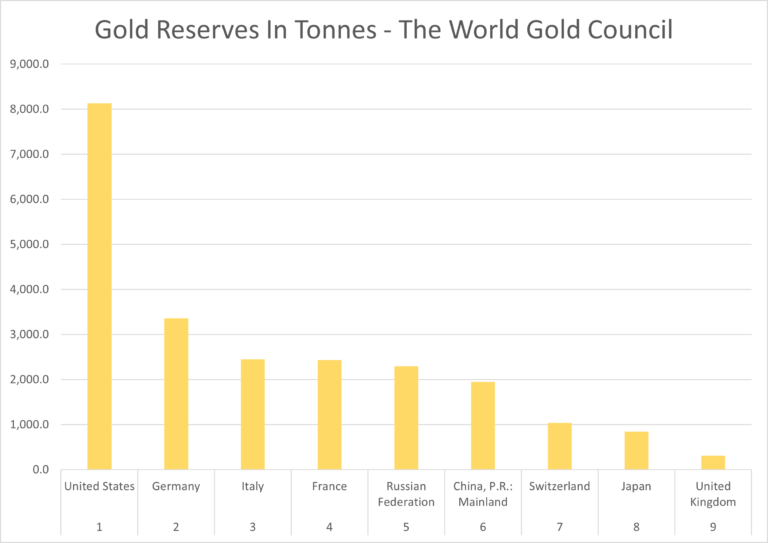
Recent data from the World Gold Council (WGC) reveals a striking trend. After a brief dip in March, central banks surged back into the gold market in April, led by aggressive accumulation in Eastern Europe and Asia. This isn’t just a hedge against inflation. it is a strategic realignment of global power.
Poland and China: The New Vanguard of Gold Accumulation
Poland has emerged as a powerhouse in the gold market. In April alone, the National Bank of Poland scooped up 14 tons of gold, bringing its total intake for the year to 45 tons. This aggressive strategy has pushed gold to represent approximately 30% of Poland’s total foreign exchange reserves.
Meanwhile, China continues its relentless pursuit of bullion. With 8 tons added in April, China has maintained a streak of net purchases for 18 consecutive months. Their official reserves now stand at roughly 2,322 tons, accounting for about 9% of their total reserves. While 9% may seem small compared to Poland, the sheer volume of Chinese buying provides a massive floor for global gold prices.
The Czech Republic is also playing a long game, recording 38 consecutive months of net purchases. This consistency suggests that the move toward gold is not a panic response to a single crisis, but a calculated, multi-year strategy to diversify away from fiat currencies.
The Divergence: Who is Selling?
While the trend is overwhelmingly bullish, not every nation is buying. Russia has continued to act as a net seller, offloading 6 tons in April and 22 tons so far this year. Similarly, Uzbekistan saw a minor sale of 1 ton in April, though they remain one of the largest net buyers on a cumulative basis.
De-Dollarization: Gold Overtakes US Treasuries
The most provocative development in this trend is the rise of gold as the world’s primary reserve asset. According to reports from the European Central Bank (ECB) and the Financial Times, gold has officially overtaken U.S. Treasuries in terms of its share in total global central bank reserves, now accounting for 27%.
This phenomenon, often termed “de-dollarization,” is driven by a desire for “neutral assets.” Unlike a government bond, which is essentially a promise from one government to pay another, gold carries no counterparty risk. It cannot be frozen by a foreign government, nor can it be inflated away by a central bank’s printing press.
Future Outlook: A Permanent Shift in the Financial Order?
Is this a temporary bubble or a permanent change? The sentiment among experts is overwhelmingly the latter. A recent World Gold Council survey found that 95% of respondents expect global central bank gold reserves to continue increasing over the next year—a significant jump from 81% in the previous survey.
Several catalysts are likely to sustain this momentum:
- Geopolitical Fragmentation: As the world splits into competing economic blocs, nations are seeking assets that are not controlled by any single superpower.
- Currency Volatility: Persistent inflation in major economies makes the stability of gold more attractive than the fluctuating yields of sovereign debt.
- Institutional Trust: The weaponization of financial systems (such as freezing reserve assets) has taught central banks that diversification is a matter of national security.
For more insights on global economic shifts, you may want to explore our guide on The Evolution of Digital Currencies or read the latest World Gold Council research for deep-dive market data.
Frequently Asked Questions
Why are central banks buying gold instead of holding US Dollars?
Gold is a “neutral asset” with no counterparty risk. Unlike the US Dollar or Treasuries, gold cannot be frozen by a foreign government or devalued by the monetary policy of a single nation.
Which country is leading the gold buying trend?
Poland has been one of the most aggressive buyers recently, significantly increasing gold’s share of its total reserves to roughly 30%.
Does central bank buying affect the price of gold for regular people?
Yes. Central banks buy in massive quantities. Their consistent demand creates a strong price floor and often drives the long-term upward trend of gold prices.
Join the Conversation
Do you think gold will eventually replace the dollar as the world’s primary reserve asset, or is this just a temporary hedge? We want to hear your thoughts!
Leave a comment below or subscribe to our newsletter for weekly deep-dives into the global economy.