
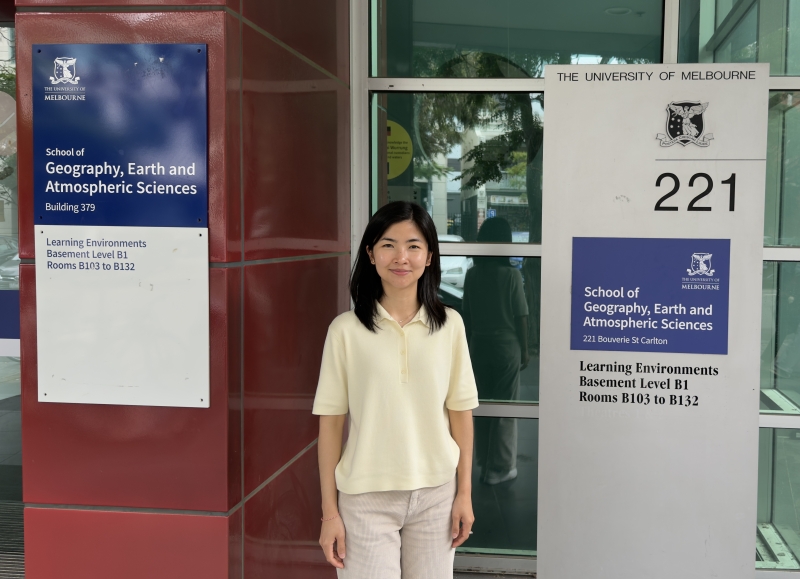
Chanrithy Lao Explores Cambodian Agricultural Decision-Making at University of Melbourne
Beyond the Surface: The Future of Nature-Based Solutions in Agriculture
For decades, modern industrial agriculture has viewed nature as something to be controlled, tamed, or cleared. However, a paradigm shift is occurring. We are moving toward a future where “ecological anomalies”—features once seen as nuisances—are being recognized as vital assets for food security and soil health.
A prime example of this shift is the ongoing research into termite mounds in Cambodia. While a farmer might initially see a mound as an obstacle to a plow, researchers like Chanrithy Lao, through the ECOTERM project, are uncovering the hidden economic and ecological value of these structures.
The trend is clear: the future of farming lies in Nature-based Solutions (NbS). By quantifying the ecosystem services provided by termite mounds—such as enhanced soil fertility and biodiversity hotspots—agriculture is evolving from a battle against nature into a partnership with it.
The Shift Toward Participatory Research and Farmer-Led Innovation
The era of the “expert” descending from a laboratory to tell farmers how to plant is ending. In its place, we are seeing the rise of participatory research—a collaborative approach where the farmer is a co-researcher rather than a subject.
Projects like NextGen, supported by the Australian Centre for International Agricultural Research (ACIAR), exemplify this trend. By focusing on the social relations of smallholder farmers and their internal decision-making processes, researchers are finding that the most sustainable agricultural changes are those initiated by the farmers themselves.
Future trends in rural development will likely prioritize “social capital.” Understanding how a community shares knowledge and adopts new practices is just as important as the chemical composition of the soil. When farmers are involved in the co-construction of solutions, the adoption rate of sustainable practices skyrockets.
Why “Bottom-Up” Innovation Wins
- Contextual Relevance: Local farmers understand the specific micro-climates of their land better than any satellite map.
- Higher Ownership: Practices developed through participatory methods are more likely to be maintained long-term.
- Resilience: Community-led adaptation creates a social safety net that protects against climate shocks.
The Convergence of Economics and Ecology (Eco-Economics)
One of the most exciting trends is the integration of econometric analysis with field ecology. We are no longer just asking “Does this help the plant grow?” but “What is the quantifiable economic value of this ecological service?”
By combining field surveys with rigorous economic modeling, researchers can now put a price tag on biodiversity. This is crucial for the future of carbon credits and biodiversity offsets. If a termite mound can be proven to sequester carbon or increase yield without chemical fertilizers, it becomes a financial asset for the farmer.
This interdisciplinary approach—blending the expertise of institutions like the CERDI and the IRD—is the blueprint for solving the climate crisis. We are seeing a move toward “Regenerative Economics,” where the goal is not just sustainable growth, but the active restoration of the environment as a means of economic profit.
For more on how this applies to global markets, check out our guide on sustainable farming trends and the impact of biodiversity economics on emerging markets.
Frequently Asked Questions
What are ecosystem services?
Ecosystem services are the many and varied benefits that humans freely gain from the natural environment and from properly functioning ecosystems, such as clean water, pollination, and soil fertility.
How can termite mounds actually help rice production?
Termite mounds often concentrate nutrients and improve soil structure and aeration. In certain conditions, these “nutrient islands” can leak benefits into the surrounding soil, enhancing the growth of adjacent crops.
What is participatory research in agriculture?
It is a research methodology that involves farmers and local stakeholders in every step of the process—from defining the problem to testing solutions and analyzing results—ensuring that the outcomes are practical and sustainable.
Join the Conversation on Sustainable Agriculture
Are we overlooking the “small things” in nature that could solve our biggest food security challenges? We want to hear your thoughts on nature-based solutions.
Leave a comment below or subscribe to our newsletter for the latest insights into the future of agroecology!