
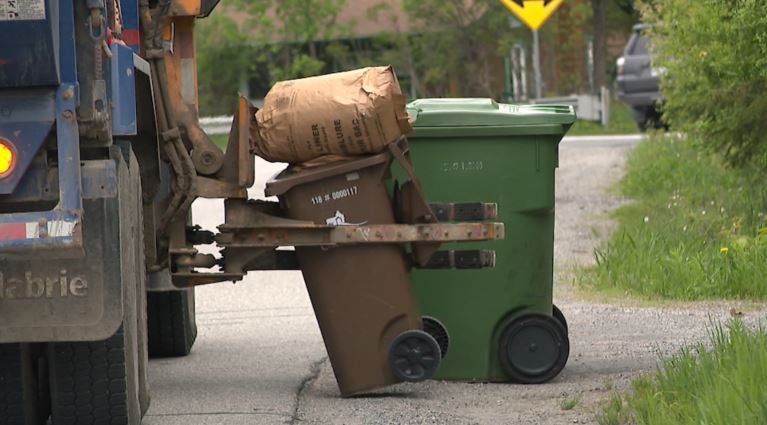
Chelsea Charges Residents for First Compost Bin
In the competitive arena of organic waste recovery, the municipality of Chelsea is playing by a different set of rules than its neighbours in the Outaouais region. While most local players provide the necessary equipment for free, Chelsea has adopted a “pay-to-play” model for its composting program.
The Cost of Entry
Residents in Chelsea who want to join the composting effort must cover the initial costs of their equipment. The municipality charges $141 for a 120-litre brown bin and $171 for a larger 360-litre model.
This strategy is rooted in the “user-payer” principle. Since the service was first implemented in 2018, residents have contributed to the cost of these bins, including through their tax accounts.
A Regional Contrast in Strategy
Chelsea stands as an exception in the region. In several other Outaouais municipalities, the first bin is provided at no cost to encourage higher participation rates.
Gatineau, for instance, employs a different playbook. In that city, the bins belong to the municipality and are distributed to residents without any fees.
Overcoming the Hurdles
Despite the price tag, Chelsea officials report strong population engagement. The municipality currently boasts one of the best organic recovery rates within the MRC.
However, the “game” is not without its obstacles. Some residents have expressed concerns regarding the costs and the risk of attracting wild animals, specifically bears.
The organization Enviro Éduc-Action suggests that requiring payment for basic equipment could potentially discourage some families from participating in this environmental gesture.
The Long-Term Goal
While Chelsea focuses on recovery rates, Gatineau emphasizes coaching and support. They offer training, practical advice, and information tools to help citizens manage insects, odors, and bin maintenance.
Environmental organizations emphasize that the stakes are high. Waste sent to landfills can travel long distances and persist for decades or even centuries.
Composting is viewed as a concrete way to reduce the amount of waste sent to landfills and lower the environmental footprint of individual households.
Future Outlook
As the region continues to refine its waste management, Chelsea may see further shifts in participation based on how residents balance the cost of equipment against environmental benefits.
Depending on future recovery trends, the municipality could potentially adjust its pricing model, or it may continue to rely on the user-payer principle if performance remains high.
Frequently Asked Questions
How much do the brown bins cost in Chelsea?
A 120-litre bin costs $141, while a 360-litre model is priced at $171.
How does Chelsea’s approach differ from Gatineau’s?
Chelsea follows a “user-payer” principle where residents pay for their first bin. In Gatineau, bins belong to the city and are provided to residents free of charge.
What are the primary concerns cited by Chelsea residents?
The main concerns include the cost of the bins and the presence of wild animals, such as bears.
Do you believe providing equipment for free is the most effective way to increase community participation in environmental programs?