
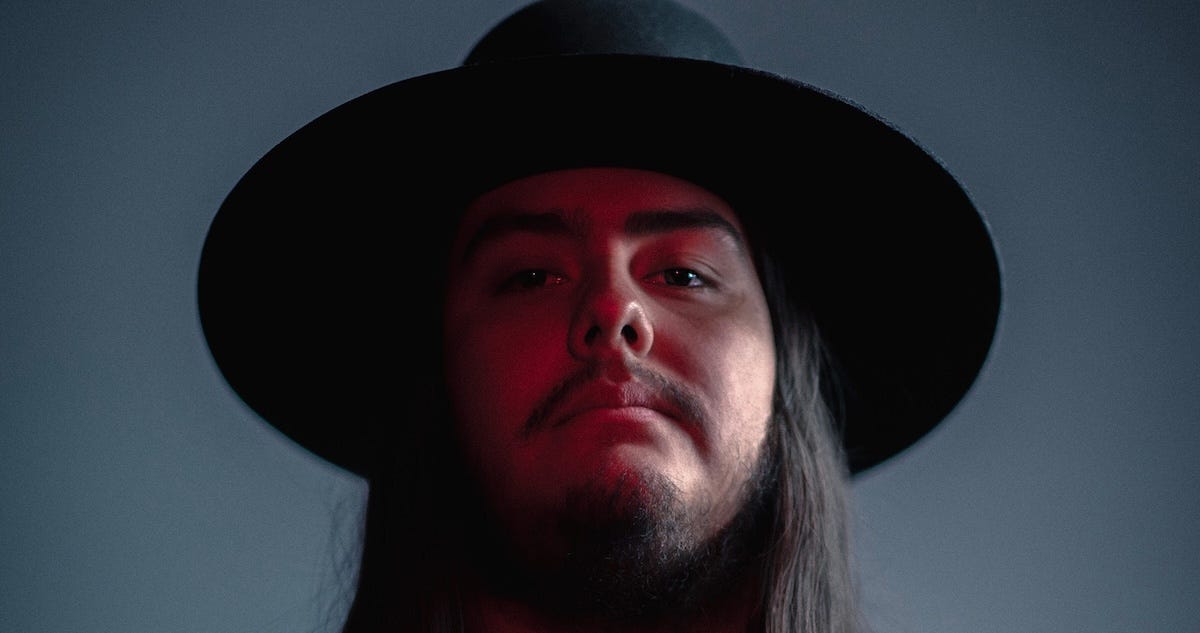
Cherokee singer & songwriter Agalisaga Mackey
Oklahoma Cherokee singer and songwriter Agalisiga “Chuj” Mackey is set to release his new album, Nasgino Inagei Nidayulenvi (It Started in the Woods), on October 18, 2024, through the label Horton Records. The project consists entirely of original songs and select covers performed in the Cherokee language, aiming to revitalize the tongue for a new generation of speakers.
The Cultural Significance of Language Revitalization
The Cherokee language currently has approximately 1,500 first-language speakers remaining. According to Mackey, the language faced significant decline due to the influence of American residential schools, which historically discouraged or prohibited the use of indigenous languages and cultures. By writing and performing in Cherokee, Mackey seeks to counter the long-standing narrative that the language lacks relevance in a modern, globalized society.

Did You Know? The Cherokee language is tonal, a characteristic that Mackey notes makes it particularly well-suited for songwriting, as it allows for a melodic flow that mirrors the way words are naturally spoken.
An Artistic Path Rooted in Tradition
Mackey’s songwriting journey began after he was discovered by filmmaker Jeremy Charles, who saw videos of him singing country music on Facebook. Charles invited him to contribute to Anvdvnelisgi, a 2022 compilation album of Cherokee-language music. This initial success encouraged Mackey to pursue a full-length album that blends country music traditions—including murder ballads and two-stepping tunes—with the Cherokee language.
The album includes translations of iconic tracks such as Hank Williams’ “I’m So Lonesome I Could Cry” and Bob Dylan’s “I Shall Be Released.” Mackey reports that translating the latter proved difficult because the Cherokee language is highly direct and specific, whereas Dylan’s lyrics often rely on open-ended interpretation.
Expert Insight: The challenge of translating modern lyrics into Cherokee highlights a broader tension between preserving ancient linguistic structures and adapting them for contemporary expression. Mackey’s work suggests that for an endangered language to survive, it must be used in evolving artistic contexts rather than being treated as a static historical artifact.
Future Prospects for Cherokee Songwriting
As Mackey continues his work as a teacher for youth in his hometown of Kenwood, Oklahoma, he hopes his album will inspire other speakers to integrate the language into their daily lives. If his model of “growing” the language through music proves successful, it could lead to an increase in indigenous-language content across various media platforms. Future developments may include more collaborative projects between Cherokee artists and record labels like Horton Records to further document and distribute songs in the native tongue.

Frequently Asked Questions
Why did Mackey choose to write in Cherokee?
Mackey aims to revitalize the language, which he views as a living, adaptive tool that has been unfairly devalued. He argues that the best way to strengthen his culture is to ensure it remains present and spoken in everyday life.
What is the musical style of the new album?
The album features a “rock-solid” country backing. Mackey draws inspiration from the country music tradition found in many Native communities, incorporating elements of the blues, murder ballads, and Western guitar styles.
Are there any English songs on the album?
No, the album is sung entirely in Cherokee. Mackey notes that for his love song “Ginaliyosv,” he initially wrote the lyrics in English before translating them, as the concept of “love” is traditionally expressed through actions rather than specific vocabulary in Cherokee culture.
How do you think the integration of endangered languages into modern musical genres affects the way younger generations perceive their cultural heritage?