

New Study Links CEO Narcissism to Return-to-Office Mandates
A new Wharton study suggests that leader narcissism is a primary driver behind corporate mandates requiring employees to return to the office. While CEOs often cite collaboration, creativity, or economic necessity as justifications for ending remote work, researchers found a direct association between a leader’s narcissism score and their resistance to flexible work arrangements. The study indicates that for these leaders, the physical office serves as a venue where power is more easily performed.
Researchers constructed narcissism scores for Fortune 500 CEOs over a six-year period by analyzing behavioral proxies, including the size of a leader’s signature, the size of their photographs in annual reports, and the pay gap relative to their peers.
The disconnect between public rhetoric and internal motivation
Corporate leaders have offered various public explanations for requiring staff to work from the office. Amazon’s Andy Jassy has characterized in-person collaboration as “simpler and more effective,” while Jamie Dimon of JPMorgan Chase has described remote work as “management by Hollywood Squares.” Instagram’s Adam Mosseri has argued that five days in the office fosters greater creativity, and Larry Fink has suggested that having employees in the office could assist in efforts to combat inflation.


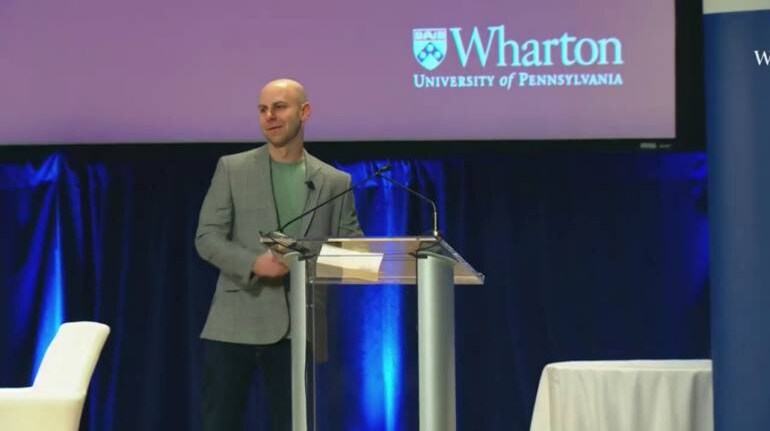
However, the Wharton study, co-authored by organizational psychologist Adam Grant, suggests these public justifications may overlook a personal incentive. The researchers found that the higher a leader’s narcissism score, the more likely they were to oppose remote work and seek additional status symbols, such as a board chairmanship. In a controlled experiment, CEOs whose egos were primed by reflecting on the assertive leadership styles of Steve Jobs and Larry Ellison displayed significantly greater opposition to remote work than those in a control group.
The findings suggest that the push for return-to-office mandates may be less about operational efficiency and more about the psychological needs of leadership. If executives rely on the office to validate their authority, they may be ignoring the potential downsides of these mandates, such as the loss of flexible work arrangements that employees value. This misalignment could lead to unintended consequences for talent retention and organizational culture if leaders prioritize their own status over workforce preferences.
Potential implications for the future of work
Grant and his co-authors warn that a focus on ego could blind leadership to the benefits of flexible working arrangements. As organizations continue to evaluate their long-term office policies, the reliance on top-down mandates driven by personal status could backfire. If mandates are perceived by the workforce as being disconnected from actual business performance, companies may struggle with employee engagement.
Looking ahead, the study serves as a signal for leaders to distinguish between legitimate operational requirements and personal preferences. Analysts expect that if companies continue to ignore employee preferences for flexibility, they may face increased friction in maintaining a productive and satisfied workforce. Future policy shifts will likely depend on whether leadership can balance the desire for centralized control with the demonstrated effectiveness of remote work.
Frequently Asked Questions
What behavioral proxies did researchers use to measure CEO narcissism?
Researchers used three primary indicators: the size of a CEO’s signature, the size of their photographs in annual reports, and their pay gap relative to industry peers.
How did priming CEOs with the leadership styles of Steve Jobs and Larry Ellison affect their views on remote work?
CEOs whose egos were primed by reflecting on these specific leadership styles showed significantly greater opposition to working from home compared to a control group.
What is the main argument for why narcissistic leaders favor in-office mandates?
According to the study, the primary reason is that power is easier to perform and maintain in a physical, in-person environment.
How do you believe corporate culture will evolve if leadership continues to prioritize office attendance over flexible work arrangements?