
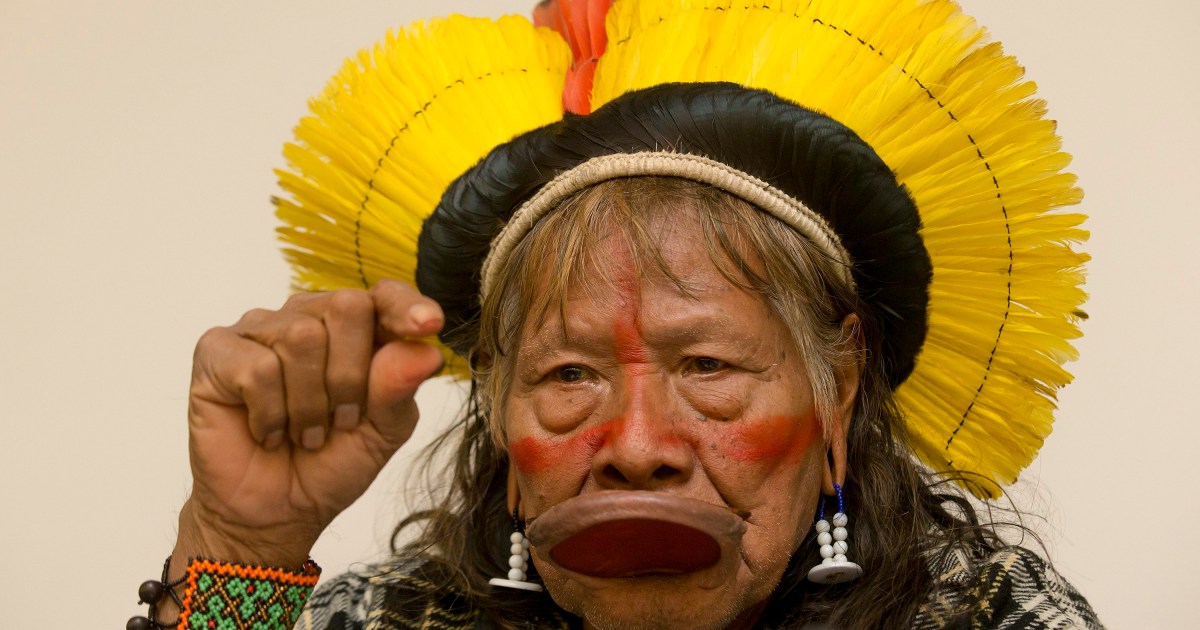
Chief Raoni Readmitted to ICU in Serious Condition
Indigenous leader Raoni Metuktire, 94, was admitted to the intensive care unit (ICU) of Hospital Dois Pinheiros in Sinop, Mato Grosso, on Sunday afternoon (14). According to the hospital, his condition is grave, with a primary diagnosis of pulmonary sepsis secondary to bronchoaspirative pneumonia caused by uncontrollable vomiting.
Why was Cacique Raoni hospitalized?
Hospital Dois Pinheiros reported that Raoni was admitted at 17:00 on Sunday after his health deteriorated at his home in the Peixoto de Azevedo region. Family members and caregivers stated the leader experienced an episode of vomiting on Saturday morning (13).
By Sunday, Raoni suffered three additional vomiting episodes, persistent coughing, abdominal pain, and expectoration containing a small amount of blood. Due to abdominal discomfort, he stopped eating after breakfast on Sunday.
The leader was transferred via air transport to the hospital. Upon arrival, medical staff observed signs of dehydration, acute drowsiness, a distended abdomen, and an absence of diuresis.
What is the current medical diagnosis?
Medical teams conducted a diagnostic investigation including blood cultures, arterial gasometry, and CT scans of the head, thorax, and abdomen. These tests identified renal function alterations and markers of a severe infectious process, according to the hospital.
The clinical team identified the primary hypothesis as pulmonary sepsis resulting from bronchoaspirative pneumonia. Additionally, an abdominal CT scan revealed gastric sub-occlusion.
Raoni is currently under continuous monitoring in the ICU. He is receiving broad-spectrum antibiotic therapy and intravenous hydration.
How does this fit into his recent health history?
This admission follows a series of health complications throughout May. On May 7, Raoni was hospitalized at Hospital Dois Pinheiros for a chronic hernia and was discharged on May 9.
Health issues resurfaced on May 12. He was first treated at a UPA in Peixoto de Azevedo and then at the municipal Regional Hospital before being transferred back to Hospital Dois Pinheiros. He entered the ICU on May 14 due to respiratory problems.
Raoni remained in the ICU for five days before being discharged on May 21 in stable condition. At that time, the hospital stated he was asymptomatic and hemodynamically stable, though he required ongoing home monitoring and medication.
What may happen next?
The leader’s recovery likely depends on his response to the broad-spectrum antibiotics and intensive support currently being administered. A possible next step involves continued stabilization of renal function and the resolution of the gastric sub-occlusion.

Medical teams may continue multiprofessional monitoring to prevent further respiratory complications, as Raoni has a recent history of ICU admissions for respiratory distress.
Frequently Asked Questions
What is the current status of Cacique Raoni?
His condition is considered grave, and he is receiving intensive care and continuous monitoring in the ICU of Hospital Dois Pinheiros.
What caused the current hospitalization?
The primary diagnosis is pulmonary sepsis secondary to bronchoaspirative pneumonia, following episodes of uncontrollable vomiting.
When was Raoni last in the hospital before this event?
He was previously discharged from the ICU on May 21 after being treated for respiratory problems.
How do you think the health of indigenous leaders impacts the visibility of environmental causes?