
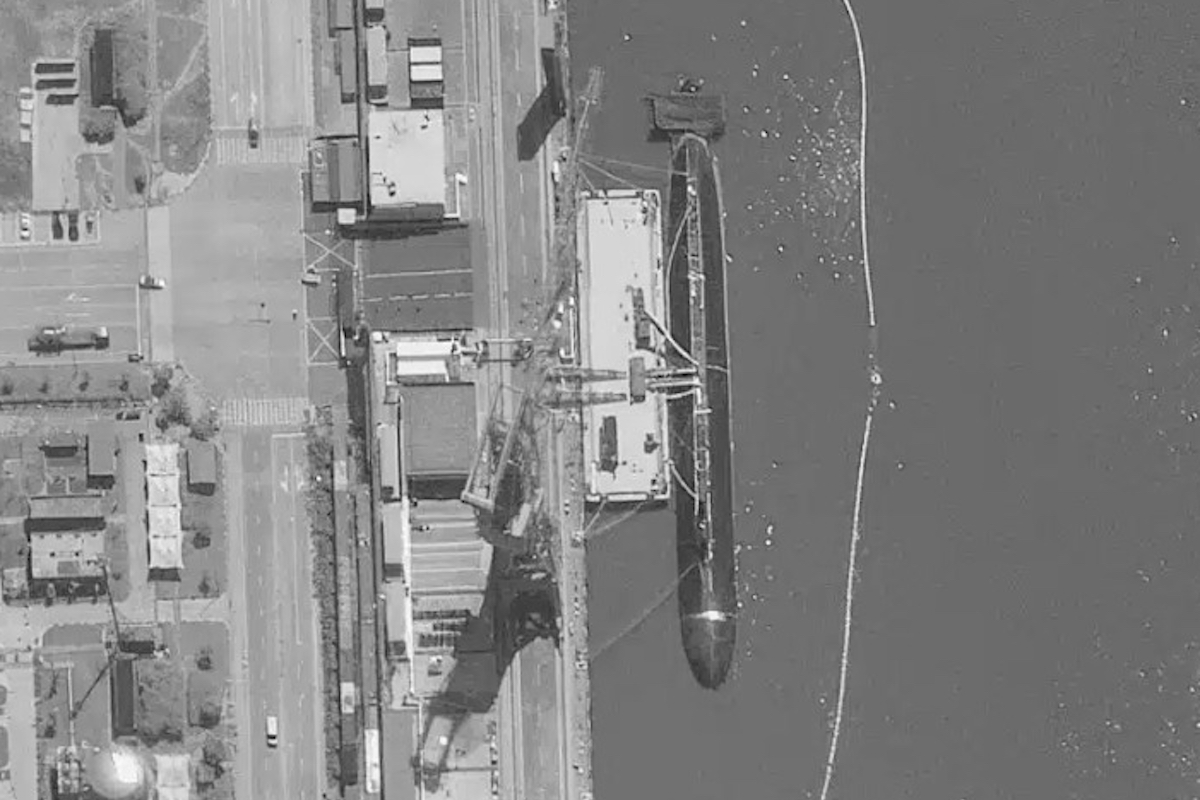
China’s sailless submarine takes warfare to the seabed
The Silent Threat: China’s Sailless Submarines and the War Beneath the Waves
In the high-stakes game of naval chess, the most dangerous moves are the ones you can’t see. Recent satellite imagery from the Jiangnan Shipyard has sent shockwaves through Western intelligence: China has covertly launched a highly advanced, “sailless” submarine. This isn’t just a design upgrade; it is a fundamental shift in how the People’s Liberation Army Navy (PLAN) plans to project power across the Indo-Pacific.
By removing the traditional “sail”—the large structure housing periscopes and sensors—China has created a vessel optimized for one thing: lethal, undetectable movement. This design reduces underwater drag, allowing for higher speeds, improved maneuverability, and a significantly quieter acoustic signature.
Beyond Detection: The New Reality of Seabed Warfare
For years, the U.S. And its allies have relied on the “Fish Hook” underwater sensor network to monitor the First Island Chain. However, these sailless vessels appear built to bypass such surveillance. Their massive dimensions suggest nuclear propulsion, giving them the endurance to linger in deep waters for weeks or months.
This endurance points to a chilling strategic pivot: seabed warfare. Major powers are increasingly viewing the ocean floor as the next critical theater of conflict. With nearly 99% of international internet traffic flowing through undersea fiber-optic cables, these vessels aren’t just hunting carriers—they are positioned to monitor, tap, or sever the digital arteries of the global economy.
The Digital Blockade: Why Taiwan and the Pacific are Vulnerable
The strategic stakes for Taiwan are particularly dire. Research indicates that the island relies on a concentrated cluster of undersea cables. A targeted “gray-zone” operation, potentially using these submarines to sever connections near the Bashi Channel, could trigger a digital blackout. Such a move would paralyze semiconductor supply chains and isolate government communications long before a single shot is fired on land.
A Shifting Balance of Power
While the U.S. Currently maintains a formidable nuclear-powered fleet, it faces a looming “valley of death” in production capacity. As older Los Angeles–class submarines retire, the U.S. Fleet is projected to hit a numerical low point by 2030. Meanwhile, China is accelerating its production, with projections suggesting they could field up to 80 submarines by 2035, half of which would be nuclear-powered.

The emergence of this new class complicates intelligence assessments. It forces Western planners to reconsider the “transparency” of the Near Seas. If China can reliably penetrate the First Island Chain, the U.S. Indo-Pacific Command (INDOPACOM) faces a new, persistent threat to its forward-deployed assets and command-and-control capabilities.
Frequently Asked Questions (FAQ)
Q: What is the main advantage of a “sailless” submarine design?
A: A sailless design significantly reduces underwater drag. This allows the submarine to move faster and more quietly, making it much harder for sonar arrays and surveillance networks to detect.
Q: Are these submarines actually capable of cutting internet cables?
A: While official details remain classified, the size and endurance of these nuclear-powered vessels suggest they are equipped for seabed operations, similar to specialized special-mission submarines operated by the U.S. And Russia.
Q: Why is the “First Island Chain” so important to this conversation?
A: It serves as a vital strategic barrier. If Chinese submarines can transit this chain undetected, they gain access to the open Pacific, threatening U.S. Carrier strike groups and critical supply lines.
What do you think? Is the future of naval warfare moving away from surface dominance and toward the silence of the seabed? Share your thoughts in the comments below or subscribe to our intelligence brief for weekly updates on Indo-Pacific security trends.