
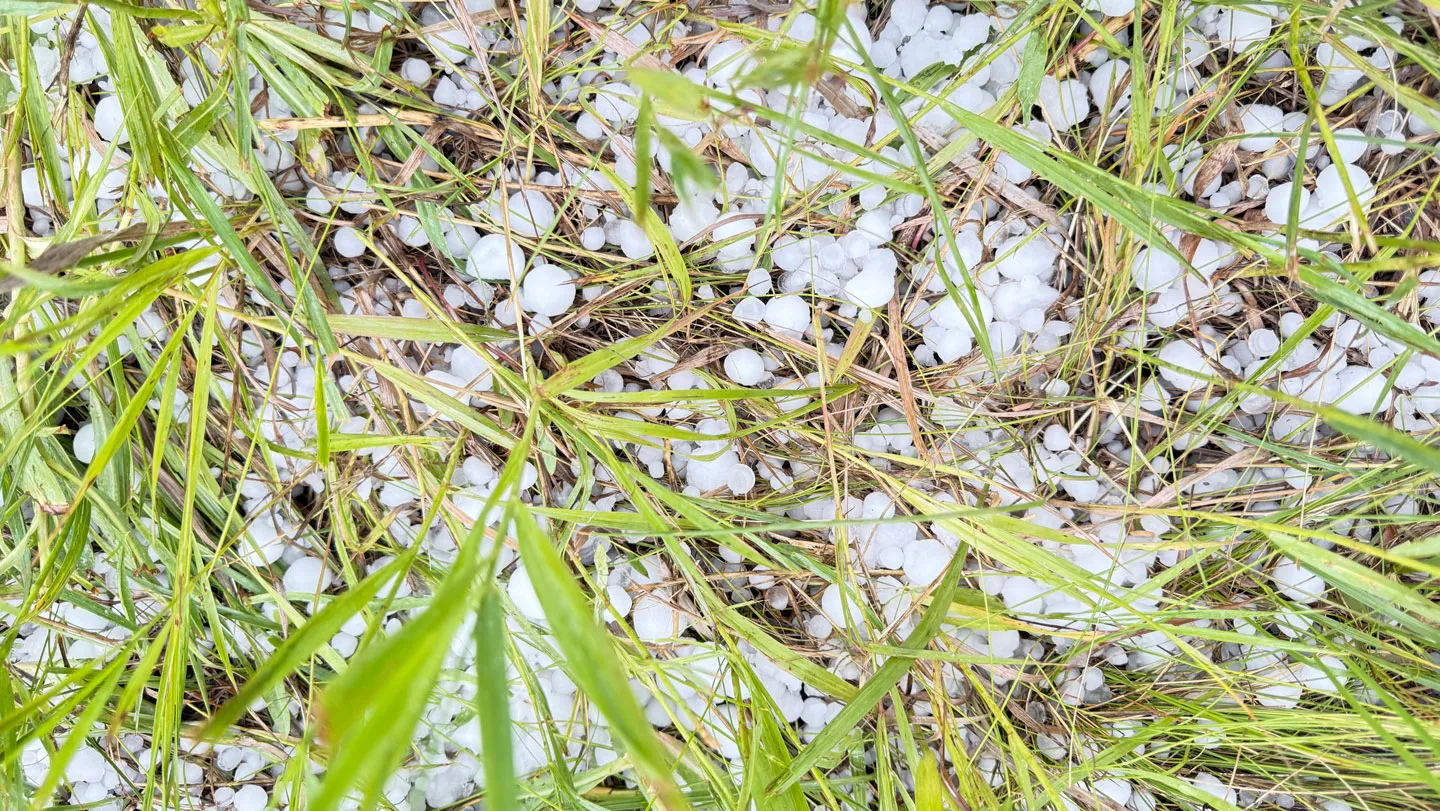
Climate Change May Lead to Larger and More Destructive Hailstones
On April 28, the city of Springfield, Missouri, faced a violent reminder of nature’s volatility as a fierce hailstorm dropped ice chunks ranging from the size of baseballs to larger than grapefruits. The event left a trail of destruction, smashing vehicles, damaging residential property, and resulting in injuries to both people and animals. While falling ice might intuitively seem destined to melt before reaching the ground, recent scientific analysis suggests that our warming climate may ironically foster the growth of larger, more destructive hailstones.
The Science of Storms
Hail formation is a complex process driven by strong winds that lift moisture high into cold clouds. Once water droplets freeze around tiny particles, they continue to grow until they become too heavy for the updrafts to maintain their suspension. Researchers at Peking University recently developed a computer simulation to model how these dynamics shift under changing global conditions, testing their findings against data from over 14,000 real-world hailstorms observed between 2014 and 2021.
The study, published May 27 in Nature, highlights a critical tension: while warmer air provides more water vapor for hail to grow, it also creates a deeper layer of warm air that can melt smaller stones into raindrops before they reach the surface. However, larger hailstones are more resilient to this melting process, meaning they are likely to reach the ground as significant, dangerous chunks of ice.
Regional Risks and Future Outlook
The implications of this research are not uniform across the globe. The model indicates that regions farther from the equator could face an increased threat of severe hail. This is partly attributed to projected sharper temperature rises at higher latitudes by the end of the century, which may strengthen the updrafts inside storm clouds necessary for larger hail development. Conversely, tropical and subtropical regions might see a potential decrease in hail damage.
While experts like climatologist Davide Faranda note that hail is an inherently local phenomenon—making it difficult for global climate models to resolve specific storm events—the broad conclusion remains a significant warning. If global temperatures continue to climb, the frequency and intensity of damaging hailstorms could pose a growing threat to communities worldwide.
Frequently Asked Questions
Why do hailstones grow larger in a warming world?
Warmer air can hold more water vapor, providing more material for hailstones to accumulate as they grow inside cold clouds. Stronger updrafts in certain regions can keep hailstones suspended longer, allowing them to reach larger sizes.
Will every region experience more damaging hail?
No, the risk is expected to vary. While areas farther from the equator may face increased hazards, hail damage in tropical and subtropical regions may actually ease as the century progresses.
Are these findings certain?
Researchers acknowledge that hail is a highly local phenomenon, which introduces uncertainty into global climate models. However, the team validated their model against decades of storm data from China and the United States, suggesting these uncertainties are manageable.
How has the frequency of severe weather events impacted your perception of environmental changes in your local area?