
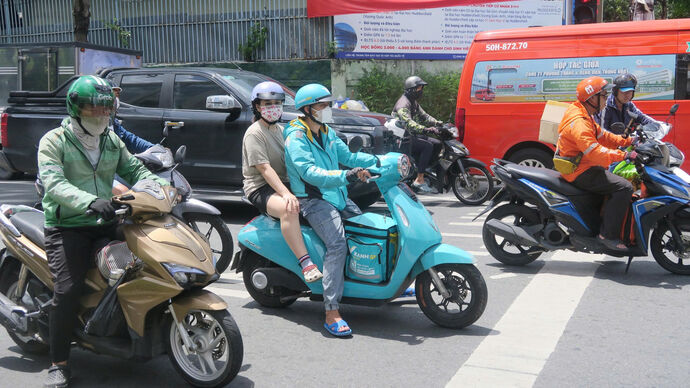
Climate Change Risks: Protecting Vietnam’s Vulnerable Informal Outdoor Workers
Informal outdoor workers in Vietnam face significant health risks from rising temperatures and extreme weather, according to findings presented on June 9 in Ho Chi Minh City by the Vietnam Medical Association and the Anh Sang Institute for Community Health Development. With nearly 7 million people working outdoors in roles like delivery, construction, and motorbike taxi driving, this group remains largely excluded from current occupational health protections and climate adaptation policies.
Vietnam has approximately 33 million informal workers, and those who labor outdoors often work an average of 55.3 hours per week—a figure that exceeds the 48-hour limit set by the Vietnamese Labor Code by roughly 15%.
Health impacts of outdoor labor
Exposure to extreme environmental conditions is a daily reality for the majority of the informal workforce. Data from the recent study indicates that 98.9% of these workers are regularly exposed to high heat, while 98.4% operate in unfavorable environmental conditions. Prolonged exposure to such heat, particularly when combined with high humidity, can lead to acute medical conditions including heat stroke, exhaustion, dehydration, and cardiovascular complications.
Beyond immediate heat-related illness, workers also face a high prevalence of chronic health issues. These include musculoskeletal disorders, respiratory infections, and dermatological conditions. For individuals like Pham Mi Sên, a motorbike taxi driver in Ho Chi Minh City with over 12 years of experience, these conditions translate into frequent dizziness and physical pain, directly impacting his ability to earn a living.
Samantha Carter notes that the lack of institutional protection for informal workers creates a high-stakes trade-off between immediate economic survival and long-term health. Because these workers often lack access to air-conditioned environments or employer-provided safety regulations, they are disproportionately affected by the climate crisis compared to the formal labor sector.
Why current policy gaps matter
Current climate change strategies in Vietnam primarily focus on infrastructure, disaster management, and emissions reduction rather than the specific health needs of informal laborers. Research has historically prioritized employment, income, and social insurance, leaving a critical void in data regarding the systematic health effects of climate-related events on this population. Analysts observe that when policy development remains siloed between the sectors of climate, health, and social protection, the most vulnerable groups are often left without adequate support mechanisms.
What could happen next
To address these vulnerabilities, experts suggest that protective measures for outdoor workers may soon become a priority for public health planning. Potential next steps include the implementation of specific thermal alert thresholds for outdoor roles and the introduction of mandatory rest periods during peak heat. At an urban level, authorities might consider establishing a network of public rest areas providing shade and potable water to mitigate heat exposure risks.
Frequently Asked Questions
Who is most at risk among informal workers?
The most vulnerable groups include motorbike taxi drivers, delivery personnel, construction workers, street vendors, waste recyclers, and manual laborers who lack access to climate-controlled workspaces.
What are the primary health risks identified by the study?
Workers face acute risks such as dehydration, heat stroke, and cardiovascular stress, as well as chronic issues including musculoskeletal, respiratory, and dermatological disorders.
Why are these workers currently left out of protection policies?
According to the study, current policies are often developed in a fragmented manner, focusing on infrastructure and emissions rather than integrating occupational health protections for the informal sector.
How do you think urban planning should change to better support workers who spend their entire day exposed to the elements?