

Colorectal Cancer Screening: New Blood Test Option Added
The American Cancer Society (ACS) has updated its colorectal cancer screening guidelines to include a blood test as an alternative to traditional colonoscopies and stool-based tests. This update arrives as approximately one in three American adults eligible for screening have not been tested as recommended.
The Growing Risk for Younger Adults
Colorectal cancer has become the leading cause of cancer death for adults under 50. While overall cancer rates in the U.S. Dropped by about 1 percent annually between 2013 and 2022, rates for adults aged 20 to 64 increased by as much as 3 percent each year.
Early-onset colorectal cancer is particularly dangerous because 75 percent of cases in adults under 50 are diagnosed at an advanced stage. This makes the disease harder to treat and more likely to be fatal.
Medical professionals point to modern lifestyle factors as potential drivers for this increase. These include higher rates of obesity, decreased physical activity, and diets high in red meat and processed foods but low in fiber.
Other contributing factors may include increased alcohol use and changes in the gut microbiome. Many younger patients are being diagnosed without classic risk factors, such as a family history of the disease.
Understanding the Screening Options
Screening allows doctors to find and remove polyps before they evolve into cancer. Depending on a patient’s risk and preference, We find now three primary categories of testing.
Imaging Studies
- Colonoscopy: Examines the colon and rectum every 10 years.
- Flexible sigmoidoscopy: Examines the lower third of the colon every five years.
- CT colonography: Creates a 3D image of the colon and rectum every five years.
Stool-Based Tests
These tests offer high sensitivity for detecting cancer and moderate sensitivity for advanced precancerous lesions.
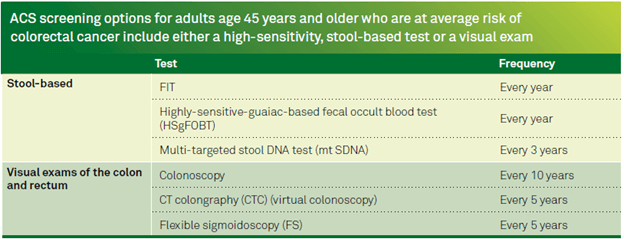
- Cologuard (ng-mt-sDNA): An at-home test analysing DNA markers and hemoglobin every three years.
- ColoSense (mt-sRNA): An at-home test analysing hemoglobin and RNA markers every three years.
- gFOBT and FIT: High-sensitivity tests that look for hidden blood in the stool, performed annually.
Blood-Based Tests
The Shield Test looks for specific DNA changes in the blood. This is recommended every three years specifically for people who decline or do not complete the preferred screening methods.
The “Gold Standard” vs. Convenience
Despite new options, doctors maintain that the colonoscopy is the gold standard. It’s the only method that is preventative, as it allows doctors to remove precancerous polyps during the procedure.
Blood and stool tests are useful for detection but cannot remove lesions or distinguish between different types of lesions. Any positive result from a stool or blood test must be followed by a colonoscopy within six months.
The ACS does not recommend screening for adults older than 85, as the potential harms of the procedures may outweigh the benefits at that age.
Future Implications for Public Health
The availability of more practical screening methods could lead to higher participation rates among adults aged 45 to 49, a group where less than 20 percent were up-to-date with screenings in 2021.
If more eligible adults adopt these “entry-level” tests, it may lead to an increase in the early detection of cancers in younger populations. This shift could potentially improve survival rates, which are excellent when the disease is caught early.
Frequently Asked Questions
At what age should adults begin colorectal cancer screening?
Screening is generally recommended to start at age 45 for those in good health.
What should I do if a blood or stool test comes back positive?
Any positive stool or blood test should be followed up with a colonoscopy within six months.
Why is a colonoscopy preferred over a blood test?
Colonoscopies are more effective at detecting abnormal lesions and are preventative, meaning doctors can remove precancerous polyps before they become cancer.
If you are 45 or older, have you discussed the various screening options with your healthcare provider?