
Cone opsin structures offer insights into vision loss
Researchers at the Paul Scherrer Institute (PSI) have mapped the 3D molecular structure of human cone opsins in their dark state for the first time, according to a study published in the journal Science. This discovery reveals the molecular architecture that enables rapid daylight vision and identifies new potential targets for treating color blindness and age-related macular degeneration (AMD).
How do cone opsins enable rapid daylight vision?
Cone opsins allow the human eye to process visual information nearly instantaneously by using a network of internal “microswitches.” According to Sarah L. Schmidt, a doctoral candidate and first author of the PSI study, these switches allow the receptor to connect with its intracellular signaling partner, the transducing G protein, even while in a resting state.
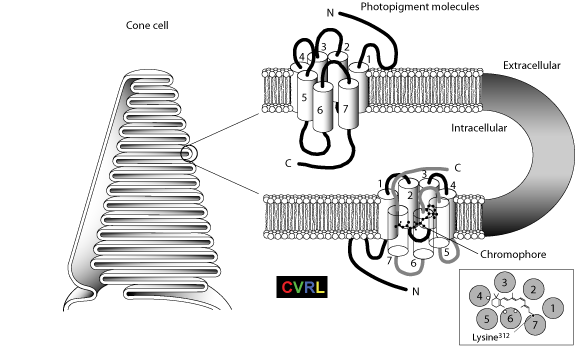
This molecular readiness means that once light hits the retinal—a light-sensitive molecule derived from vitamin A—the signal to the brain is triggered without delay. The human retina contains six to seven million of these cone cells, which are densely packed in the fovea centralis to ensure sharp, high-resolution vision during the day.
Why is the structure of blue-sensitive opsins different from green ones?
The speed and sensitivity of vision depend on the architecture of the retinal binding site. In green-sensitive cone opsins, the binding pocket is relatively open at the entrance and exit. This allows the retinal to be displaced quickly after a light pulse, preparing the cell for the next signal, according to the PSI researchers.

In contrast, blue-sensitive opsins feature a more confined binding site with “closed doors” that restrict retinal movement. Because of this restriction, a higher-energy light stimulus is required to trigger a shape change in the molecule. Blue light carries more energy than red or green light, making it the only stimulus capable of effectively triggering this specific transition.
| Feature | Green Cone Opsins | Blue Cone Opsins |
|---|---|---|
| Binding Pocket | Open / Accessible | Confined / “Closed Doors” |
| Energy Requirement | Lower energy | Higher energy |
| Activation Speed | Rapid turnover | Restricted movement |
What does this mean for the treatment of eye diseases?
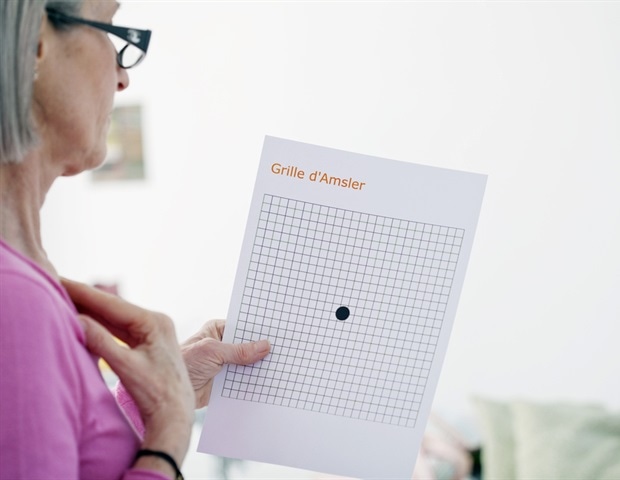
The 3D mapping of these proteins provides a blueprint for treating conditions where cone receptor function is impaired by genetic mutations or degeneration. Polina Isaikina of PSI stated that this structural understanding helps researchers identify exactly where molecular failures occur in diseases like age-related macular degeneration (AMD).
AMD affects the central retina and leads to progressive vision loss. By understanding the “dark state” of the protein, scientists can now explore drugs designed to stabilize cone opsin function or slow the rate of vision loss. This research also opens the door for optogenetics, where engineered light-sensitive proteins are used to restore cellular signaling in blind or visually impaired patients.
How was the 3D structure captured without activating the proteins?
Capturing the “dark state” of cone opsins is technically difficult because these proteins can activate spontaneously even without light. To prevent this, Isaikina and her team worked exclusively under dim red light, using wavelengths that fall outside the sensitivity range of the cone opsins being studied.

The team combined cryo-electron microscopy, ultrafast laser spectroscopy, and computational tools to resolve the structure. While the red cone opsin was not studied directly, the researchers noted that its close genetic similarity to the green variant suggests the same molecular principles apply.
Frequently Asked Questions
What are cone opsins?
They are light-sensitive receptor proteins in the retina that enable high-resolution, color vision during daylight hours.
What is the “dark state” of a protein?
The dark state is the inactive form of the protein before it has been triggered by a light stimulus.
Can this research fix color blindness?
While it is not a cure, the study provides the molecular framework needed to develop targeted therapies for color-vision deficiencies, which affect roughly 5% of the global population.
Want to stay updated on the latest breakthroughs in sensory biology? Leave a comment below with your thoughts on optogenetics or subscribe to our newsletter for more deep dives into medical science.