
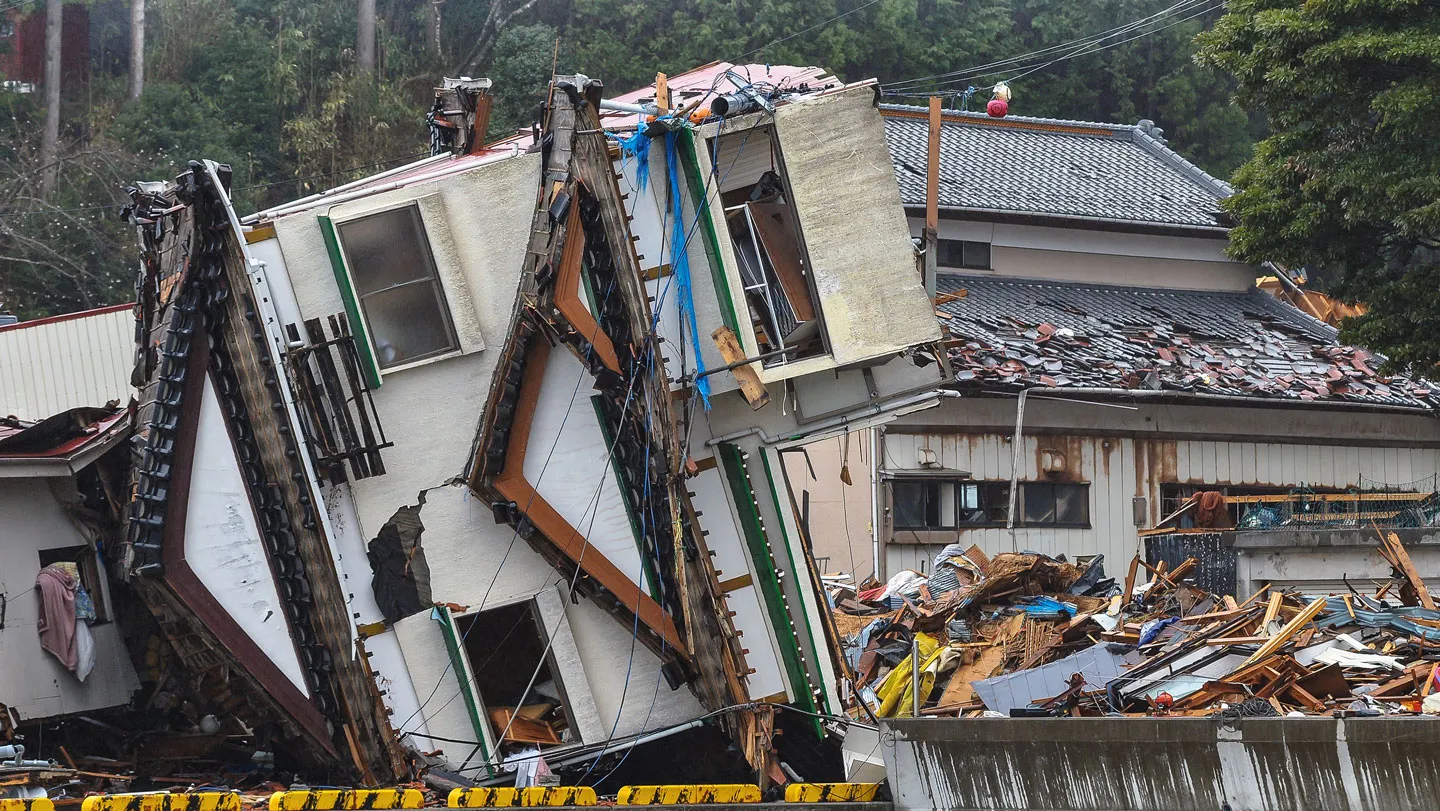
Core-Reflected Seismic Waves Trigger Massive Fault Slip in Japan
A core-reflected seismic wave caused Japan to shift a few millimeters east following the March 11, 2011 Tohoku earthquake, according to research published June 18 in Science. Seismologist Sunyoung Park and her colleagues determined that a wave traveling to Earth’s core and back triggered fault slips across the entire country.
Why did Japan shift east after the 2011 earthquake?
The movement resulted from “core-reflected S waves,” which travel 2,900 kilometers through Earth’s rocky mantle to the core’s edge before returning. This specific wave appeared roughly 15 minutes after the magnitude 9.0 mainshock, Sunyoung Park of the University of Chicago reported.

Hundreds of GPS sensors across Japan recorded a coincident shifting of the ground. Park described this phenomenon as a “permanent offset,” marking the first recorded instance of a core-reflected wave triggering a fault to slip.
How extensive was the fault slip?
The displacement spanned the entirety of Japan, reaching from Hokkaido in the north to Kyushu in the south. Park and her team concluded that two separate plate boundaries, totaling at least 3,000 kilometers, likely “unzipped.”
Caltech seismologist Zachary Ross, who was not involved in the study, stated that such ground displacement implies a specific amount of fault slip. The resulting rupture length is unprecedented, measuring more than twice the length of the rupture from the 2004 Sumatra earthquake.
What are the risks of future seismic waves?
The slippage during the Tohoku event occurred over about three minutes and was likely not perceptible because the energy distributed over a massive area. However, researchers warn that future events may not be as benign.

Andrea Donnellan, a geophysicist at Purdue University, stated it is “very plausible” that seismic waves can trigger the release of long-term tectonic stress. This suggests that similar core-reflected waves could potentially trigger fault slips in future earthquakes.
Frequently Asked Questions
What is a core-reflected S wave?
It is a seismic wave that travels through 2,900 kilometers of Earth’s mantle, bounces off the core’s edge, and returns to the surface.
How much did Japan move during the 2011 event?
The country moved a few millimeters to the east.
Was the movement felt by people in 2011?
The slippage was probably not perceptible because the energy was distributed over an enormous area and occurred slowly over three minutes.
How should this new understanding of seismic hazards change our approach to disaster readiness?