
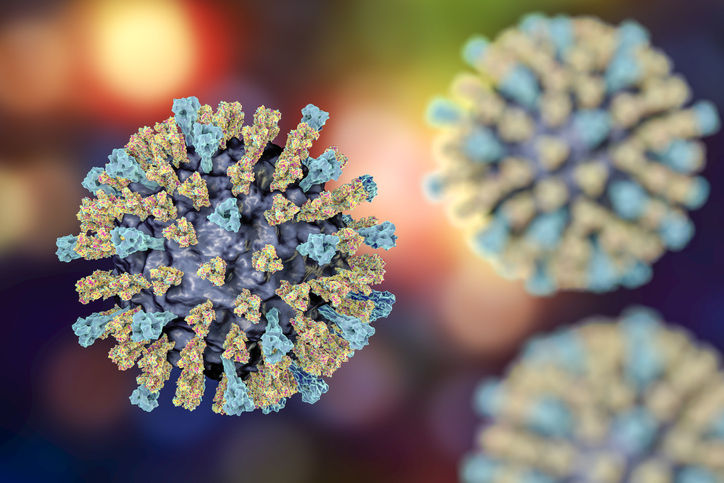
Cross-Reactive T Cells Could Point to Broad Vaccines or Treatments for Measles, Nipah Virus
Scientists at the La Jolla Institute for Immunology (LJI) have uncovered a new way the human immune system may fight off a dangerous family of viruses. Their research focuses on T cells, which are critical defenders capable of stopping severe infections and tumor growth.
Mapping the Paramyxovirus defence
A research team led by Alessandro Sette, PhD, systematically mapped human CD4+ T cell epitopes across the measles and Nipah viruses. These two pathogens belong to the paramyxovirus family, a group of viruses that present significant global health risks.

The team analyzed T cells from 31 participants who had received the MMR vaccine, protecting them against measles, mumps, and rubella. Although these donors had never been exposed to the Nipah virus, the study found their T cells could still recognise it.
This recognition is possible because the two viruses share conserved T cell epitope regions, known as CTERs. Specifically, the researchers identified a shared epitope in the viral fusion, or “F,” protein.
The Power of Cross-Reactive T Cells
Most T cells target a specific threat, meaning a cell that fights influenza typically will not fight malaria. However, LJI scientists have found that some T cells can cross-react to different viruses if they share similar conserved features.

What we have is not the first time LJI researchers have observed this phenomenon. Previous studies by Sette and colleagues showed that cross-reactive T cells could recognise the resemblance between different coronaviruses, including those causing the common cold and SARS-CoV-2.
More recent work by Sette and Alba Grifoni, PhD, also demonstrated that these cells may offer broad protection against the Lassa virus and the wider arenavirus family.
Implications for Global Health
The significance of this discovery is underscored by the ongoing threat of paramyxoviruses. In 2023, there were an estimated 10 million measles infections worldwide, contributing significantly to child morbidity and mortality.
Meanwhile, Nipah virus outbreaks are becoming more frequent, particularly in the Malaysian region. Because these pathogens are of pandemic concern, finding broad ways to stop them is essential.
“No one knows which particular viral species or strain of a virus might be responsible for an outbreak, as we’ve seen in the recent cases of Andes hantavirus,” said Alessandro Sette, PhD.
Future Directions in Vaccine Design
The findings reported in Cell Reports Medicine could guide the creation of new therapies. Researchers suggest that focusing immune responses on conserved regions could provide broad protection for an entire viral family.

Current Nipah vaccine candidates often focus on whole-protein antigens to maximize antibody responses. These could potentially be optimized by incorporating conserved T cell epitope regions.
Sette suggested that during a Nipah outbreak, vaccinating people with a measles vaccine might potentially offer some benefit due to this T cell cross-reactivity.
Frequently Asked Questions
What are CTERs and why are they important?
CTERs are conserved T cell epitope regions. They are features that remain unchanged within viral families, allowing cross-reactive T cells to recognise and target multiple different viruses at once.
How did the LJI study prove cross-reactivity?
Researchers analyzed blood from 31 participants who had received the MMR vaccine but had never been infected with the Nipah virus. They discovered that the T cells primed to fight measles could also recognise the Nipah virus.
What is the difference between the measles and Nipah viruses?
Both are paramyxoviruses, but while measles is highly infectious and a leading cause of childhood morbidity, the Nipah virus has a much higher fatality rate of 40-75%.
Do you believe broad-spectrum vaccines are the most effective way to prepare for future viral outbreaks?