
Crown Heights Politics: Why Voters Are Diverging From Activists
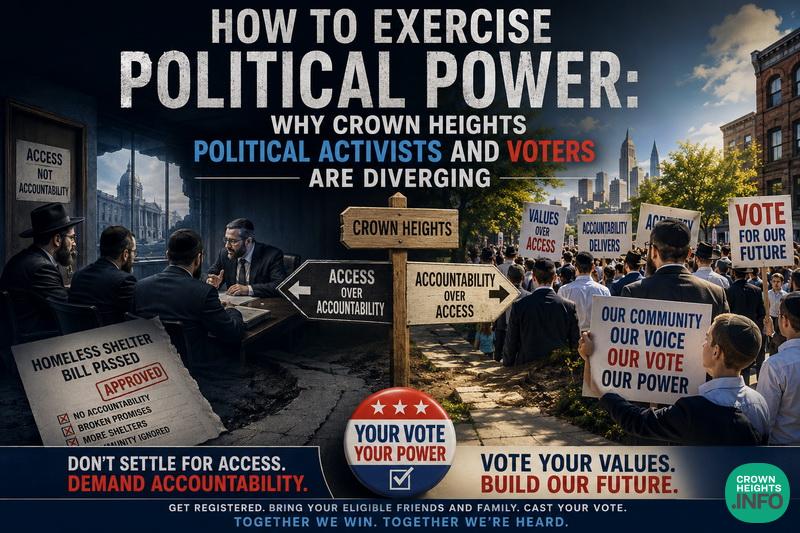
A growing tension has emerged in Crown Heights as a divide widens between the community’s political establishment and its voters. Former city council candidates Benny Rosenberger and Yehuda Shaffer suggest that this friction stems from fundamentally different beliefs regarding the exercise of political power.
The Conflict Over Political Access
According to the authors, current political activists prioritize the status quo and the maintenance of relationships with incumbent politicians. This strategy views access as a tool to secure occasional favors for the community, which activists see as a risk-free approach.

In contrast, many voters evaluate political success based on tangible results. While voters previously trusted activists to use these connections for the neighborhood’s protection, that trust is being tested as specific “red lines” are crossed.
A primary point of contention is the sponsorship of legislation by an incumbent to place additional homeless shelters within Crown Heights. This move has highlighted the gap between the pragmatic approach of activists and the expectations of the electorate.
Accountability Versus Expediency
Activists argue that maintaining a seat at the table is essential to avoid retaliation and preserve future influence, especially after legislation has already passed. They suggest that low voter turnout is the primary obstacle to gaining more community power.
However, Rosenberger and Shaffer argue that low turnout is a result, not a cause, of this strategy. They contend that when voters see no consequences for crossed boundaries, apathy replaces engagement because the vote feels meaningless.
The authors suggest that a “moral hazard” is created when politicians believe community activists will prioritize access over accountability. This dynamic may lead officials to feel comfortable supporting measures that burden the neighborhood.
Potential Shifts in Political Strategy
The authors assert that true leadership requires clear standards for maintaining community endorsement. They argue that unified voting based on values rather than expediency is the most effective way to earn respect from those in power.

Moving forward, community members could seek to increase their influence by registering to vote and encouraging eligible friends and family to do the same. A possible next step for the electorate may be to support candidates who originate from within their own community.
Frequently Asked Questions
What is the primary cause of tension in Crown Heights?
The tension arises from a divide between political activists who value relationships and access to incumbents, and voters who prioritize results and accountability, particularly regarding legislation for additional homeless shelters.
How do activists justify maintaining ties with incumbents?
Activists view these relationships as a pragmatic way to request occasional favors and believe that damaging these ties could invite retaliation and reduce their future influence.
Why do the authors believe voter turnout is low?
They argue that low turnout is the result of a strategy that lacks accountability; when voters perceive that important boundaries are crossed without consequence, they feel their votes no longer matter.