
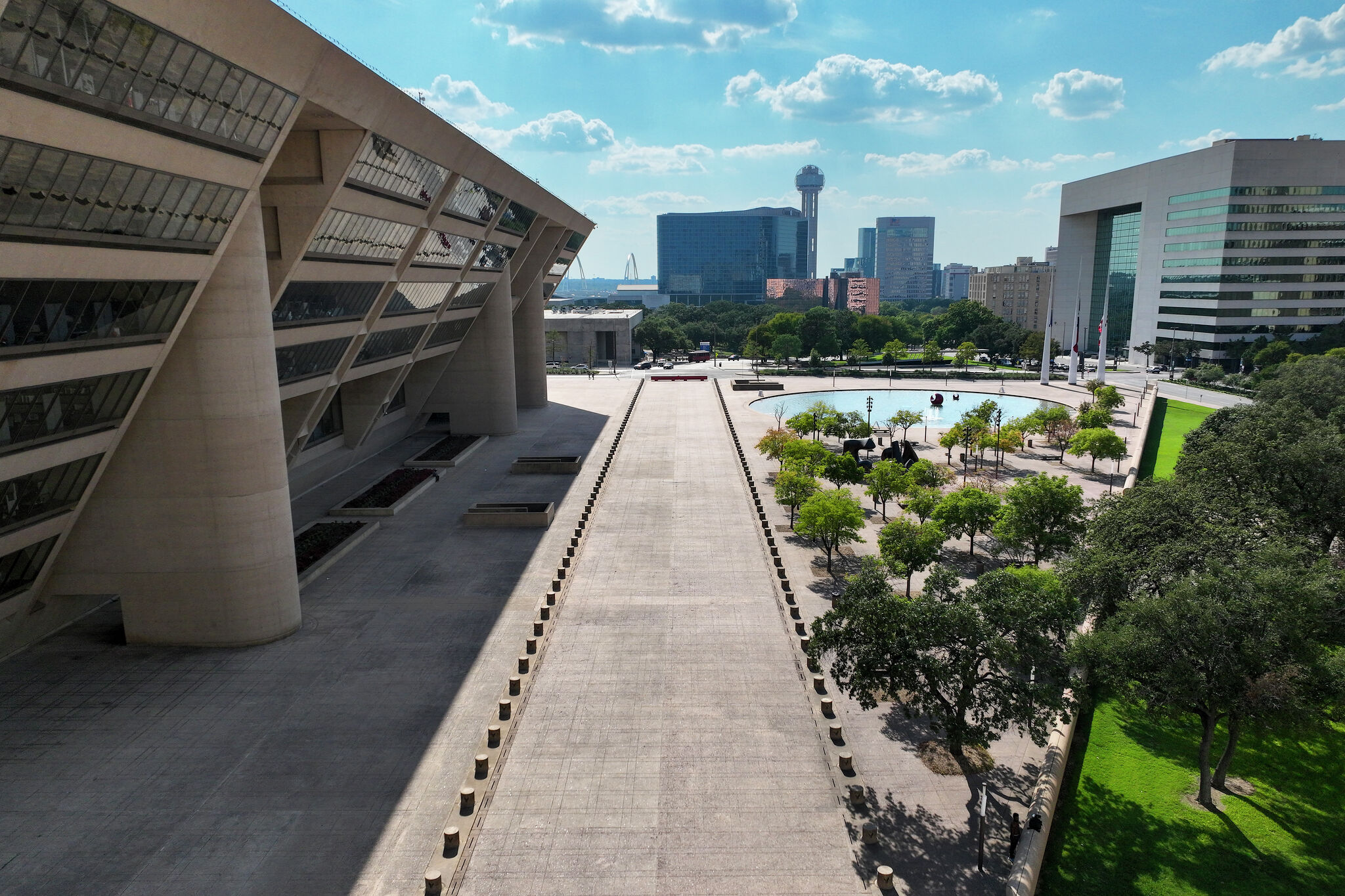
Dallas City Hall Faces Over $500 Million in Repair Costs Amid Funding Uncertainty
Dallas City Hall, an iconic downtown landmark, faces a financial and operational reckoning as consultants project that repairing and modernizing the aging building could cost between $532 million and $611 million over the next decade. The estimates, presented to city leaders, underscore a stark reality: the structure’s deteriorating infrastructure and code violations make piecemeal fixes impractical, forcing officials to confront a difficult choice between massive investment or exploring alternatives, including relocation.
City Manager Kimberly Bizor Tolbert confirmed there is no dedicated funding source for the repairs, leaving options limited to issuing debt—a typical approach for new construction—or reallocating existing city funds. “Notice no free options,” Tolbert stated, emphasizing the fiscal constraints. Councilmember Lorie Blair echoed the urgency of the dilemma, asking, “How are we supposed to pay for all this?”
The debate comes at a pivotal moment for downtown Dallas, where recent announcements—such as Neiman Marcus closing its flagship store, the Mavericks planning a new arena district in North Dallas, and the Stars potentially relocating to Plano—have intensified scrutiny over the city’s long-term viability. Mayor Eric Johnson framed the challenge bluntly: “The wolf is not in this room, the wolf is up the tollway,” signaling growing competition from suburban areas.
Why It Matters
The estimates, ranging from $531.6 million to $610.8 million depending on the consulting firm and timeline, reflect the severity of the building’s deficiencies. Two firms—Gresham Smith and WM2—provided differing but equally staggering projections, with both emphasizing the need for comprehensive upgrades rather than incremental repairs. The city’s inability to secure dedicated funding could force difficult trade-offs, potentially diverting resources from other critical services.
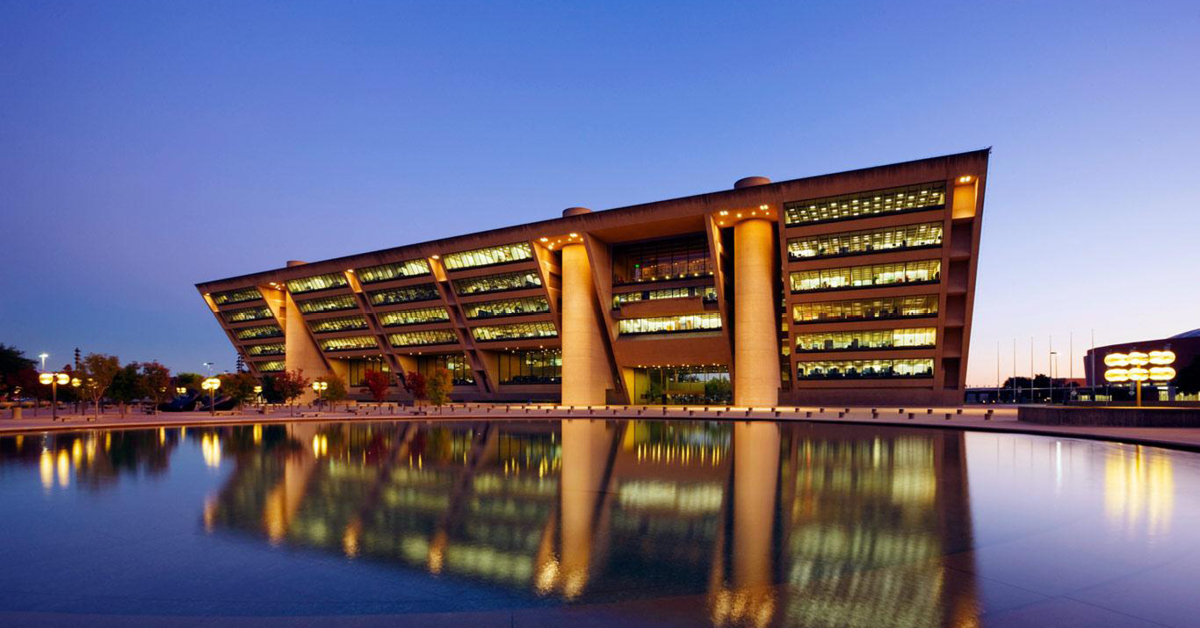
Preservationists and advocates for the I.M. Pei-designed building argue for retaining it as a symbol of Dallas’ identity, while business leaders suggest exploring alternative locations. Councilmember Cara Mendelsohn questioned the reliability of the estimates, noting they were based on earlier assessments by AECOM, while Councilmember Jaime Resendez argued the latest figures validated those projections—though they may still understate the true cost.
What May Happen Next
City leaders could pursue further review of the consultants’ work, as Councilmember Adam Bazaldua suggested, to ensure transparency and accuracy before making a final decision. If the estimates are confirmed, the city may explore financing mechanisms, such as bonds or partnerships, though these would require political approval and public support. Alternatively, the council could advance discussions on relocation, though this would involve logistical challenges, including leasing or constructing new facilities.
A possible next step is a public forum to gather input from residents, businesses, and preservation groups, as the future of City Hall could redefine Dallas’ urban landscape. The debate may also accelerate broader conversations about downtown revitalization, given the recent departures of major anchors like Neiman Marcus. Analysts expect the process to unfold over months, with no immediate resolution in sight.
Frequently Asked Questions
[Question 1]
What are the key safety concerns at Dallas City Hall?
The building lacks fire sprinklers above the first floor, has no smoke evacuation system, and some stairwells act as chimneys during fires. Electrical systems, including generators, are also nearing the end of their operational life.

[Question 2]
How much would repairs cost, and why is the range so wide?
Estimates vary between $532 million and $611 million depending on the consulting firm and timeline. Gresham Smith projected $531.6 million over six years or $556.8 million over a decade, while WM2’s estimates ranged from $591.2 million to $610.8 million. The differences reflect varying approaches to phased repairs and system upgrades.
[Question 3]
What funding options are being considered?
City Manager Kimberly Bizor Tolbert mentioned issuing debt—a common method for new construction—as one potential avenue, along with reallocating funds from the city’s existing budget. No dedicated funding source currently exists for the repairs.
As Dallas grapples with this decision, how do you think the city should balance preserving its architectural heritage with the need for modern, functional infrastructure?