

Global Millionaire Population Surges to 25.3 Million as Wealth Gap Widens
Global wealth experienced a significant surge last year, with soaring stock markets creating nearly 2 million new millionaires. The global millionaire population grew by 7.9%, reaching 25.3 million individuals in 2025.
Total wealth for this group increased by 8.7% to $98.3 trillion, representing the fastest growth seen in five years. However, this expansion has not been distributed evenly across the wealth spectrum.
The Widening Gap Between Millionaires and the Ultra-Wealthy
While the number of millionaires is rising, the growth of “ultra-high-net-worth individuals” (UHNWIs)—those with $30 million or more in investible assets—is outpacing them. The UHNWI population grew by 9.4% to 250,000 in 2025, with their fortunes increasing by 9.7%.
This small group now represents just 1% of the overall millionaire population but controls 35% of all millionaire wealth. Gareth Wilson of Capgemini attributes this disparity to exclusive access to private markets, hedge funds, and pre-IPO investments.
Regional Engines of Growth
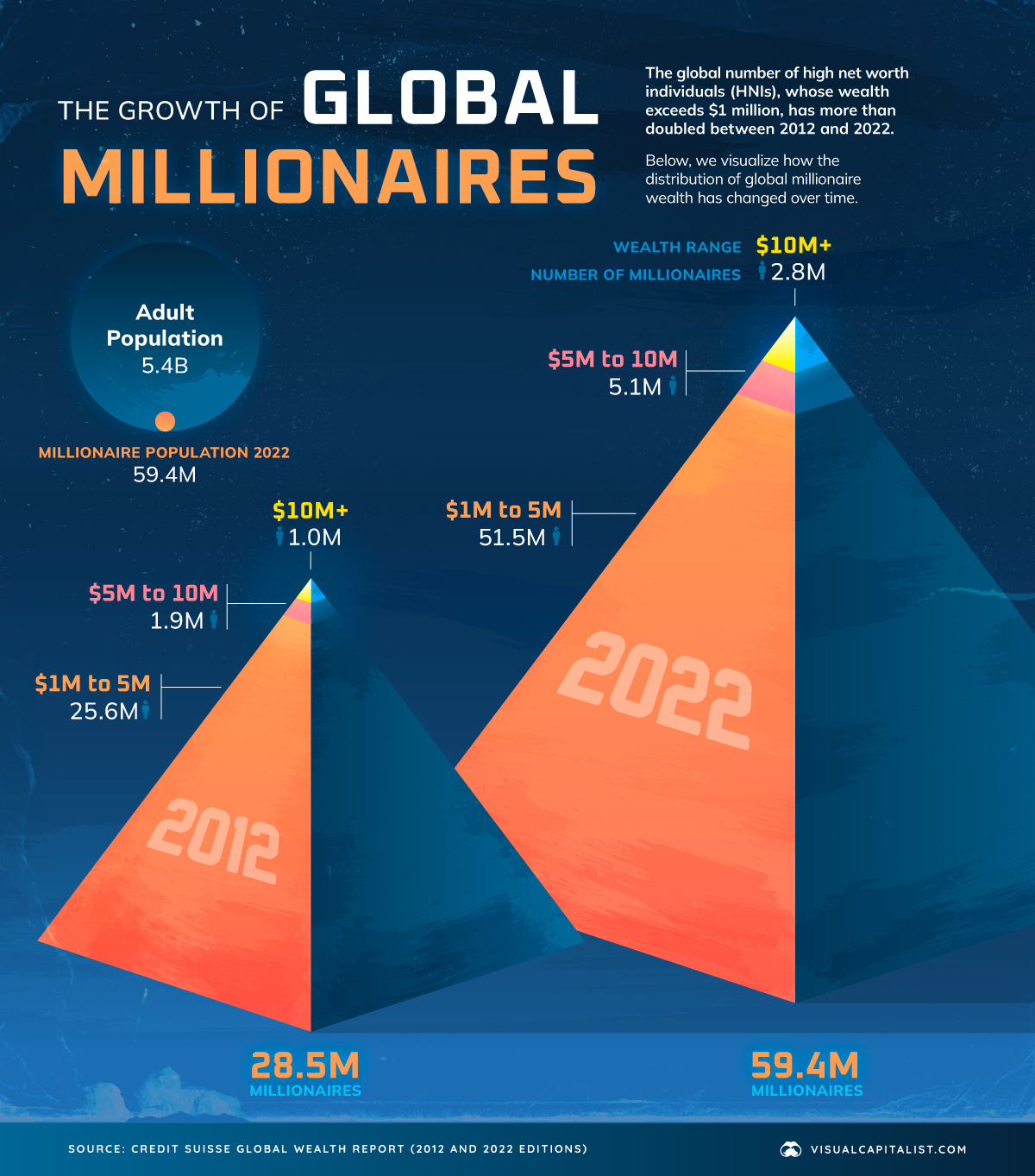
The United States remains a primary driver of this global trend, adding 730,000 new millionaires in 2025. This brings the total U.S. Millionaire population to 8.73 million, with total fortunes rising by nearly $3 trillion to $31.3 trillion.
Asia also showed strong momentum, with its millionaire population reaching 8.3 million and wealth increasing by 10.5%. Meanwhile, Europe saw a 6.5% growth in its millionaire population, and Latin America rose slightly by 0.3%.
Conversely, the Middle East experienced a decline, with its millionaire population dropping by 1.4%.
A Shift Toward Higher Risk
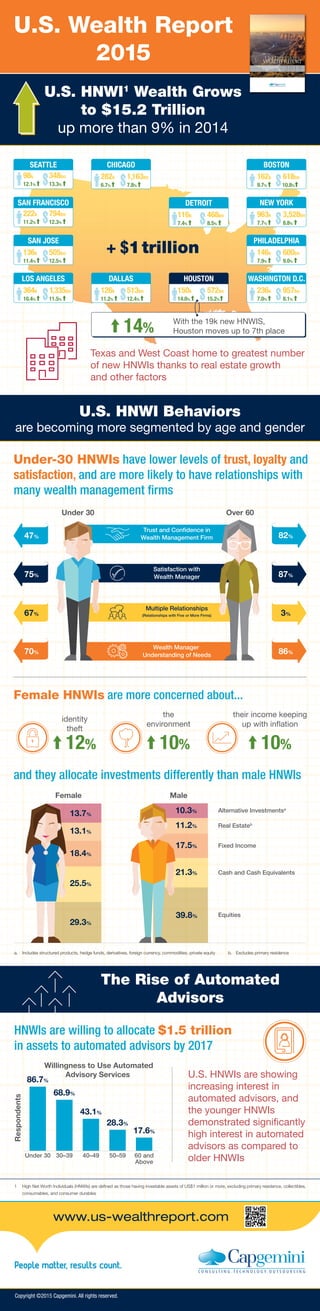
Millionaire investors are increasingly adopting a “risk on” attitude, moving away from cash and toward equities. Stock holdings rose to 25% of portfolios in 2025, up from 22% the previous year.
Cash holdings declined to 24% from 26%, and alternatives fell from 15% to 12%. Fixed income holdings saw a slight increase to 20%, while real estate investments remained flat at 19%.
The Evolution of Wealth Management
The surge in wealth is transforming how the affluent seek financial advice. Millionaires are increasingly dividing their assets among multiple specialized advisors rather than relying on a single firm.
A quarter of millionaires now utilize between four and six advisors, a figure that has doubled since 2019. In contrast, the number of those using only one advisor has fallen by more than half to 19%.
Investment preferences are also fragmenting by wealth tier. Those with $1 million to $5 million are utilizing more roboadvisors, while those in the $5 million to $100 million range are turning toward registered investment advisors. At the highest level, many are establishing their own family offices.
Future Outlook for Wealth Firms
To remain competitive, wealth management firms may need to pivot toward highly personalized services that address a client’s entire life rather than just investment guidelines.
Firms that can successfully build deep, trusted relationships could be more likely to retain clients and gain referrals within exclusive social circles, such as boat or golf clubs.
Frequently Asked Questions
How does Capgemini define a millionaire for this report?
Millionaires are defined as individuals with $1 million or more in investible assets, which excludes their primary home, consumer goods, and collectibles.
Why are UHNWIs growing their wealth faster than standard millionaires?
According to Gareth Wilson, UHNWIs have greater influence and access to higher-returning private investments, such as private markets and pre-IPO opportunities.
What is the current trend in portfolio allocation for millionaires?
Investors are increasing their holdings in stocks (now 25%) and fixed income (now 20%), while reducing their holdings in cash (now 24%) and alternatives (now 12%).
How do you think the rise of roboadvisors will impact the traditional relationship between wealth managers and their clients?