

DoD Seeks $55 Billion Budget Boost for AI-Driven Autonomous Warfare
The $55 Billion Shift: America’s Autonomous Arms Race
The Pentagon is signaling a tectonic shift in warfare. Recent testimony from Senate Armed Services Subcommittee hearings confirms a massive budgetary pivot: the defence Autonomous Warfare Group (DAWG) is slated to see its funding explode from $225 million to $55 billion in a single fiscal cycle. This isn’t just a spending increase; it is an acknowledgment that the battlefield of the future will be dominated by uncrewed systems, AI-driven targeting, and autonomous munitions.
As the U.S. Races to maintain its technological edge against adversaries like China, the integration of Artificial Intelligence into offensive and defensive architecture is moving at a velocity that current regulatory frameworks—specifically DoD Directive 3000.09—struggle to govern.
Engineering the Future: From Prototypes to Production
The primary hurdle in modern defence isn’t just innovation; it’s transition. Historically, the “valley of death” has claimed countless promising prototypes. However, the Department of defence is now prioritizing companies that can bridge the gap between R&D and mass production.

A prime example is the Navy’s partnership with Castelion. By focusing on low-cost hypersonics—aiming to slash per-unit costs from $50 million to under half-a-million dollars—the DoD is moving toward a strategy of mass proliferation. The goal is to secure a procurement pipeline of over 12,000 Blackbeard missiles over the next five years, signaling a move toward “attritable” weapons that can be deployed in large numbers without bankrupting the budget.
The Directed Energy Frontier
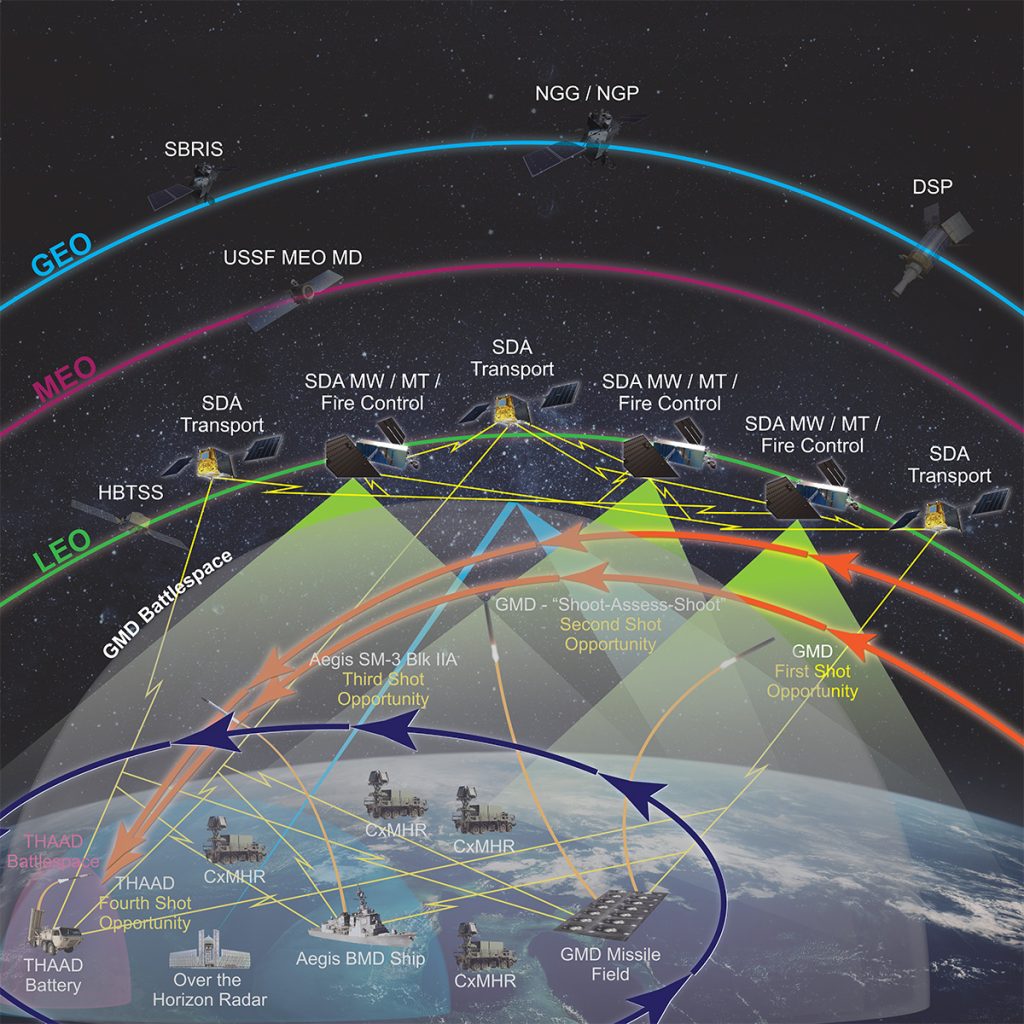
Laser and directed energy weaponry have moved out of the science fiction realm and into the engineering phase. With the science largely settled, the focus has shifted to scaling production. This is critical for the “Golden Dome” anti-missile system, which relies heavily on directed energy to manage the sheer volume of incoming threats.
The Geopolitical AI Tug-of-War
National security experts are increasingly concerned about the “distillation” of American AI models by foreign adversaries. When competitors copy sophisticated models and strip away safety guardrails, they turn dual-use technology into potent cyber, biological, or chemical weapons.
This has sparked a heated debate regarding export controls. Should the U.S. Continue selling “older” chips to adversaries? Proponents argue that by keeping adversaries reliant on the American software stack, the U.S. Maintains a subtle form of leverage. Critics, however, argue that any access to advanced semiconductor technology accelerates the adversary’s path toward domestic self-sufficiency.
Policy Friction: The Case of Anthropic
The recent friction between the Pentagon and AI-firm Anthropic highlights a growing tension: who sets the rules for military AI? While the DoD initially flagged Anthropic as a supply chain risk due to restrictive terms of service regarding battlefield management, the White House recently intervened to keep the firm involved in intelligence operations.

This suggests that the future of defence procurement will be defined by a delicate balance: maintaining rigorous security standards while ensuring the military has access to the cutting-edge tools necessary to stay ahead of the curve. As these policies evolve, they will likely change more frequently than in previous decades to keep pace with the hyper-accelerated threat environment.
Frequently Asked Questions
- What is the DAWG? The defence Autonomous Warfare Group is a specialized unit tasked with the rapid development, testing, and fielding of autonomous systems and drone swarms.
- Why is the Pentagon moving toward “low-cost” hypersonics? To move away from hyper-expensive, singular assets toward a model of mass proliferation, where hundreds or thousands of missiles can be deployed affordably.
- How does the U.S. Plan to compete with China on AI? By focusing on a “six to 12 month” lead in chip manufacturing, power generation, and capital formation, while attempting to control the proliferation of sophisticated programming languages.
What are your thoughts on the rapid expansion of autonomous weaponry? Is the $55 billion investment enough to secure the future, or are we moving too fast for our own governance frameworks? Join the conversation in the comments below or subscribe to our newsletter for deep-dive analysis on the future of global security.