
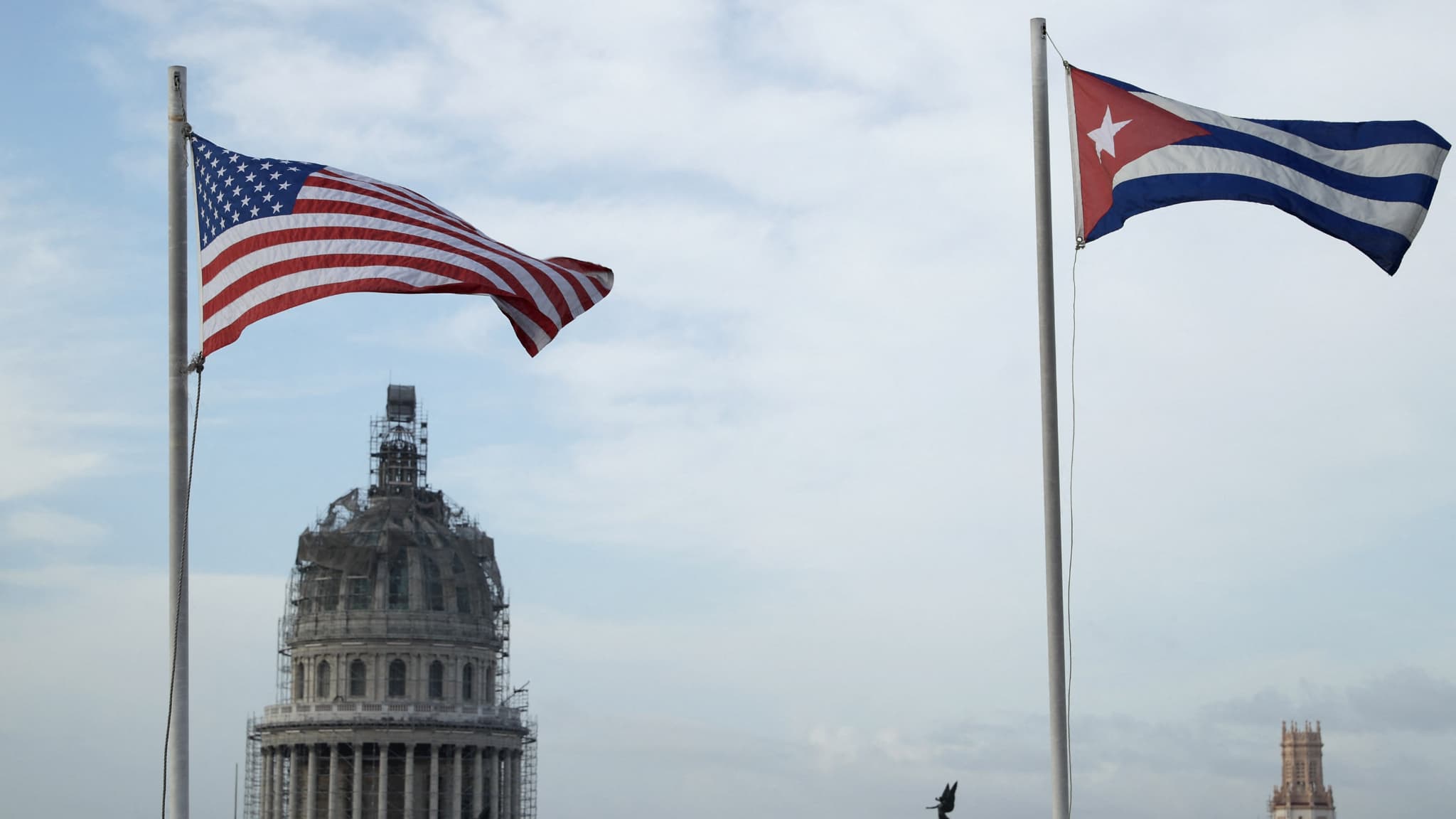
Donald Trump’s Cuba Strategy: Regime Change and Negotiations
Donald Trump has increasingly labeled Cuba an “extraordinary threat” to United States national security, signaling a potential shift in policy toward the island. While military intervention remains a possibility, current efforts appear focused on economic pressure and diplomatic maneuvering as Washington seeks to regain influence over a nation that has remained outside its control since 1959.
The diplomatic relationship between the U.S. and Cuba was previously restored in December 2014 under the Obama administration, ending a rupture that began in 1961. However, subsequent mandates under Donald Trump have dismantled this progress through new economic sanctions.
Why the U.S. is targeting Cuba now
Analysts suggest the current pressure on Cuba is driven by political and symbolic objectives rather than genuine security risks. Experts like Alexandre Marc of the Institut Montaigne argue that the “extraordinary threat” narrative is a pretext, noting that Cuba possesses no weapons of mass destruction and lacks the resources for a significant military buildup. Jean Baptiste Thomas of the Institut des Amériques emphasizes that the U.S. objective is to regain control of an island that has been independent of American influence since the Cuban Revolution led by Fidel Castro and Che Guevara.
Domestic politics also play a significant role. By targeting an “extreme left” regime, the current administration may be aiming to solidify support among conservative Hispanic voters ahead of the November mid-term elections. Furthermore, there is a clear economic motivation: the U.S. seeks to reopen Cuban markets—specifically in tourism and mining—and reclaim assets that were subject to state expropriation during the 1960s.
The distinction between the situations in Venezuela and Cuba is critical. While the U.S. intervention in Venezuela was framed around resource control and was widely supported by the regional population, Cuba lacks comparable hydrocarbon reserves. The goal here is less about resource extraction and more about dismantling a long-standing anti-American political and economic structure.
What is the risk of military conflict?
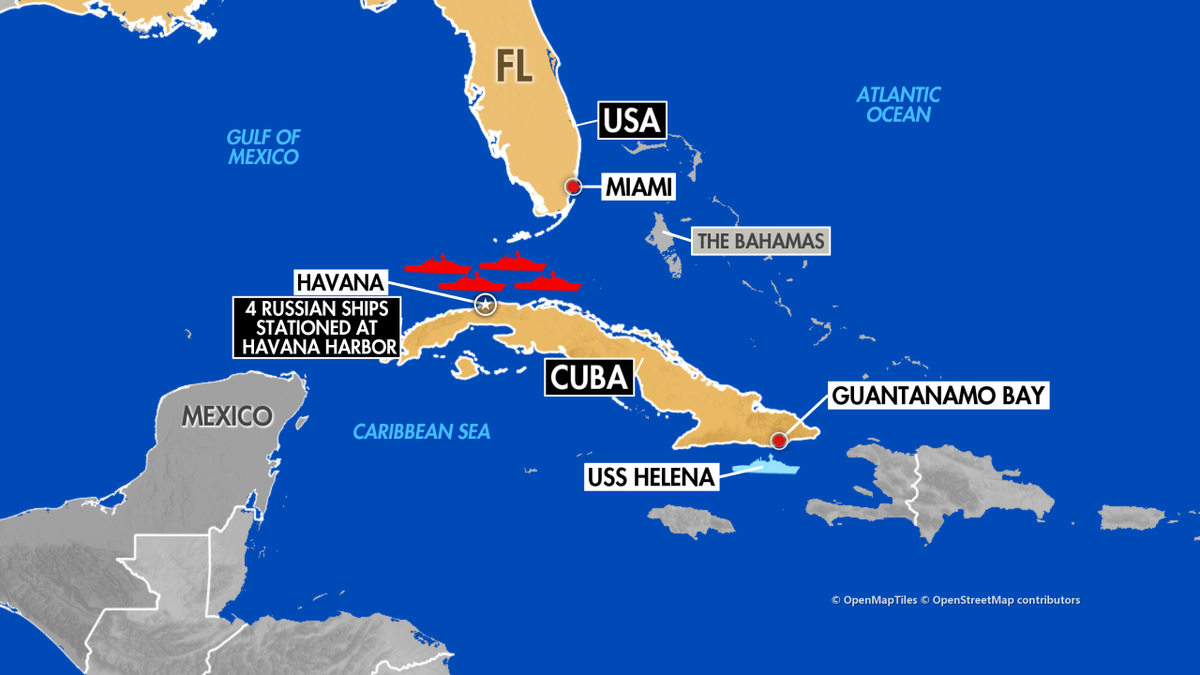
While the U.S. has moved military assets, such as the aircraft carrier Nimitz, near the region, experts remain skeptical of an actual invasion. Jean Baptiste Thomas notes that Cuba’s military equipment is largely obsolete, inherited from the Cold War era, and would be unable to resist the U.S. military. However, Cuban President Miguel Díaz-Canel has warned that any military intervention would result in a “bloodbath.”
The administration is likely weighing the risks of another long-term conflict, particularly given the ongoing instability following U.S. actions in Iran. Instead of a full-scale invasion, observers expect the U.S. to continue “asphyxiating” the Cuban economy through trade restrictions, hoping to force a regime change or a shift in policy without the political and human costs of a direct war.
Are negotiations still possible?
Despite the heightened rhetoric, back-channel communication persists. The Cuban government has publicly expressed a willingness to engage in bilateral dialogues to resolve existing disputes. Official contact has already occurred, including a meeting on May 28 between the head of the U.S. Southern Command, Francis Donovan, and his Cuban counterparts at the Guantánamo naval base.

Whether these discussions can prevent a total collapse of relations remains uncertain. For now, the strategy appears to be a calculated mix of economic isolation and limited diplomatic dialogue, aimed at fundamentally altering the political landscape of the island.
Frequently Asked Questions
Is Cuba currently a military threat to the United States?
Experts like Alexandre Marc and Jean Baptiste Thomas state there is no evidence of a credible threat. They note that Cuba lacks weapons of mass destruction and relies on outdated military equipment.
Why is the U.S. interested in controlling the Cuban economy?
The goal is to open the island to American businesses, particularly in the tourism and mining sectors, and to regain possession of companies and assets that were expropriated during the 1960s.
Are there any active negotiations between the two nations?
Yes. President Miguel Díaz-Canel has indicated a desire for dialogue, and senior military officials from both nations met at the Guantánamo base as recently as May 28.
How do you think the potential for economic reform in Cuba might impact the everyday lives of its citizens?