

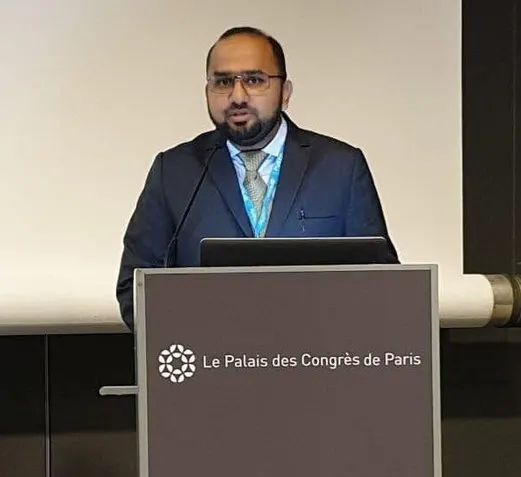
Dr. Syed Mohammed Ghouse: Pioneering Global Remote Robotic Surgery from China to India
Dr. Syed Mohammed Ghouse, a leading robotic surgery expert at the Asian Institute of Nephrology and Urology (AINU) in Hyderabad, successfully performed the world’s first remote robotic ureteral reimplantation on May 18, 2026. Operating from a console at Tongji Hospital in Wuhan, China, Dr. Ghouse treated a patient located in Hyderabad, India, using 5G technology to transmit surgical commands with a latency of less than 200 milliseconds.
How the Remote Procedure Was Conducted
The surgery utilized the MedBot robotic platform, developed by the Chinese firm MicroPort, to execute a complex urological reconstruction. According to Dr. Ghouse, the system consists of a patient cart, a vision cart for 3D imaging, and a surgical console. While the surgeon is physically located in Wuhan, the robotic arms in Hyderabad mirrored his movements in real-time. To ensure patient safety, local medical staff remained on standby in the Hyderabad operating room, and the connection relied on dedicated lines with 30–50 Mbps bandwidth to provide automatic failover in the event of a network disruption.
Did You Know? Dr. Syed Mohammed Ghouse has performed over 2,000 robotic surgeries throughout his career and credits his early interest in precision and systems engineering to his grandfather, a retired superintendent engineer.
Significance of the Cross-Border Operation
This procedure represents a shift in surgical delivery, suggesting that specialized medical care may no longer be restricted by geographic location. Dr. Ghouse stated that the success of this operation was made possible by the intersection of high-speed connectivity infrastructure and the maturity of robotic platform technology. For AINU, the event serves as a demonstration of the institute’s role in global surgical innovation. Dr. Ghouse noted that the primary difference between India and Western nations in this field is not surgical capability, but rather the availability of institutional support, infrastructure, and total case volume.
Expert Insight: The success of this remote procedure signals a potential move toward decentralized surgical care. By decoupling the surgeon’s physical presence from the operating table, medical institutions could eventually provide specialized expertise to underserved or remote regions, provided that robust, low-latency 5G infrastructure is maintained to support the safety protocols required for robotic systems.
The Future of Remote Surgery
The patient recovered quickly and was discharged on the same day Dr. Ghouse returned to Hyderabad. Moving forward, the integration of remote surgery into daily clinical practice remains the primary goal. Dr. Ghouse suggests that for this to become a standard, investments in robotic infrastructure must expand beyond major metropolitan areas. Additionally, he advocates for the development of structured training programs that allow younger surgeons to gain the necessary experience to master these technologies without administrative friction.
Frequently Asked Questions
What technology enabled the remote surgery?
The operation used the MedBot robotic platform and 5G network technology, which allowed for real-time data transmission with a latency of under 200 milliseconds.
What safety measures were in place?
The system utilized multiple dedicated internet lines for redundancy. If one line failed, another would automatically take over. Furthermore, local medical personnel were physically present in the Hyderabad operating room to manage any emergency situations.
Is this technology available in India?
Yes, the same MedBot system used in the Wuhan procedure is already installed and operational at the Asian Institute of Nephrology and Urology in Hyderabad.
How do you believe the expansion of remote surgical technology will change access to healthcare in your own community?