

Early Hair Loss Symptoms: Self-Diagnosis and Treatment Guide
Early hair loss is identified by thinning hair and a visible scalp at the crown or parting. According to Seoul National University Hospital medical information, while losing 50 to 100 hairs daily is normal, consistent loss exceeding this range or the appearance of vellus hairs often indicates the onset of hair loss.
How do you recognize the early signs of hair loss?
Identifying the start of hair loss requires looking beyond the amount of hair shed. A key indicator is “miniaturization,” where thick, healthy hairs gradually transition into thin, short vellus hairs. This process often causes the scalp to become visible at the parting or the crown.
Medical information from university hospitals suggests eight red flags for self-assessment. These include losing more than 100 hairs a day during brushing or washing, a widening part, and a receding M-shaped hairline. Other signs include hair that feels thinner and weaker, the presence of vellus hairs among shed strands, a family history of hair loss, and symptoms persisting for several months.
What causes hair to thin and fall out?
Male pattern hair loss is primarily driven by genetics and hormones. Specifically, the enzyme 5-alpha reductase converts the male hormone testosterone into dihydrotestosterone (DHT). Hair follicles that are genetically sensitive to DHT experience a shortened growth phase and gradual thinning.
Different triggers can lead to telogen effluvium, a form of temporary hair loss. According to the source, factors such as stress, childbirth, major surgery, extreme dieting, or nutritional imbalances can push hair prematurely into the resting phase. While this type of loss often recovers once the trigger is removed, prolonged shedding may indicate other underlying causes.
How is early hair loss treated?
Treatment options generally split into topical and oral medications. Minoxidil is an over-the-counter topical solution that works by improving scalp blood flow and encouraging follicles to enter the growth phase. It is typically applied twice daily to a dry scalp, with results usually appearing after three to six months.
Finasteride is a prescription medication that inhibits the production of DHT. According to Ministry of Food and Drug Safety guidelines, this drug requires at least three months of use to show effects, and benefits may disappear if the medication is stopped. This drug is strictly contraindicated for women, especially those who are pregnant or of childbearing age, as they must avoid both ingestion and contact with broken tablets.
Comparison of Common Treatments
- Minoxidil: Over-the-counter; topical application; targets blood flow; may cause temporary initial shedding.
- Finasteride: Prescription only; oral administration; targets DHT production; contraindicated for women.
What happens if treatment is delayed?
Early intervention is considered more advantageous because it targets living follicles. If the condition progresses to a stage where follicles are completely atrophied, the hair may stop growing entirely, making recovery difficult.
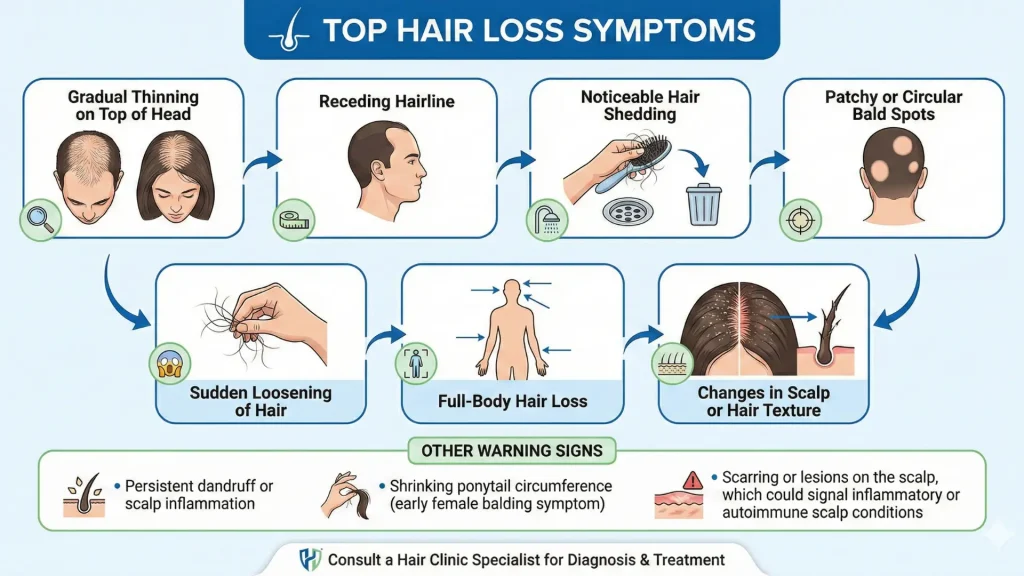
While lifestyle adjustments—such as adequate sleep, stress management, balanced nutrition, and scalp cleanliness—support overall hair health, they may not be sufficient to stop the progression of genetic hair loss on their own. Medical consultation is recommended to determine the specific type of hair loss, as male pattern, telogen effluvium, and alopecia areata require different treatments.
Frequently Asked Questions
At what age does early hair loss start?
There is no fixed age. While male pattern hair loss often appears in the 20s or 30s, it can start earlier depending on family history. The pattern of thinning and widening parts is a more reliable indicator than age.
Does losing a lot of hair always mean hair loss?
No. Shedding 50 to 100 hairs a day is normal. Temporary increases can occur due to seasonal changes or short-term stress. However, losing over 100 hairs daily for several months or seeing visible scalp patches warrants a medical exam.
Can self-diagnosis confirm hair loss?
No. Self-diagnosis tools are intended only to help determine when to visit a doctor. A professional diagnosis is necessary to distinguish between different types of hair loss, as the causes and treatments vary.
Have you noticed changes in your hair density or the width of your parting over the last few months?