
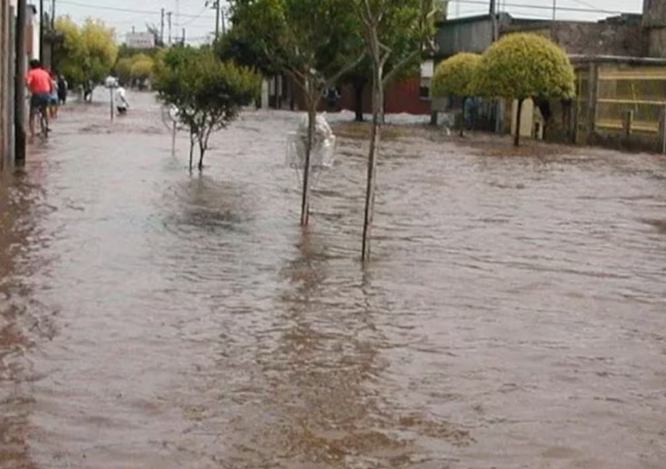
El Niño 2026: Climate Forecast and Risk Management for Chaco Province
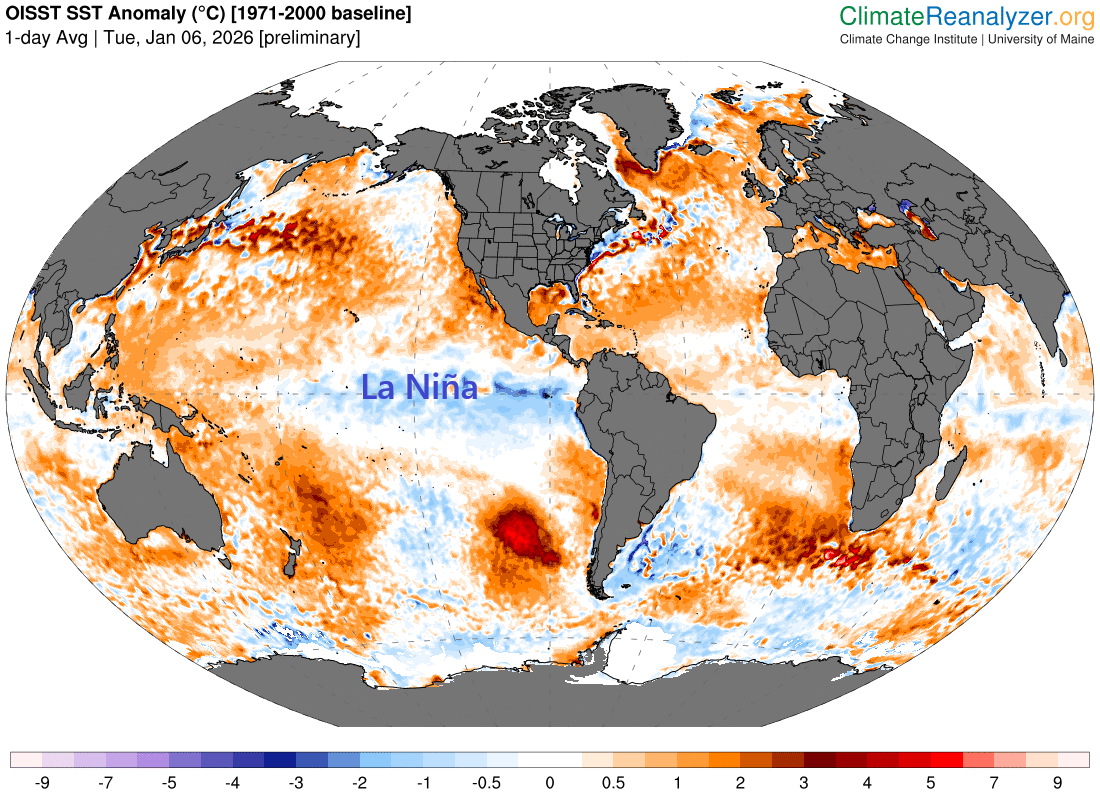
International climate agencies, including the National Oceanic and Atmospheric Administration (NOAA) and the National Meteorological Service of Argentina (SMN), have confirmed that global conditions are transitioning toward an El Niño event for late 2026. While the phenomenon increases the probability of significant rainfall and hydrological shifts across the Chaco region, researchers from the National University of the Northeast (UNNE) and the Federal University of Santa Maria (UFSM) emphasize that its final intensity and local impacts remain uncertain.
Why is El Niño 2026 considered a high-stakes climate event?
The “El Niño Advisory” issued by the NOAA Climate Prediction Center (CPC) on June 11, 2026, officially recognizes that El Niño conditions are present and likely to strengthen through the 2026-2027 summer. According to the NOAA/CPC, there is a distinct possibility the event could reach “very strong” intensity between November 2026 and January 2027. However, the agency cautions that even powerful events do not guarantee extreme impacts in every geographic location, as regional atmospheric responses vary.
How does the current forecast differ from early 2026?
The latest technical report from the UNNE Faculty of Engineering marks a shift from the initial “incipient” signals seen earlier in the year. In May 2026, climate models were constrained by the “predictability barrier,” a period when forecasting tools historically struggle to capture the full evolution of the El Niño-Southern Oscillation (ENSO).
| Source | Status/Projection |
|---|---|
| NOAA/CPC | El Niño Advisory active; potential for very strong intensity. |
| IRI | High probability of persistence throughout the remainder of 2026. |
| SMN Argentina | Neutral conditions transitioning to a warm phase with positive sea surface temperature anomalies. |
By June, the convergence of data from these international centers has increased the reliability of the forecast. While the SMN reported neutral conditions on June 1, they noted sea surface temperature anomalies reaching +1.7 °C in the Niño 1+2 region, signaling a clear departure from standard neutral behavior.
What are the risks for the Chaco region?
Researchers at UNNE and UFSM categorize the risk for the Chaco province into two distinct scales. The first involves local and regional rainfall, which directly affects urban drainage, soil moisture, and agricultural production. The second scale concerns the broader Copernicus/GloFAS hydrological forecast for the La Plata Basin.
Data from the GloFAS system indicates a progressive increase in water flow for the Paraná-Paraguay system toward late 2026. While the median forecast for Corrientes remains below official alert levels, some model ensembles suggest potential spikes that could approach or exceed these thresholds. The UNNE researchers stress that these figures are exploratory and should not replace official bulletins from the National Institute of Water (INA) or local provincial authorities.
How should municipalities prepare for potential floods?
The UNNE report advises local governments to adopt a gradual, technically founded preparation strategy. For municipalities with limited technical resources, the focus should be on “low-regret” measures:
- Infrastructure: Prioritize the cleaning and preventative maintenance of urban and rural drainage networks.
- Logistics: Audit available machinery, fuel reserves, and emergency supply contracts.
- Mapping: Update simple visual maps of flood-prone areas and emergency access routes.
- Communication: Establish clear protocols to avoid contradictory public messaging during weather events.
Frequently Asked Questions
Does an El Niño declaration mean a disaster is coming?
No. According to the NOAA/CPC, an El Niño advisory indicates that the climate driver is present, but it does not automatically determine the severity of local impacts. The outcome depends on regional rainfall and local infrastructure capacity.

Why are there different intensity forecasts for 2026?
Different models, such as those from the ECMWF and the IRI, use varying data sets and algorithms. The ECMWF has projected higher anomalies, while other models show more moderate trends. Researchers use these as an ensemble to capture the range of possibilities.
Where can residents find official updates?
Residents should monitor updates from the Provincial Water Administration (APA) of Chaco, the National Meteorological Service (SMN), and local Civil Defense agencies for operational decisions.
Are you a local authority or resident preparing for the upcoming season? Share your questions about regional water management in the comments below or subscribe to our newsletter for the latest technical updates from the UNNE hydrology team.