
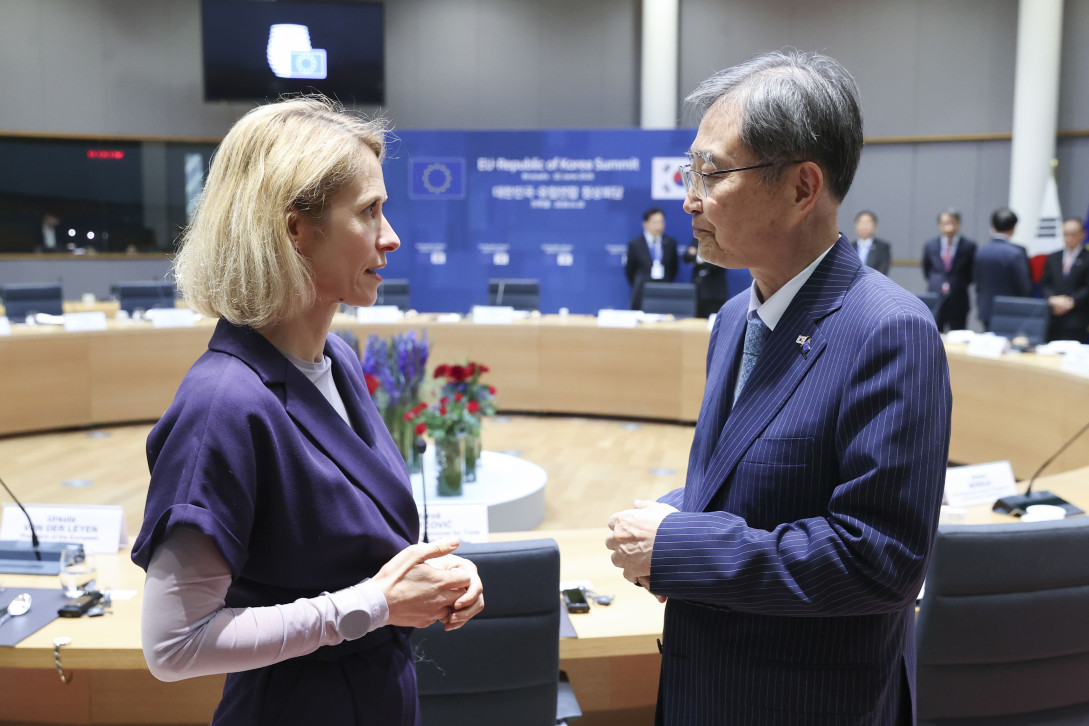
EU and Republic of Korea Strengthen Security and Defence Partnership
The European Union and the Republic of Korea are deepening their security and defence collaboration to counter shared geopolitical threats, including regional instability in the Indo-Pacific and the consequences of Russia’s war in Ukraine. According to the European External Action Service (EEAS), this partnership, formalized in November 2024, focuses on maritime security, cyber resilience, and the protection of a rules-based international order.
How is the EU–ROK security partnership evolving?
The cooperation has moved beyond symbolic agreements into operational military and strategic alignment. The EU has upgraded the EU–ROK Security and Defence Dialogue to the Managing Director level to ensure faster decision-making. According to EU official reports, this structural change allows for more frequent, high-level exchanges on critical threats, such as foreign information manipulation and cyber warfare. The deployment of a dedicated Military Advisor to the EU Delegation in Seoul marks a significant step in institutionalizing this day-to-day coordination.
The Republic of Korea is one of the few non-European nations to conduct joint naval exercises with the EU’s Operation Atalanta, which focuses on maritime security in the North-West Indian Ocean.
Why are maritime and cyber security the new focus?
Both Brussels and Seoul view maritime stability and cyber integrity as the most vulnerable frontiers of their respective regions. The EEAS notes that joint naval exercises serve as a practical deterrent against piracy and illegal activities that threaten global trade routes. Similarly, the expansion of cyber-policy roundtables signals a shift from reactive defense to proactive diplomatic responses. By sharing intelligence on malicious cyber activities, both parties aim to harden their national infrastructures against state-sponsored digital interference.
What are the next steps for EU–ROK cooperation?
Future trends point toward a more integrated approach to non-proliferation and disarmament. Because both the EU and South Korea face direct risks from nuclear and missile development—either in Eastern Europe or on the Korean Peninsula—alignment on sanctions and diplomatic pressure has become a primary policy objective. According to the EEAS, the partnership acts as a central pillar for both actors to address these cross-regional challenges without relying solely on traditional security alliances.

Watch for future joint statements regarding “emerging threats.” These documents often signal which new technologies, such as AI in defense or drone warfare, will be the focus of the next round of EU–ROK policy summits.
Frequently Asked Questions
- What is the primary goal of the EU–ROK Security and Defence Partnership?
The partnership aims to align security policies, improve maritime cooperation, and strengthen cyber resilience between the EU and South Korea. - How does this partnership affect the Indo-Pacific region?
It increases the EU’s presence and influence in the Indo-Pacific by working with a like-minded democracy to uphold international law and regional stability. - Are there military advisors involved in this cooperation?
Yes, the EU has planned the deployment of a Military Advisor to its Delegation in Seoul to facilitate ongoing security and defense engagement.
What do you think about the growing security ties between Europe and East Asia? Join the conversation by sharing your thoughts in the comments section below, or subscribe to our newsletter for more updates on global defense policy.