
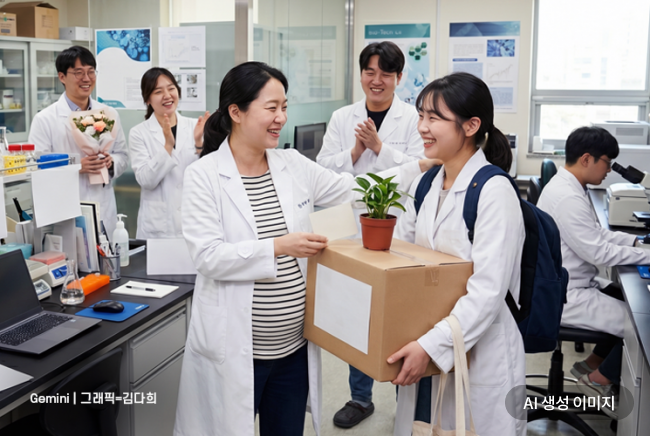
To Prevent Research from Stopping Due to Childbirth and Parenting… Ministry of Science and ICT to Provide Additional Support for 100 Substitute Personnel
The Ministry of Science and ICT in South Korea has launched a program to support researchers managing childcare responsibilities, aiming to prevent career disruptions. The initiative, part of the “2026 Science and Technology R&D Substitute Personnel Support Program,” provides salary funding for substitute research staff. Institutions applying by July 13 can receive up to 30 million won annually for PhD-level personnel, with support lasting up to two years.
The program, developed with the Center for Women in Science, Engineering and Technology (WISET), operates in two categories: one for researchers on parental leave or reduced hours, and another for those balancing childcare. Since 2018, 987 substitute personnel have been supported, with 233 spots available this year and an additional 100 through second-half recruitment.
Why This Matters
The initiative addresses systemic challenges in retaining researchers, particularly women, amid childcare responsibilities. Lee Junbae, a ministry official, highlighted that career gaps could harm national science and technology competitiveness. By funding substitute staff, the program seeks to maintain research continuity while supporting work-life balance.
What May Happen Next
The government may conduct additional recruitment in September for institutions that missed the July 13 deadline. Analysts suggest the program could influence broader workplace policies, though its long-term impact on workforce retention remains uncertain. Future expansions might depend on participation rates and outcomes from current cohorts.
Frequently Asked Questions
What does the program support? It funds salaries for substitute research personnel, enabling researchers on parental leave, reduced hours, or childcare duties to continue R&D work.
Who is eligible? Research institutions can apply for funding to hire substitutes. PhD-level researchers may receive up to 30 million won annually for two years, while those with lower degrees receive lower amounts.
What are the deadlines? Applications must be submitted by 6:00 p.m. on July 13. Institutions planning to hire may apply later, with potential additional recruitment in September.
How might this program affect long-term research productivity in South Korea?